Graduate Student Research Seminar Day ‑ Feb 25, 2026
You are cordially invited to the Graduate Student Research Seminar of the Department of Industrial Engineering.
Date: Wednesday, Feb 25, 2026
Time: 1:00 pm - 2:40 pm AST
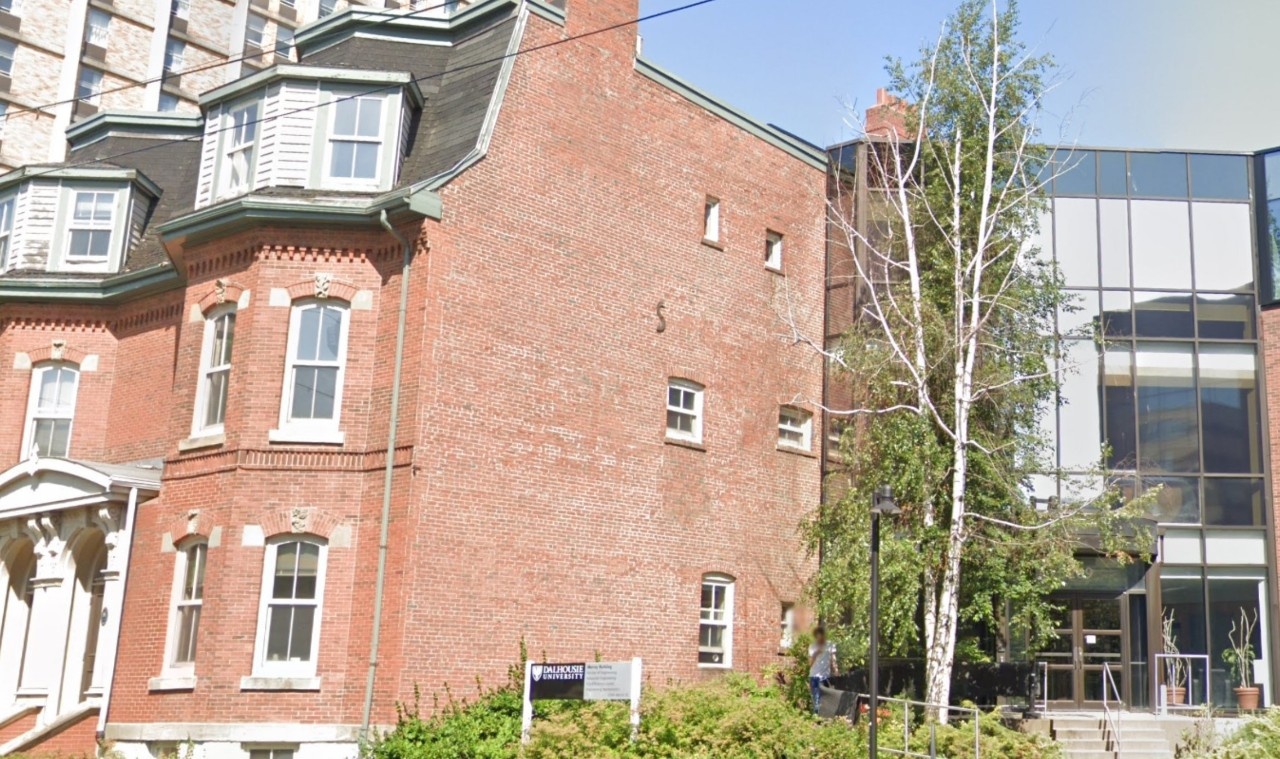
In Person: Room I-121, Sexton Campus
Online: In-person only
(NOTE: Students are reminded that they must attend in person if they are planning to put this toward their Seminar course requirements.)
Schedule:
1300-1325 |
Ali Mahmoudi, PhD Candidate Evolving Strategies in Public Transportation: An Evolutionary Game-Theoretic framework for Technology Adoption and Government Policy |
| 1325-1350 | Clifford Ojukannaiye, PhD Candidate Engineering cooperation: A multi-stage game-theoretic framework for transforming host-displaced relations through shared resource investment |
| 1350-1415 | Andrew Swift, MASc. student Grid-Integrated Green Ammonia Production System Design Optimization Under Renewable Uncertainty |
| 1415-1440 | Farzad Falahaty, MASc. student Optimizing budget allocation for multimission selective maintenance planning |
Abstracts:
Evolving Strategies in Public Transportation: An Evolutionary Game-theoretic framework for Technology Adoption and Government Policy
Ali Mahmoudi, PhD Candidate
Contemporary environmental challenges, such as global warming, require countries to move toward environmentally friendly strategies. As one of the main contributors to global CO2 emissions, the transportation sector must prioritize the adoption of sustainable vehicle technologies. This study develops an evolutionary game-theoretic framework to analyze strategic interactions between public transit agencies and government authorities, focusing on the transition from diesel to cleaner technologies such as electric and hydrogen buses. The model incorporates government subsidies, penalties, operational costs, and evolving technology costs to assess policy effectiveness under varying economic conditions, using real-world data from Halifax, Canada. The results of long-term simulations (2025–2050) reveal that electric buses initially emerge as the dominant strategy by 2030, but as hydrogen production costs decline, hydrogen buses gradually replace electric fleets, eventually forming a fully hydrogen-powered network. The findings highlight the critical role of early-stage policy incentives in accelerating sustainable transitions, although their influence diminishes over time without continued policy adaptation. Additionally, a sensitivity analysis on diesel bus retrofitting shows that under favorable cost conditions, retrofitting becomes a dominant short- to medium-term strategy. However, it also competes with hydrogen adoption in the absence of strong policy signals, underscoring the importance of long-term coordinated planning for sustainable fleet transformation.
Engineering cooperation: A multi-stage game-theoretic framework for transforming host-displaced relations through shared resource investment
Clifford Ojukannaiye, PhD Candidate
The “Not In My Backyard” (NIMBY) opposition to humanitarian camps location often stems from a perceived zero-sum conflict between displaced populations (DP) and host communities (HC). The core challenge is to transform this conflict into sustainable cooperation by systematically redesigning the underlying incentive structures for mutual benefit. This study develops a novel multi-stage game-theoretic framework. The model progresses from a Prisoner's dilemma (PD) capturing initial low-trust interactions, to a repeated game for trust-building, and finally to a cooperative game using the Shapley value for surplus distribution. The framework is operationalized by identifying concrete, investable arenas of cooperation, such as shared water management and agricultural cooperatives, that functionally alter the game's payoff structure.
The findings demonstrate that the suboptimal equilibrium of conflict is not inevitable. Strategic external investment in shared resources can reshape payoffs to make cooperation the dominant strategy. In repeated interactions, these investments trigger a virtuous cycle in which cooperation builds trust and resources, which in turn enable more cooperation. The application of the Shapley value ensures the fair distribution of gains, securing long-term partnership stability. These core findings are robust to extensive sensitivity analysis. This study provides the first integrated game-theoretic roadmap from conflict to cooperation in displacement settings. It moves beyond diagnostic analysis to offer a prescriptive model for "cooperation engineering," giving policymakers a mathematically optimized allocation strategies to design interventions that proactively transforms NIMBY conflicts to cooperation, making the latter the most rational choice for all parties.
Grid-Integrated Green Ammonia Production System Design Optimization Under Renewable Uncertainty
Andrew Swift, MASc. Student
Green hydrogen (GH) and green ammonia (GA) are key energy carriers for decarbonizing hard-to-abate industries and enabling long-term renewable energy storage and transport. As global interest in GH increases, optimizing production facilities facing intermittent renewable energy supply is essential for economic viability. However, existing research often neglects or simplifies uncertainty representation in renewable availability and treats these systems in isolation, overlooking grid interaction. This study demonstrates how accounting for energy market participation and renewable uncertainty improves performance reliability for grid-connected GH-GA production. A distributionally robust optimization framework co-determines subsystem sizing, technology selection, and market participation through a pay-as-cleared bidding mechanism, using a Total Variation ambiguity set to hedge against scenario probability errors. The framework includes a hyperparameter calibration procedure for scenario count and divergence budget, validated through out-of-sample testing that confirms superior performance compared to the conventional stochastic approach. A case study in Nova Scotia, Canada identifies a hybrid wind-solar configuration with grid-supplied backup power as most cost-effective for the region, achieving a levelized cost of hydrogen of $4.17/kg and ammonia of $0.72/kg. A market pricing sensitivity analysis reveals distinct design regimes where optimal designs shift toward higher on-site wind capacity and reduced grid reliance as electricity prices increase, driven by changing buy-sell incentives and market participation rules. These regimes also differ in renewable utilization efficiency, with higher wind configurations achieving low costs despite increased renewable power curtailment. The results guide investment decisions for developers and policymakers by demonstrating that optimal system configurations and grid participation strategies are region-specific, and that stable production performance, efficiency and economics can be achieved through rigorous design modelling that accounts for data ambiguity.
Optimizing budget allocation for multimission selective maintenance planning
Farzad Falahaty, MASc. student
Mission-critical systems in sectors such as aerospace, defence, transportation, petrochemistry, and
power generation require high reliability to prevent failures causing major economic losses, environmental damages, and safety risks. For such systems, solving the selective maintenance problem (SMP) yields optimal maintenance planning decisions during scheduled breaks. Its extension, the multi-mission SMP (MMSMP), focuses on optimizing component maintenance, maintenance levels, and repairperson assignments over multiple consecutive missions interspersed with maintenance breaks. While recent advances integrate predictive, resource-constrained, and fleetwide strategies, they rely on the unrealistic assumption of fixed budgets, ignoring the reality of fluctuating and tight financial constraints faced by planners. This study investigates how different maintenance budget allocations across missions affect system performance. Using a two-phase decomposition model and binary integer programming, it explores various budget distribution strategies: uniform, linearly increasing, and inverted-V. The goal is to determine how allocating resources differently across missions can enhance asset reliability within fixed budget limits. The findings aim to guide maintenance planners in making budget decisions to improve overall system reliability while balancing resource constraints.
Contact Person:
Hamid Afshari, Ph.D., P.Eng.
email: hamid.afshari@dal.ca