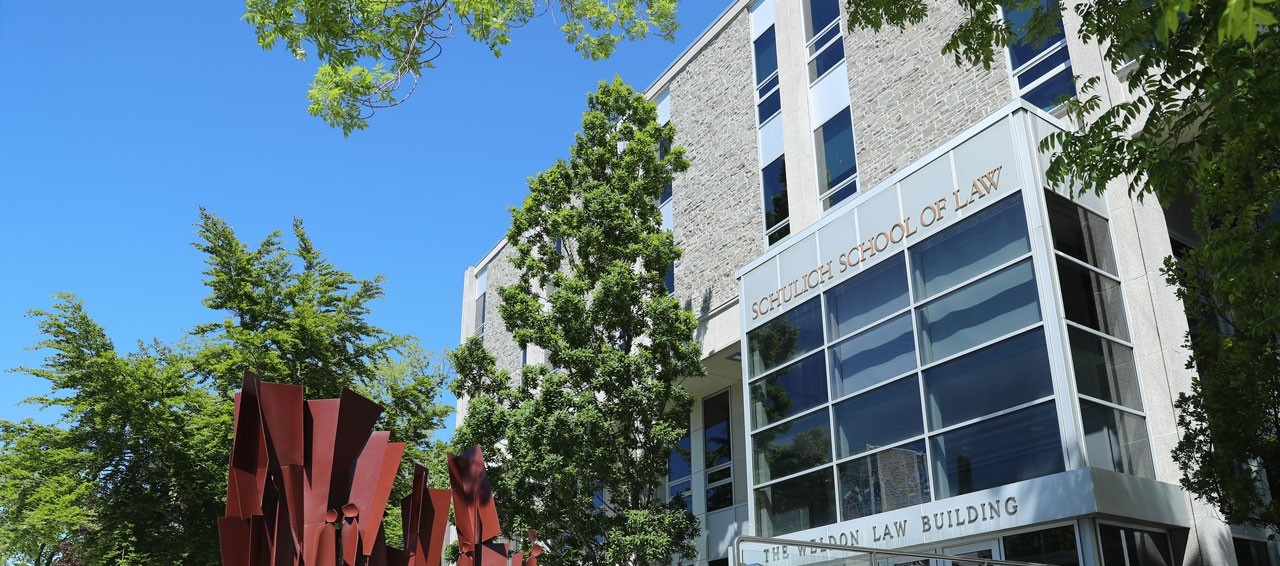

The Schulich School of Law is pleased to welcome Dr. Katie Pentney and Ajey Sangai as Schulich Fellows for the academic year.
Schulich Fellows contribute to teaching in the JD program, advancing their research, and participating in the intellectual life of the law school while developing their careers as scholars and educators.
Get to know Dr. Katie Pentney
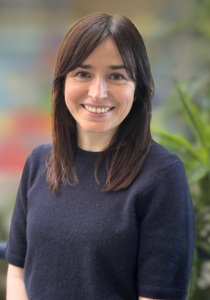
She is teaching Legal Research and Writing to first-year law students, as well as Comparative Constitutional Law, an upper-year seminar, in the winter term.
Tell us about your academic and legal background.
I have a DPhil (PhD) in Law from the University of Oxford, where my doctoral dissertation sought to answer whether government falsehoods about matters of public importance – like COVID-19, elections, migrants, and 2SLGBTQ+ persons – may infringe on the public’s right to be informed, potentially violating freedom of expression guarantees in the Canadian Charter, the US Bill of Rights, and the European Convention on Human Rights.
Before that, I earned an Advanced LLM in European and International Human Rights Law (summa cum laude) from Leiden University, a JD from Osgoode Hall Law School, and a BA (Hons) in Political Science from Carleton University.
I was called to the Bar of Ontario in 2013, and practised law in the public and private sectors for several years as a litigator at Lenczner Slaght LLP in Toronto and as legal counsel with the Information and Privacy Commission of Ontario. Prior to that, I worked in public policy with the Canadian Human Rights Commission and Women and Gender Equality Canada (formerly known as Status of Women Canada).
I’ve also worked internationally on climate change and freedom of expression cases before the European Court of Human Rights and the Inter-American Court of Human Rights, and on the rule of law and access to justice with International Development Law Organization in Myanmar.
What appealed to you about doing an academic teaching Fellowship at the Schulich School of Law?
I was attracted to the Schulich Fellowship for a few reasons. First, I was excited to learn from and work alongside Schulich Law’s faculty and to immerse myself in the academic community. Everyone has been so welcoming, helpful, and collegial in my short time here, and I know it will be a really enriching experience.
Second, I was drawn to Schulich Law’s commitment to the Weldon Tradition of unselfish public service – a value I hold dear and one that has played a central role in my life and work.
Finally, I really enjoy teaching and I see it as a great privilege to guide students as they develop the ability to think critically about constitutional law across different systems and to communicate effectively with diverse audiences. These are skills that will serve them well no matter what path they choose after law school.
What will you be working on while you are here?
I am developing my doctoral dissertation at Oxford into a monograph for publication, and I will be pursuing new research on the subject of ‘good governance’ in Canadian constitutional law, including how it is best understood and how it can be harnessed to safeguard democracy, the rule of law, and Charter rights in Canada. This is a natural continuation of my doctoral research and previous publications, moving from the impact of government speech on individual rights to governments’ broader role in Canadian constitutional governance. The topic feels particularly timely as governance challenges continue to emerge both within Canada and around the world. I’m also interested in contributing to the Law & Technology Institute, which aligns with my research interests in disinformation, hate speech, and artificial intelligence.
Get to know Ajey Sangai
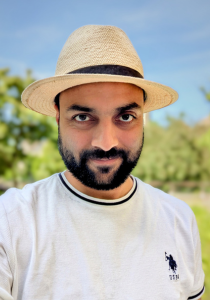 He is teaching Law of Contract and Judicial Decision-Making to first-year JD students.
Tell us about your academic and legal background.
I completed my undergraduate studies in a five-year integrated course in Law and Humanities in 2011 from NALSAR University of Law, Hyderabad, India. That was my first experience with an interdisciplinary study of law, where courses on law and poverty and jurisprudence influenced me to think more deeply about legal philosophy.
Soon after, I pursued my LLM in legal theory at the School of Law at New York University. My studies there gravitated towards legal and political philosophy; my master’s thesis critiqued Rawls’ theory of justice from a disability standpoint.
After completing my master's, I started teaching at Jindal Global University (JGU) in India. I briefly taught at NALSAR and worked with Vidhi Centre for Legal Policy, a policy think tank in Delhi, as team lead in their Right to Education initiative, before returning to JGU.
Over several years, I taught Property Law, Contract Law, Criminal Law and Jurisprudence. I also offered an elective course on Distributive Justice and Contract Theory. This experience helped me land on a question that I wanted to research for a more sustained time, which led me to McGill University to pursue a Doctor of Civil Law (DCL).
At McGill, I had the opportunity to not only sharpen my understanding of the Common Law, but to also get some exposure to the Civil Law. I was lucky to have an excellent community of scholars around me from whom I learnt a lot.
What appealed to you about doing an academic teaching Fellowship at the Schulich School of Law?
As I was looking towards life after doctoral studies, I realized that I missed teaching – but having been away from it, I thought it was best to gradually ease back into the role while simultaneously putting some parts of my thesis and the ideas that I had worked on over the last few years into the publication pipeline.
I was also inspired by my interactions with Dean Sarah Harding, in whom I saw an inspiring leader from which I have a lot to learn.
Finally, I had heard many good things about Halifax and had never visited Atlantic Canada, so I was quite excited at the possibility of moving here when I applied for the fellowship.
What will you be working on while you are here?
I am very much looking forward to actively participating in the research forums and general university life.
Recent News
- Brent Cotter Receives 2026 Weldon Award for Unselfish Public Service
- Professor Emeritus Wayne MacKay ft in "N.S. NDP removes Wozney as party whip over deleted social media post"
- Associate Professor Michael Karanicolas ft in "Social media ban for under‑16s consistent with Charter, government says"
- Professor Emeritus Wayne MacKay ft in "Albertans want more control over immigration and limits on newcomers' access to social services"
- Professor Emeritus Wayne MacKay ft in "Legal Column: What legal hurdles would separatists have to overcome to leave Canada?"
- 2026 Smith Shield Moot Results
- Assistant Professor Anthony Rosborough ft in "Why farmers are suddenly demanding tractors they can fix themselves"
- Professor Rob Currie ft in "Disgraced ex‑dean landed job at German university after fleeing Winnipeg"


