
Research
Royal Society honours Dal oceanographer for globally recognized climate research

One of Canada's highest academic honours goes to Dal oceanographer Dr. Katja Fennel for her globally recognized contributions to climate research. Read more.
Featured News

Monday, September 14, 2026
Enabling pharmacists to prescribe preventive Lyme disease medication shifted hundreds of routine cases out of emergency departments, easing pressure on the health-care system, shows a new Dalhousie study.

Tuesday, September 8, 2026
As it enters a new era, the MacEachen Institute of Public Policy and Governance is expanding its efforts to connect researchers, decision-makers, and communities on pressing national and regional issues.
Thursday, August 20, 2026
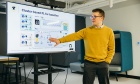
A new Dal-hosted research institute will connect researchers, students, partners and communities to advance AI research, learning and innovation rooted in Atlantic Canada.
Archives - Research
Thursday, March 7, 2019
Some of Dal's brightest and boldest graduate students are set to showcase their research in Dal's annual Three Minute Thesis competition. Meet some of the competitors and make plans to attend the finals on March 13.
Monday, March 4, 2019
The Dal-led Ocean Frontier Institute's Seed Fund provides awards ranging from $10-30,000 for innovative ocean research projects, supporting researchers studying everything from organic waste in fish farms to new low cost, low impact scallop-harvesting technology.
Friday, March 1, 2019
Dal researchers are raising funds to study the lakes of Sable Island National Park Reserve and better understand how the island's interconnected ecosystems are changing.
Tuesday, February 26, 2019
Marine geophysicist Hanchao Jian is helping us better understand the Earth of 150 million years ago by studying the rock off the coast of Nova Scotia today.
Friday, February 22, 2019
As more and more devices around the home get connected to the internet, security risks are rising. That's why Dal Engineering prof Colin O'Flynn started his company NewAE Technology — and why a partnership with the new Emera ideaHUB is set to take its product development to the next level.