

As plans take shape for one of the world's leading ocean action summits, organizers are turning to Nova Scotia's research and ocean expertise to help set the agenda.
Canada’s newly appointed Ocean Envoy, Madame Diana Fox Carney, visited Dalhousie earlier this month to gather ideas from researchers, policymakers and community leaders ahead of next year’s Our Ocean Conference.
Thousands of researchers, policymakers, political leaders, community advocates, and industry reps from more than 100 countries will gather in Halifax from May 9-11 next year for the conference, happening in Canada for the first time. Fox Carney is serving as chair of the 12th annual gathering.
"I'm excited for what it means for Halifax, for Atlantic Canada, for the whole of Canada," Fox Carney told the dozens of attendees during the session last Thursday at Dal.
I'm excited for what it means for Halifax, for Atlantic Canada, for the whole of Canada.
The ocean summit serves as a major international forum where governments and organizations “build consensus and momentum” around ocean governance, she said. Themes centre around marine protection, sustainable blue economy, climate action, maritime security, sustainable fisheries and marine pollution.
Nova Scotia’s leadership in ocean research and innovation — and Halifax’s role as conference host — made a visit to the province a logical first stop for Fox Carney in her consultations.
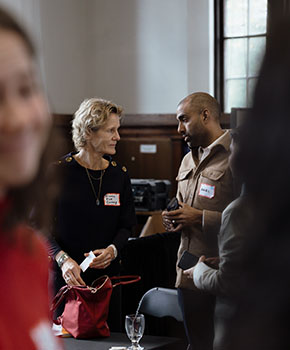
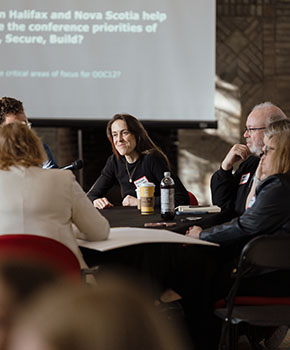
Dal served as a fitting backdrop for the brainstorming discussion given its deep strength in the field. The university houses a range of internationally renowned research institutes, groups, and facilities, including Ocean Frontier Institute, Ocean Tracking Network, MEOPAR, Aquatron, DeepSense, and others.
Fox Carney sought ideas from the group on how to engage the broader community, what the conference should focus on, and what legacy it should leave for Halifax, Nova Scotia and the ocean.
“I'm interested in your view about how to bring the whole city in to celebrate the ocean,” she said.
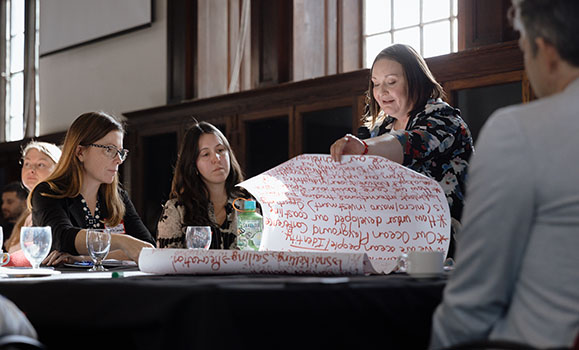
Participants generated a range of ideas on making the conference a citywide and provincewide experience, ways to showcase Canadian and Nova Scotian ocean leadership, creating lasting improvements or community benefits, elevating Indigenous and community voices, and educational opportunities to improve ocean literacy.
Fox Carney noted she also met with Indigenous chiefs and leaders during her trip to Nova Scotia, calling their input “essential” to the conference.
“I'm very happy to be part of a team that is welcoming the world to Halifax, helping to spotlight both ocean technologies and community-based solutions,” she said. “We are one of the world's great ocean nations.”


