

Gaining global influence as a researcher can be tough to pull off as a solo endeavour. Collaborations, particularly those that cross borders, are key.
Just ask the three Dal faculty members named to Clarivate’s Highly Cited Researchers list for the second year in row.
Drs. Noni MacDonald, Eric Oliver, and Tony Walker have all developed productive international collaborations over the years, tapping into others’ expertise to help complement their own.
For Drs. MacDonald and Walker, who also made 2023’s list, this year marks their third consecutive appearance in the report.
Clarivate released its 2025 list in November, with 6,868 researchers from more than 1,300 institutions in 60 countries and regions making the cut. Canada ranked sixth overall with 227 Highly Cited Researcher Award recipients, representing a 3.2 per cent global share. The list is compiled by analysts from Clarivate’s Institute for Scientific Information using data from the Web of Science citation index along with quantitative metrics and qualitative analysis.
Below, Dal’s Highly Cited Researchers reflect on an international collaboration that helped them raise their profile and increase their reach.
 Dr. Noni MacDonald
Professor Emeritus, Department of Pediatrics, Faculty of Medicine
“Vaccine hesitancy has gone from being an obscure topic with little attention being paid to it and very little research to becoming recognized as one of the World Health Organization’s (WHO) top 10 major global health threats in 2019. As the key author of the WHO Strategic Advisory Group of Experts on Immunization (SAGE) working group’s report on vaccine hesitancy in 2015, it’s not a surprise this and other major papers from the report have been cited so frequently. It’s a burgeoning field – vaccine hesitancy research went from representing much less than one per cent of all papers published in vaccinology in 2012 to now well over 10 per cent. We have recently written about political vaccine hesitancy, a previously little-known area that is now impacting the U.S.A. Research is needed to better understand how to more effectively combat this.”
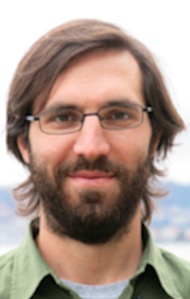 Dr. Eric Oliver
Associate Professor, Department of Oceanography, Faculty of Science
“I have been part of the Marine Heatwaves International Working Group since its inception in 2015. This group brings together international marine ecologists, physical oceanographers, climate scientists, and fisheries scientists to tackle the interdisciplinary problems surrounding marine heatwaves. The group is dedicated to understanding marine heatwaves on regional to global scales: their physical drivers, properties, predictability, and socio-ecological impacts. This group takes a multi-disciplinary approach with the ultimate goal of informing management and conservation.”
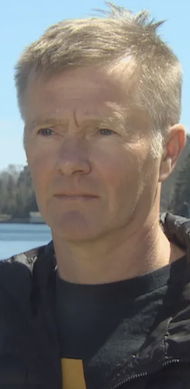 Dr. Tony Walker
Professor, School for Resource and Environmental Studies, Faculty of Science
“A paper I co-authored with 17 international researchers that was published in Science Advances revealed a direct 1:1 correlation between plastic production and plastic pollution - a one per cent increase in plastic production resulted in a one per cent increase in plastic pollution in the environment. Our study found that 56 global companies were responsible for more than half of all branded plastic pollution and was the first quantification of the global relationship between production and pollution. So far, this paper has appeared in 244 news stories from 161 outlets. As world leaders continue to negotiate a Global Plastics Treaty, this impactful research will support evidence-based decision making to inform a high-ambition legally binding treaty that includes provisions on corporate accountability."