

More than 4,000 new undergraduate students have arrived at Dalhousie this fall, including a significant number who will be living off campus and adjusting to university life from communities around Halifax and Truro.
A new off-campus student support and mentorship program aims to help these off-campus undergrads build community and access resources beyond residence.
“It’s tougher for students who are off campus to connect,” says Jack Killeen, associate director of student experience with Dal’s Student Affairs team, who says he felt this struggle in the past personally when he was a transfer student at Dal.
It’s tougher for students who are off campus to connect.
The new program was designed by Dal’s Student Affairs team to help bridge this gap.
“Sense of belonging is a critical factor that contributes to student success, enabling students to thrive personally and academically, while fully engaging in their Dalhousie experience,” says Rick Ezekiel, Dal’s vice-provost, student affairs.
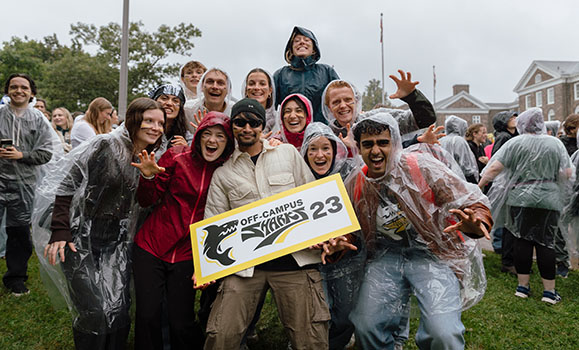
A group of off-campus students takes part in a pep rally last weekend. (Alexa Cude photo)
Building connection beyond campus
The initiative, which swings into gear during this year’s Orientation Week (O-Week), operates through three main components: mentorship, student support, and programming.
First-year off-campus students in Halifax are automatically enrolled in the group’s mentorship program and matched with an upper-year mentor before starting their classes, creating a built-in sounding board as they navigate their transition to university.
International student Carolina Lenz, a fifth-year psychology major and mentor with the group recalls having to build connections and navigate the city without much support.
“You have no support on where to buy groceries or catch the bus,” she says. “I can tell them, “This is where we do this. These are the events. Here is where you meet people,” and even help them figure out transit.”

The group has also created a dedicated space located on the second floor of the Student Union Building (SUB) to serve off-campus students during O-Week. The lounge offers a relaxing spot where they can check their bags, relax and grab a snack between activities, meet other students organically, and enjoy all that O-week has to offer — similar to the experience students nearby in residence get.
Related reading — Starting with hello: Dal's newest students build community together
Sara Bregaw, a second-year diagnostic medical ultrasound student and mentor, participated in Together at Dal — a past student-orientation support program — during her first year.
“While it had the people, it didn’t have the physical space,” she says. “We never had a common place with candy, food, goodies, or a lounge.”
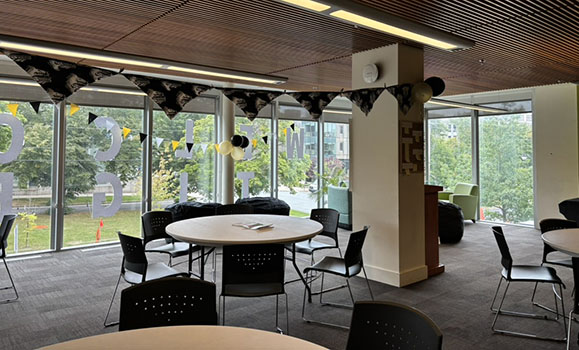
A place for off-campus students to relax, check their bags, and unwind while on campus.
The program continues beyond O-Week, too, with ctivities running throughout the academic year.
The goal, says Sophie Berrigan, the off-campus student experience coordinator, is to give off-campus students an experience like what students in residence get: a sense of community, a support group, and drop-in events.
A mascot — the off-campus shark, seen below at Tiger Welcome Day on Saturday — also provides a sense of identity.
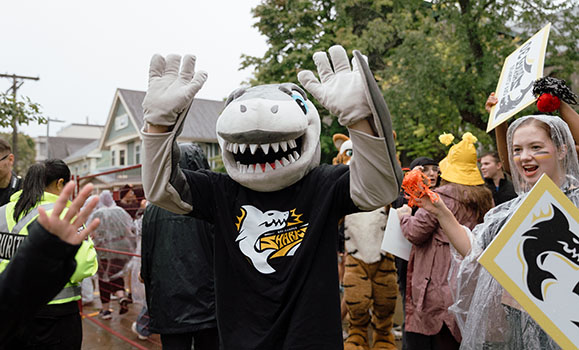
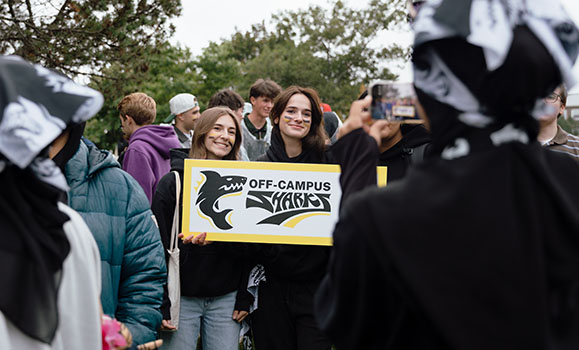
(Alexa Cude photos)
Made for students, by students
While the university is supporting the new program, its structure is intentionally student-led.
“We know that peer-delivered services lead to more responsive programming that resonates with students, and that students are more likely to reach out to and engage with their peers for support,” explains Ezekiel. “That’s why we are intentionally expanding peer-delivered programs and services across Dalhousie, and our new off-campus support group is a great example of that.
It’s a distinction that matters to Berrigan.
“Students know what they need and how to improve it,” she says.
Rather than building another program for students, the support team is designed to build something with them, giving off-campus students an active role in shaping the resources, programming and community they want and need.
Having upper-year students volunteer and support the initiative has also helped get the council off the ground more quickly, he adds.
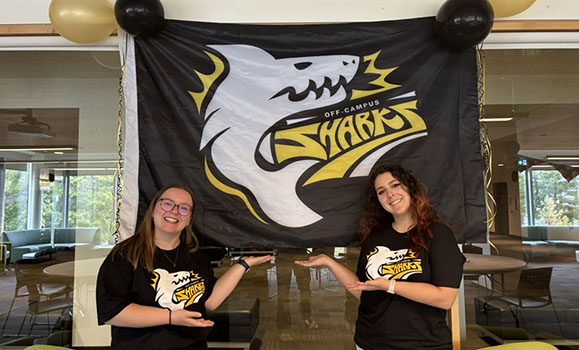
To mirror residence mascots, Dal has even created an off-campus mascot for the new group: the Off-Campus Sharks.
Killeen says the off-campus team’s long-term success will likely come down to building a culture students want to be a part of – and return to, referring to students like Lenz who joined the mentor team to give back what was given to them.
“The better the experience that these students have will create a culture that feeds itself,” he says. “Students will want to come back and help support the incoming class as mentors.”
University is so much more than just the GPA you have or the degree you leave with.
The program has led to significant increases in off-campus student engagement programming during this past O-week, with hundreds of students engaging with their mentors and programming in its launch year.
For Bregaw, one of the mentors, the initiative speaks to a deeper aspect of the student experience – one too often overlooked. “University is so much more than just the GPA you have or the degree you leave with,” she says. “The people you meet, the memories you make, the legacy you leave is so important and it's important to put time into those things.”