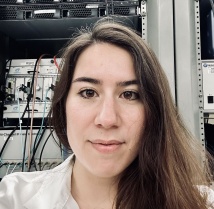
Melissa Schwab

Assistant Professor

MelissaSchwab


Email: melissa.schwab@dal.ca
Mailing Address: 
Dalhousie University
6287 Alumni Cres
PO BOX 15000
Halifax NS B3H 4R2
CANADA
Office:
Life Sciences Centre
4th floor, Ocean Wing
Rm. 4613
 

Education

D.Sc. (Biogeochemistry), ETH Zurich, 2021
M.Sc. (Earth Sciences), ETH Zurich, 2015
B.Sc. (Earth Sciences), Ruprecht Karl University of Heidelberg, 2013

Teaching

ERTH 4601: Advanced Biogeochemical Cycles

Research

  • Riverine export of organic carbon from continental reservoirs to the ocean.
  • Understanding exchange processes between particulate, dissolved, and gaseous organic carbon pools.
  • Monitoring changes in carbon cycling in response to climate warming.
  • Tracking the fate of organic carbon in the pedosphere and hydrosphere using compound-specific biomarker analyses.
  • Bridging the gap between local and regional carbon cycles using ground truthing and remote sensing.
  • Provenance analysis using radiogenic geochemistry.
  • Radiocarbon dating (bulk, compound-specific).
  • Geospatial modeling and machine learning frameworks.

Research opportunities:

Graduate Opportunities in Riverine Carbon Cycling

Join an NSERC-funded research program at Dalhousie University investigating how organic carbon is transported from land to the ocean across Canada’s major river systems: the Mackenzie, Athabasca, and Fraser. This research sits at the intersection of biogeochemistry, isotope geochemistry, and computational modeling, addressing critical uncertainties in carbon cycling under rapid climate change.

Research Focus

We study how organic carbon is mobilized, transported, and stored as it moves from land to ocean across Arctic, subarctic, and temperate river systems. Our work integrates depth-resolved river sampling, multi-proxy geochemical analyses, and advanced computational modeling to resolve physical and biogeochemical processes that shape carbon fluxes. By quantifying the behavior and fate of coarse particulate organic carbon and linking it to hydrology, channel morphology, ecosystems, and climate, we address major gaps in current carbon budgets and generate insights that strengthen carbon cycle models and support environmental management.

Open positions

M.Sc. Projects

Carbon transport & deposition
Field-based investigation of organic carbon settling along the Mackenzie River and delta using ADCP surveys and sediment geochemistry.

Particle hydrodynamics & composition
Examine how plant fragment properties (density, morphology, taxonomy) control transport and deposition under varying flow conditions.

Ph.D. Projects

Physical drivers of carbon flux
Quantify controls on coarse particulate carbon export using Rouse-based theory and machine learning across diverse hydrological regimes.

Isotope tracing & source apportionment
Apply radiocarbon, stable isotopes, and lipid biomarkers within a Bayesian framework to resolve modern, aged, and fossil carbon sources.

Global platform & modeling (C-RIVER)
Develop an open-access Python platform and lead the first global assessment of coarse particulate organic carbon fluxes.

What You Will Gain

You will develop expertise in:

  • River field methods and hydrodynamic surveys
  • Radiocarbon and stable isotope geochemistry
  • Lipid biomarker analysis
  • Machine learning and geospatial modeling
  • Bayesian mixing and process-based modeling

You will contribute to research that informs carbon budgets, climate models, and environmental management.

Qualifications

Applicants should have a strong background in Earth science, environmental science, hydrology, geochemistry, or related fields.

  • M.Sc. applicants: Honours degree or equivalent
  • Ph.D. applicants: M.Sc. preferred

A minimum A standing (≥ 4.0/4.3 GPA or equivalent) is expected. Experience with analytical geochemistry (e.g., lipid extraction, gas chromatography, isotope mass spectrometry) and/or quantitative methods (statistics, modeling, programming) is highly advantageous. Strong written and verbal communication skills in English are required.

Funding

The funding package covers tuition, medical insurance, fees, and a minimum guaranteed stipend for living expenses. TA earnings are in addition to the stipend. Students are expected to apply for competitive external scholarships.

How to Apply

If you are interested in joining the team, please send your curriculum vitae, academic transcripts, and a brief statement of research interests to: melissa.schwab@dal.ca
Applications are reviewed on a rolling basis for Fall 2026 and Spring/Summer 2027 admissions until positions are filled.

Undergraduate Opportunities

Summer internships and honours research positions are available for motivated students interested in carbon cycle science, biogeochemistry, and environmental data analysis.