

The International Science Council has named Dalhousie researcher Dr. Rita Orji a Fellow, the highest honour the elite body confers on individual scientists.
While the computer scientist has accumulated a remarkable stack of honours and awards over the course of close to a decade at Dal, she says the latest distinction lands even more profoundly as it recognizes contributions to advancing science as a global public good.
“I grew up in a small community in Nigeria where access to science and technology was very limited. So, the idea that science should serve everyone, not just the privileged few, is deeply personal to me,” says Dr. Orji, who was selected from candidates representing nearly 30 countries.
The idea that science should serve everyone, not just the privileged few, is deeply personal to me.
Fellows are also chosen for their high-level leadership in science-policy integration and commitment to shaping global scientific cooperation.
At Dal, Dr. Orji has established a Canada Foundation for Innovation-funded research lab with collaborations across five continents and grown an internationally recognized research enterprise with a portfolio of projects worth $45 million.
“The growth has been remarkable and above what I could have ever imagined, both in scale and the kind of problems we are solving or we've solved,” she says.
People at the centre of AI
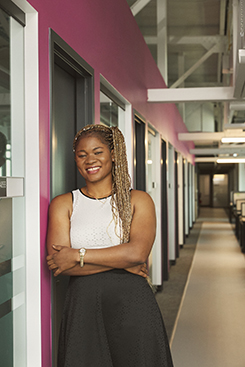 Earlier projects centred on how tech can influence human behaviours in positive ways through digital health interventions via apps, games, and other tools. As AI has grown more powerful, her research has shifted to explore new questions about how to ensure the latest tech is designed responsibly with human needs in mind.
Being named a Fellow reflects just how pressing these questions are, she says.
"It reinforces how important it is to put people at the centre of technological innovation, especially now. We all know that AI is advancing at an extraordinary pace. The question is no longer just what can AI do, right? But we're now asking what should AI do? Who benefits? Who might be harmed? How do we ensure that people remain in control?"
Dr. Orji says she’s proud of the research program she’s built at Dal, the competitive funding she has attracted, and the international recognition she has received through publications and awards.
Building the next generation
Most of all, though, she says it's the impact made through people that's most meaningful as it continues long after research projects end. She has mentored about 200 students and researchers from more than 20 countries, with many of her trainees going on to hold faculty positions in North America, the UK, Africa, and the Middle East.
“Seeing these trainees develop confidence, complete their degrees and go on to lead their own research group is an incredibly fulfilling moment and feeling for me,” she says.
Dr. Orji was nominated as a Fellow jointly by the African Academy of Science and the Royal Society of Canada's College of New Scholars, Artists and Scientists. She says the dual nomination matches the nature of the research she does “bridging the gap between global north and south.”
“For me, this recognition is both an honour and a responsibility,” she says. “It affirms the kind of science we are doing at Dalhousie. Research that is rigorous, internationally relevant and committed to improving lives and society at large.”
Research shaping global conversations
Dr. Orji’s expansive expertise and scientific influence have brought other organizations, including the United Nations, to knock on her door. She chaired a working group on human rights, information, and democracy for the global body’s Independent International Scientific Panel on AI, helping bring research evidence into global discussions on how the technology should be developed and governed.
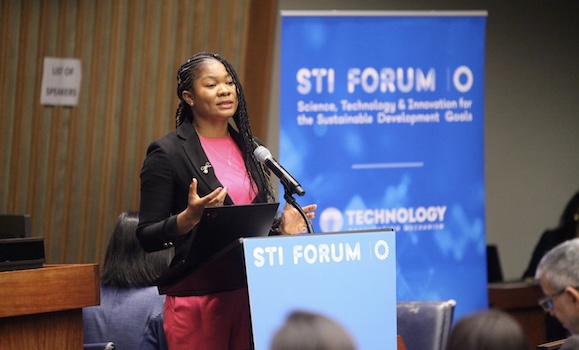
Closer to home, one of Dr. Orji's new projects centres specifically on using an adaptive persuasive AI system to help immigrant communities in Canada build resilience against online disinformation.
“We have invested in training people to have enough skill to not fall prey to this, to distinguish between real and fake," she says. "When you migrate to a new country, because of culture and language barriers and other differences, you might not be able to tell real or fake apart."
This will be one of the defining research challenges of our time.
She says ensuring AI protects and strengthens human agency rather than undermining will be her focus for some time to come.
“I think this will be one of the defining research challenges of our time,” she says. “I am proud that me and my lab are contributing to that global challenge here from Dalhousie.”