

Public health physicians in the Maritimes now have an official place to grow, collaborate and lead — right here at Dalhousie.
The launch of the new Division of Public Health and Preventive Medicine (PHPM), shaped by long-term planning and the hard-earned lessons of the COVID-19 pandemic, is set to transform how the region trains, supports and empowers public health leaders.
Led by interim division head, Dr. Gaynor Watson-Creed, the new division aims to bring public health physicians into the Dalhousie environment.
“We haven’t had an academic home for public health physicians in the Maritime provinces, even though many are interested in academic work and teaching,” says Dr. Watson-Creed. “Students from across the country still come here for public health experiences, so we wanted to support that interest by creating the right environment.”
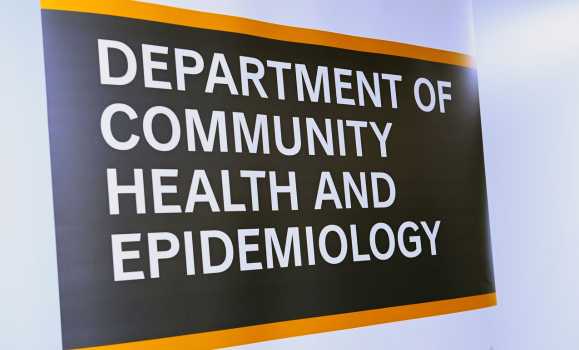
Developed in collaboration with Nova Scotia Health (NS Health), the new division is located within Dalhousie’s Department of Community Health and Epidemiology and will offer opportunities to enhance public health expertise and capacity in Nova Scotia and the Maritimes.
It gives public health physicians a true academic home.
“The new Division of Public Health and Preventive Medicine is transformational for Dalhousie Medicine and the broader Maritime region,” says Dr. David Anderson, dean of the Faculty of Medicine. “It gives public health physicians a true academic home, which highlights the important work they do to build healthier communities, and deepens our support for learners, faculty and researchers who are passionate about population health.”
Lessons from the pandemic
In the Maritimes, PHPM specialist physicians may work in a variety of settings. Some are employed as Medical Officers of Health at the regional, provincial or federal level, while others work across clinical, academic and research settings to advance health equity and improve outcomes for diverse communities.
The COVID-19 pandemic thrust public health into the spotlight, making the work of Nova Scotia’s Chief Medical Officer of Health, Dr. Robert Strang, and his team a daily fixture for residents across the province. As the government responded to rapidly evolving challenges, the need for robust training, succession planning and academic engagement among public health physicians became increasingly clear.
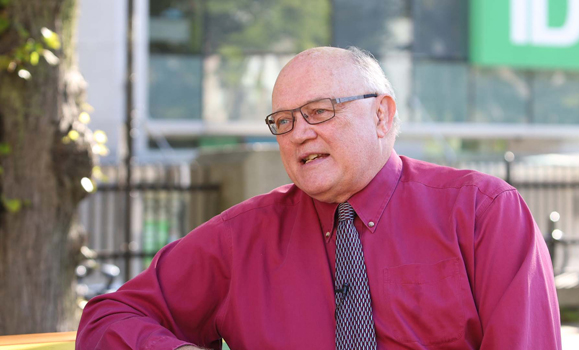
Dr. Robert Strang.
This heightened awareness not only underscored gaps in the system but also sparked new interest among students and practitioners in pursuing clinical and academic roles within public health.
“There’s been a longstanding lack of awareness of public health and preventive medicine as a recognized specialty,” says Dr. Strang. “Having this division brings a focus on prevention to leadership tables and creates opportunities to rebalance investments in care and prevention. Prevention is multi-layered and complex, and working in this space requires a specialized skill set.”
A new residency in public health and preventative medicine
A cornerstone of the new division will be the launch of a dedicated residency program. Though a recognized Royal College of Physicians and Surgeons of Canada specialty, until now, many public health physicians in the region have held academic appointments in family medicine, because of lack of opportunity in public health. The new division will bring these practitioners together, providing a robust academic environment and diverse training experiences for learners across Atlantic Canada. Working closely with the Royal College to align with new national competencies, the division would anticipate its first residency intake by 2028.
Having residents energizes the public health system, so we're really looking forward to that opportunity.
“It’s so exciting to think about hosting that content here,” says Dr. Watson-Creed. “Having residents energizes the public health system, so we're really looking forward to that opportunity.”
By embedding resident trainees in the region’s public health infrastructure, Dalhousie aims to foster a new generation of leaders equipped to advance health equity, drive research and respond to emerging public health needs.
Community-driven research
A central mandate of Dalhousie’s new division is to advance research and academic growth, not just for public health physicians, but for learners at every stage of training. By integrating public health expertise within the Department of Community Health and Epidemiology, the division creates new pathways for collaboration, innovation and hands-on learning.
“Having an academic home like this brings agencies like CIHR directly into focus for those practitioners,” says Dr. Watson-Creed. “The folks who join the division will be able to take advantage of that, which means that the ideas they’ve been holding on to, or the ideas fed to them by community around research that’s needed now, actually have some chance of growing and having life breathed into them.”
The division will coordinate research efforts with the Faculty of Medicine and health authorities, focusing on areas relevant to Nova Scotia’s population health needs. This includes supporting community-driven research, advancing health equity and addressing the structural determinants of health. By connecting public health physicians with academic resources and funding opportunities, the division aims to increase research activity and impact across the region.
Real-world public health experience
The division will raise the profile of public health as a specialty, attracting learners for various projects — graduate studies, undergraduate electives and research projects, and more. Prospective faculty are eager to contribute to teaching at all levels, ensuring that learners have access to engaged educators and real-world public health experiences.
“Dalhousie is an amazing place to learn and grow,” says Dr. Watson-Creed. “Learners will have new opportunities to engage with public and population health, and faculty will be able to develop the academic side of their work. The excitement around this is real.”