

Aligned with International Women’s Day, a novel gathering of women in leadership roles across government and academia took place in Ottawa earlier this month.
The convening forces behind the event, titled “Democracy Needs Us,” were Françoise Baylis and Kim Brooks — presidents, respectively, of the Royal Society of Canada and Dalhousie University.
Their goal: create space for timely and important conversation about the precarious moment in which democratic society finds itself in 2026, with women who are navigating that moment in their respective settings.
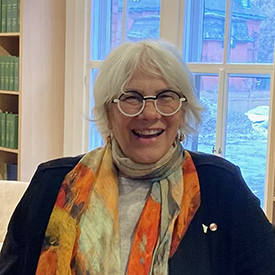 “Academia and government are two interconnected realms in the same ecosphere — to have a well-functioning democracy, we need a well-educated public and engaged politicians,” says Dr. Baylis, who in addition to her leadership of the RSC is a world-leading bioethicist and professor emerita at Dalhousie University.
“Democracy needs people who are interested in, and willing to listen to, ideas and opine on them in some way, shape, or form — at a minimum by casting a vote,” she adds. “It also needs MPs and Senators who are actively participating in the democratic process as well as people engaged in knowledge production who can provide all parties with best available evidence.
The invited attendees at the event included university presidents along with MPs and Canadian senators, all women. The table topics they discussed throughout the full-day session ranged from democratic pressure points to strategies for rebuilding public trust in knowledge systems. Operated in Chatham House rules (which allows individuals to share general insights from the conversation but without attribution), it was a discussion that, according to President Brooks, was thoughtful, candid, and willing to wrestle with difficult questions.
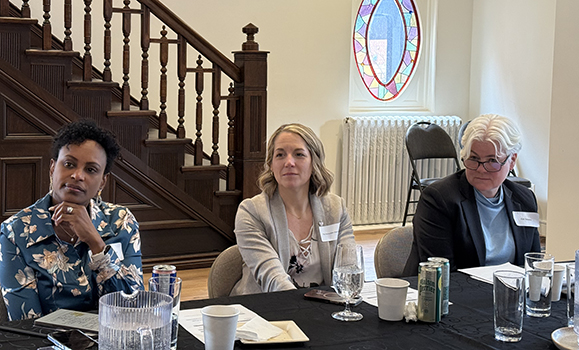
“One of the strongest takeaways for me was the sense that the challenge we’re facing is structural and cultural,” says President Brooks. “Democracy depends on a set of knowledge institutions that help societies work through complexity together, and there was real clarity in the room that those institutions are under strain.
“I was also struck by how much convergence there was across participants from different sectors. There was a shared recognition that producing knowledge is no longer enough and that we need to engage more directly with the public, with governments, and with each other as conveners of dialogue.”
Dr. Baylis agrees, noting how the event aligns with her goals for the RSC and its mission to promote and mobilize Canada’s leading researchers and scholars.
“I want to create a space where if you’re a politician or policy maker and you’re interested in the best available evidence, we can make that connection for you. I believe the knowledge that’s created in our universities belongs to Canadians. Everything we produce is for the betterment of Canadians and society writ large. For me, this event is part of that — how do we get better conduits to get knowledge to the people who can use it effectively?”
Dr. Baylis says she hopes to host another edition of the event for International Women’s Day next year as well. In the meantime, we reached out to a few event attendees for additional insights they took from the conversation.
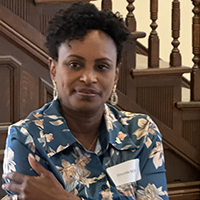 “It was a generative and inspiring conversation with leaders from government, academia, and in the not-for-profit sector. I observed that we shared common views that democracy has served people who approach ideas from different lived experiences. We also noted that while the tenants of democracy remain consistent, algorithmic media platforms and an intensification of focus on who gets to participate in knowledge production are necessitating a refinement to how we enact democracy. While I worry about our collective ability to deliberate across differences — typified by cancel culture — I am hopeful that universities remain places where difficult conversations and civil discourse can still take place. That is worth fighting for.” — Rhonda McEwen, President, Victoria University in the University of Toronto
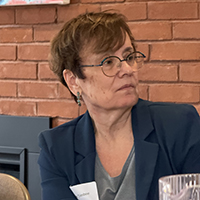 “Central to a healthy democracy is that citizens are informed and engaged in decision making. What does it mean to be informed in a context of widespread misinformation and disinformation? Who do we trust as experts? How do we grapple with political polarization? Where do we feel safe to test, debate, and convene challenging conversations? Universities are beacons of hope in uncertain times. They are places that spark curiosity, push boundaries, strengthen community, and develop innovative solutions to the world's most complex problems. Broad access to higher education is key to a strong and vibrant democracy.” — Dr. Annette Trimbee, President, MacEwan University
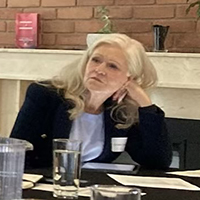 “By coming together in such a congenial and productive manner to discuss ways we might enhance democracy, build trust, teach effective advocacy and inspire critical thinking, it gives me hope. Conversations like this remind me that many people share the same concerns — and the same commitment to strengthening our democratic culture. By continuing to work together, we can foster more respectful dialogue and empower citizens to participate thoughtfully and confidently in public life.” — Senator Dawn Arnold