

Fashion Revival was more than an ordinary fashion show – it was a celebration of ethical fashion and a rejection of “fast fashion” consumerism.
The members of student society Dal Students for Ethical Fashion (DSEF) had long dreamed about putting on a fashion show. After months of planning, rehearsals and fundraising, they put it all on the runway before a packed, energetic auditorium in the Student Union Building last Wednesday (March 11).
DSEF is committed to raising awareness about fast fashion — a business model of producing large volumes of cheap clothing using low-quality, environmentally harmful materials, exploiting workers and promoting short-lived trends.
The society organizes events like clothing swaps and vintage markets to encourage a more sustainable approach to fashion.
Rosie MacMillan is a fourth-year Sustainability and Management student and is one of the three presidents of DSEF. She hoped that the show would educate audience members and encourage reflection on fashion and its life cycle.
“We wanted to start introducing more events that were stepping out of the boundaries of consumerism and reflecting on the fashion we consume,” says Rosie.
The fashion show was split into six scenes, each representing a stage of the life cycle of a piece of clothing. Throughout, the participants showcased clothing from local ethical, pre-loved, and vintage vendors.
Before each scene, the red curtain closed and Gemma, Arden and Cass, the fashion show directors, gave a speech about the message behind each scene.
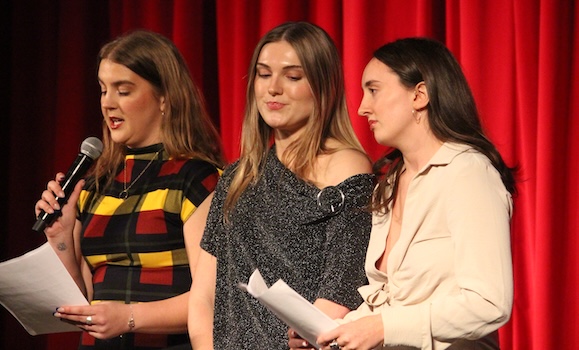 Photo Gemma, Arden and Cass, fashion show directors.
The show started with a scene showcasing the raw materials that are woven into the clothing that we wear. It was filled with simple, breezy linen outfits sourced from Better Day, an East Coast slow fashion brand that repurposes textile waste and prioritizes sustainable fabrics.
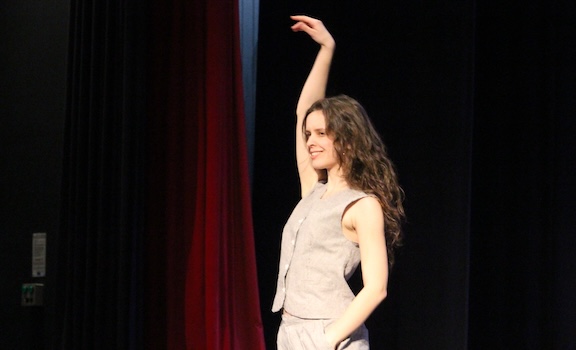 Photo A model poses for the "natural beginnings" scene in a linen outfit designed by Better Day.
Rosie hopes that the audience will come away with more appreciation for their clothes and what went into them.
“There’s so much time and materials and hands put into one garment that it deserves more than a week-long trend,” she says.
The show continued with scenes surrounding the formation of textiles and fashion design creation, showcasing looks from Stoked Duds, a Halifax Avant Garde fashion house specializing in custom tailoring.
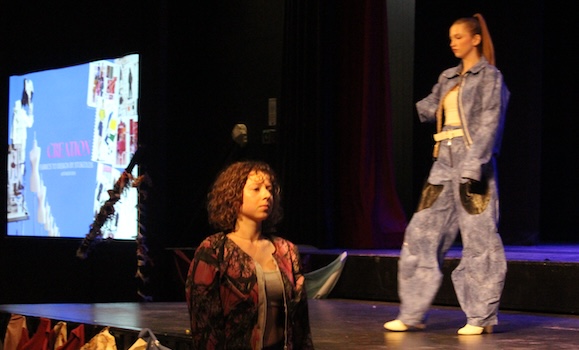 Photo Models pose for the “creation” scene.
Gemma Simpson, a fourth-year Commerce student and one of the fashion show directors, is grateful for the enthusiasm and commitment of the vendors that lent their pieces for the show.
“The thought that they could be in a fashion show was super exciting for them, to show off their amazing pieces,” says Gemma.
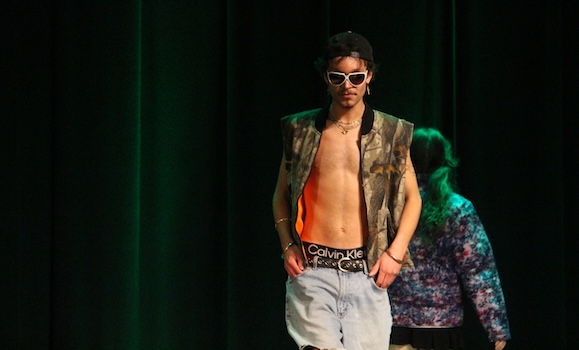 Photo A model poses for the “studio to street” scene.
The show then moved from the studio to the street, a scene dominated by ‘90s streetwear from Presto Shift to Thrift, and into fashion in action, where refined vintage outerwear looks from secondhand women's wear vendor Sadie pre-loved were showcased.
The final scene was the namesake of the show: Fashion Revival, a scene that revived looks featured in previous scenes. The audience cheered even louder as they saw their favorite outfits brought back for a second strut across the runway.
“We are hoping to have this full-circle moment where it's showing this new model for fashion: a circular economy, reused, closed-loop supply chain where everything being brought into production has already had a life,” says Rosie.
After the final scene, the curtain opened again and all the 30 models, along with the fashion show directors and other executive members, got up on stage and danced, met with a roar of applause from the audience.
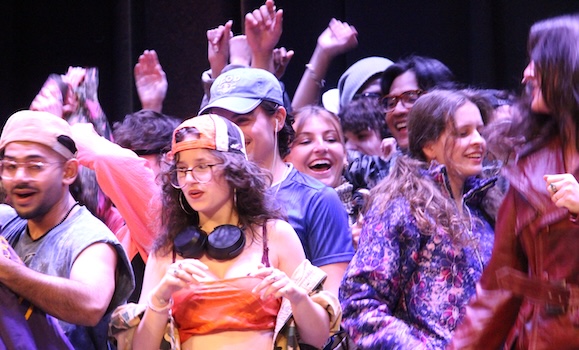
Fashion show models, directors and DSEF executive members dance together at the end of the show.
Gemma was thrilled with how smoothly the show ran, thanks to the dedication and enthusiasm of the backstage team. “The energy backstage is such a good tell of how well the show really went because everyone was just so excited and so proud to be a part of something,” she says, noting that, for many of the Dal and King's students participating, this was their first time ever modeling.
“It wasn’t a requirement to be a professional model, and I think that’s what was so exciting; they got to do something they never got to do before.”
Modeling for the show was much more than strutting down the runway: models auditioned for the show in January, rehearsed every week for a month prior to the show, attended vendor fittings and a dress rehearsal.
Gemma and Rosie hope that the show inspires people to slow down their consumption and fall in love with pre-loved, timeless pieces.
“I hope people walk away thinking that fashion is so cool, and fashion that has had a full life and is now given a new life is even cooler than fashion that comes off of a rack”, says Rosie.