

The Snapshot
The new MicroResearch Institute at Dalhousie is a proven, community‑driven research model that empowers local people—doctors, nurses, midwives, community health workers, teachers, police and students—to investigate and solve the health and public safety challenges they understand better than anyone.
The Challenge: Turning urgency and insight into action
In 2010, in small Ugandan villages, the first days of life of some newborns were shaped as much by tradition as by medicine. Relatives and community members shared advice across generations. Substances believed to protect the child, herbs, ash, even soil, were carefully applied to the healing umbilical cord. These acts were done with care, part of longstanding cultural practices. No one understood that some of these traditions might be causing harm.
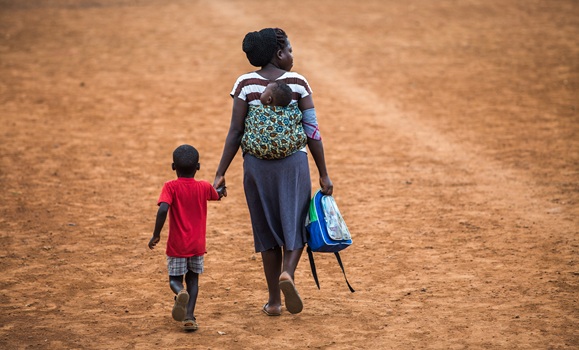
An Ugandan mother with her baby on back, has taken her son from school and is going home. (Photo: Stock)
That same year, Uganda recorded more than 39,000 neonatal deaths. Many were linked to infections that should have been preventable. Inside the Ministry of Health, public health physician and child health specialist, Dr. Isha Grant, faced this troubling reality. The data made clear that newborns were dying at alarming rates. What it could not show was why.
Almost a thousand kilometers away, educators at the Kenya Medical Training College were facing a different but equally perplexing problem. Their students, future health professionals who understood infectious disease better than most, were not completing their own hepatitis B vaccinations. The science was clear, but the behaviours did not follow.
In both cases, willing leaders had identified problems but struggled to build the research strategy they needed to understand and tackle them.
It’s a common occurrence around the world, from Uganda and Kenya to Nova Scotia and Nunavut. People face serious health problems without access to the tools or training required to study and solve them.
The problem is that research has often been done to communities rather than done by the communities, explains Drs. Noni MacDonald and Robert (Bob) Bortolussi, co-directors and co-founders of Dalhousie’s MicroResearch institute. It’s a situation they say leaves communities with strategies that fail to reflect local realities and without the skills to take on their own challenges in the future.
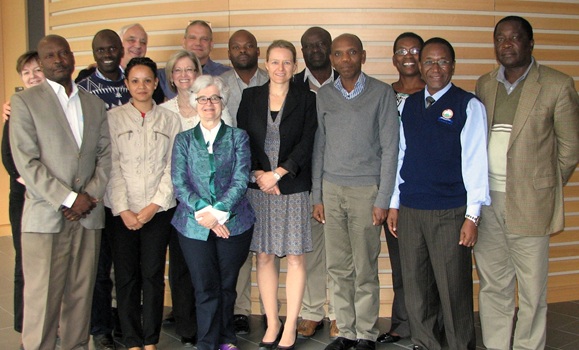
Researchers united to transform research into community-driven solutions.
“Well‑intentioned outsiders bring in solutions that don’t fit the culture, context, or available resources,” she explains. “Too many times people come from away and tell communities how to fix their problems—and the fixes don’t fit.”
“The pattern is costly, wastes resources, and overlooks local expertise,” says Dr. MacDonald, noting that without community‑rooted research capacity, issues persist or go unaddressed altogether.
The Solution: Flipping the research model
Since its inception in 2008, MicroResearch has been flipping the traditional research model on its head. Instead of parachuting in ideas, it builds local research capacity so communities can investigate their own health challenges and design research to find solutions that work.
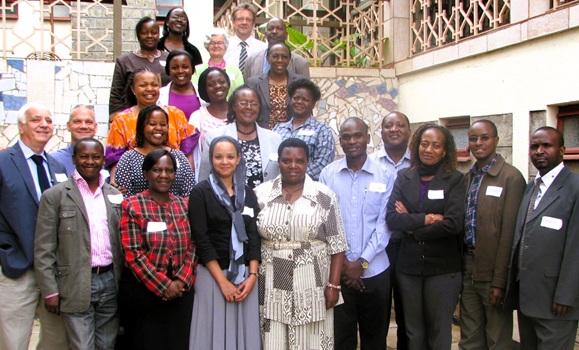
The MicroResearch Institute participated at a public forum in Nairobi, 2013.
The program’s intensive workshops teach through hands‑on, experiential learning. Each team works collaboratively, draws on diverse expertise, and receives mentorship from Dalhousie researchers and international volunteers.
MicroResearch has been a part of the IWK Health Centre for several years with its focus on women’s and children’s health. But it quickly became evident to the founders that some urgent community needs extend beyond those of mothers and children.
By recently becoming an official Dalhousie Institute, MicroResearch now has another home for support that aligns with their broader mission of community impact, interdisciplinary collaboration, and global reach. This formal structure strengthens the program’s partnerships across faculties, supports research hubs in Canada and abroad, and ensures more communities gain access to training, mentorship, and micro‑grants.
The Work: Small studies, life-changing results
MicroResearch began precisely where the stories in Uganda and Kenya stalled, with workshops that positioned local teams to ask their own questions and learn how to answer them.
During her participation in a MicroResearch workshop in Kampala, Dr. Isha Grant, and her team set out to understand why babies were dying in the first month of life in rural villages.
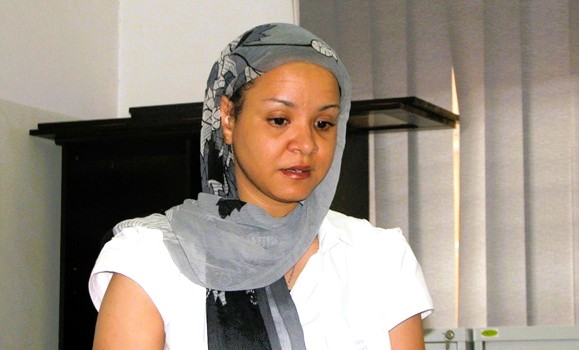
Dr. Isha Grant.
“We knew newborns were dying at alarming rates, but we needed to understand what was really happening in communities—not just what hospital data could tell us,” says Grant.
Acting as principal investigator, Grant and her team determined that long‑standing cultural practices around umbilical cord care were contributing to dangerously high rates of newborn sepsis. With mentorship through MicroResearch, the team published their findings and presented them to Uganda’s Ministry of Health. The evidence helped inform national guideline changes and supported the establishment of a not‑for‑profit initiative to produce chlorhexidine gel (UmbiGel), a topical antiseptic now included in maternal delivery kits.
“The results of our study supported knowledge translation and policy and guideline development regarding safe cord care practices,” says Grant. “The MicroResearch program gave me the skills I needed to work with a multidisciplinary team to improve health outcomes here in Uganda.”
In a follow‑up study, the rate of umbilical‑cord sepsis dropped from over 40 per cent to seven per cent, says Dr. MacDonald. “This is saving thousands and thousands of lives, and it all started with a modest investment—less than $5000 for the two pivotal studies that drove this change.”
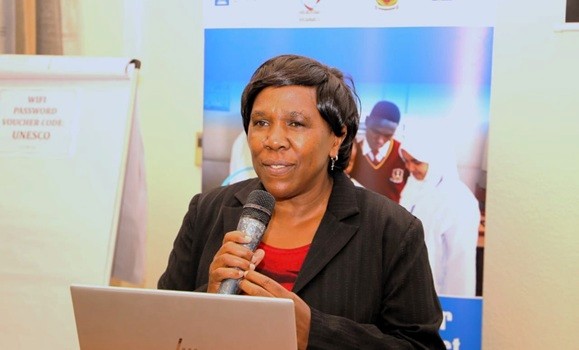
Dr. Leah Bii.
In Kenya, MicroResearch participant, Leah Bii’s, research team studied hepatitis B vaccination uptake among healthcare students at the Kenya Medical Training College—a study later published in BMC Public Health in 2020. The research identified barriers such as supply shortages, storage limitations, and operational inconsistencies. The findings have since guided improvements to how the college implements its vaccination program.
“MicroResearch helped us ask the right questions—and find answers we could act on,” says Bii.
The Impact: Strength from within
As part of the MicroResearch program, Dalhousie faculty, students, and volunteers work alongside teams as coaches, reviewers, and mentors. Workshops run in Africa and across Canada, including Indigenous and northern communities. Many regions—including Nunavut, Manitoulin Island, and rural Nova Scotia—have recently requested MicroResearch programming to help address local health issues on their own terms.
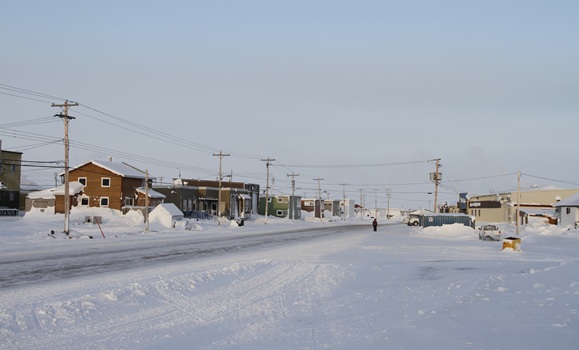
Indigenous community in Nunavut (Photo: Stock)
Dr. Bortolussi says, “If you can harness the energy and enthusiasm of people at the local site, things can get done that you couldn’t imagine from afar.”
More than 80 per cent of MicroResearch workshop graduates continue conducting research up to five years later—far surpassing most traditional graduate programs. As one participant put it, “you don’t have to be Superman to do great research.”
MicroResearch projects have influenced health guidelines, improved clinical training, strengthened vaccination programs, guided mental‑health supports for fishers, and informed policy work, all with minimal funding—typically a $1,500 micro‑grant per project internationally and about $3,000 in Canada.
“It’s a simple idea with extraordinary implications,” says Dr. MacDonald.
Dr. Bortolussi agrees and uses a proverb to drive the point home. "If you give a person a fish, you feed that person for a day. If you teach a person to fish, you feed a family for a lifetime. By teaching research, MicroResearch empowers people to improve communities,” he says.
The initiative has proven that when communities own both the research and the solutions, change becomes sustainable, culturally grounded, and far more effective. And with the launch of the new MicroResearch Institute at Dalhousie University, this made‑in‑Nova‑Scotia model is poised for an even greater impact.