

Sciographies is a radio show and podcast about the people who make science happen, presented by the Faculty of Science and campus-community radio station CKDU 88.1 FM. This is the first article in a series featuring excerpts from each new episode released this winter.
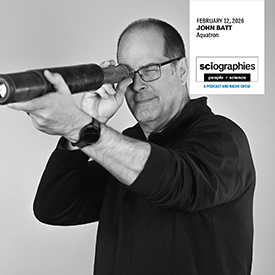
In this premiere episode of season seven, we talk to John Batt, manager of Dalhousie’s Aquatron, Canada's largest university aquatic research facility.
Host Dr. David Barclay dives into Batt’s long-standing career at Dalhousie, sharing details about the work he and his team are leading, including the endangered Atlantic whitefish and his leadership of animal care at the Beaty Centre for Marine Biodiversity, a first-of-its-kind ocean science centre in Halifax.
Excerpts from the episode:
David (host): Let's talk about the Beaty Centre for Marine Biodiversity. Can you describe your role?
John: I'm in charge of all the animals behind the glass.
David: What were the parameters that you had in your mind when you made the edited list of dream animals for the Beaty Centre?
John: I think it started with make a list of animals you know you can put in an aquarium. Then what can we get people to talk about? Like seahorses — we didn't have them for opening, but hopefully we'll have them in there soon. And we want to make people ask questions.
David: Right.
John: That's the key, to get people thinking about the ocean and marine biodiversity.
 David: Why seahorses?
John: Oh, because they come up to Nova Scotia in the summer.
David: I am curious, how did you become the aquarium czar of Dalhousie? Where did it start?
John: It starts before I can remember. My mom says I started when I was three years old. My grandfather was a home aquarium breeder. In Grade Six my grandfather gave me my own aquarium, one of those that was on the wall and then I had them all my life, and my dad was a scuba diver.
David: Was it strictly for pleasure in your family, or were there people working on the water?
John: The Batt family in Charlottetown, P.E.I. had a long history of being on the water. I've got pictures of my great-grandfather's towing company. A great-great-great-grandfather had a big towing company. They towed barges all over the world. The Batts were always around the water.
David: How does one take this kind of home passion and spin it into a career? What did you get trained in?
John: Well, I went to the University of Prince Edward Island. I went there for one year because I had run out of money and my grandmother said I could stay at her house. So I only had to find enough money for tuition.
Growing up, my dad was an RCMP officer, and we moved a lot. And somewhere around that year, instead of transferring to Dal, I said, "I'm going to go to one university for an undergrad."
I got a summer job. We didn't have a co-op program. We had a program, I think it was called COSEP, so it was career-minded people working in career jobs during the school break. I got on with the Department of Fisheries and we were diving, running boats every day. I was like that was it. This is my life.
David: Are there any standout growths, standout animals that have successfully been sustained by the Aquatron that you'll never forget?
John: Yeah. I mean, it's hard to not talk about the Atlantic whitefish project. I think everybody at Dal should feel that's an important project.
Listen to John Batt’s full episode of Sciographies at 10 a.m. on Thursday, Feb. 12 on CKDU 88.1 FM in Halifax or find it on Apple Podcasts, Spotify, and other popular podcasting platforms. You can also listen to previous Sciographies episodes on the same platforms and at dal.ca/sciographies.