EES Departmental Seminar: 2025 Science Atlantic Lecture Tour Lecture: What is at the bottom of Archean crust?
Dr. Jillian Kendrick
Assistant Professor
Department of Earth Science, Saint Mary’s University
2025 Science Atlantic Lecture Tour Lecture: What is at the bottom of Archean crust?
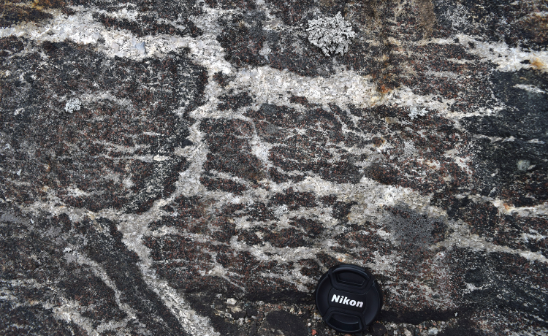
Abstract: The Archean Eon (4 Ga to 2.5 Ga) was a critical period in Earth’s history. During this time, the planet saw the start of plate tectonics, rise of continents, and evolution of primitive life forms. The only evidence remaining of these important milestones is in rocks of the crust, the outermost layer of the Earth, however preserved Archean crust is limited. Most currently exposed Archean rocks were formed in the upper crust and provide crucial insights into surficial and shallow-level processes but contain limited information on larger-scale tectonic processes and sources of felsic magmatism. Although the deepest levels of Earth’s crust are largely inaccessible, they hold the key to understanding how continents were constructed from the Archean to today. Indirect methods have been developed to shed light on unexposed deep crust, such as those based on geophysical data. However, ancient deep crust can be directly observed in high-grade metamorphic terranes, which are sporadically exposed around the world. In this talk, I will showcase a rare and spectacular example of Archean deep crust known as the Kapuskasing Structural Zone, located in northern Ontario. These rocks preserve evidence of key early Earth processes, including crustal melting, which may have been responsible for the formation of most Archean continental crust. Questions remain unanswered, however, surrounding the nature of this deep crust and the clues it may hold to understanding the evolution of early Earth.
Bio: Jillian Kendrick is an Assistant Professor in the Department of Earth Science at Saint Mary’s University. She completed her PhD at University of Waterloo in 2022, where she investigated the origins of Archean granitoids. Jill’s research background is primarily in metamorphic petrology with crossover into igneous petrology, as her work has a strong focus on high-grade metamorphism, crustal melting, and the evolution of associated granitoid magma. In her research program, Jill employs a broad methodological approach (field methods, geochemical analysis, computer modelling) to understand the record of crustal evolution preserved in metamorphic and igneous rocks throughout Earth’s history.
Time
Location
Milligan Room, B-8007 8th Floor Biology/EES wing of the LSC
Additional Information
Owing to scheduling conflicts, Jillian will not be able to meet with the audience for coffee before her lecture.