CyberSci Atlantic 2025
Dal Computer Science teams finish first AND second at regional cybersecurity challenge
Two Dalhousie Capture the Flag teams bested seven other teams to win the CyberSci Atlantic competition and finish in the top 10 nationwide.
By Emily MacKinnon - December 4, 2025
Dalhousie students finished first and second at the regional level of an international hacking challenge. CyberSci is a cybersecurity competition designed for university and college students around the world, and is divided into regional, national, and international events.
At a CyberSci event, student teams are presented with a realistic corporate network that forces them to think like an attacker to try and break through the network’s defenses and expose vulnerabilities.
“We are living in a hyper-connected world, and as citizens of this world, we need to understand both the wonderful conveniences of this cyber world and the dangerous pitfalls,” says Computer Science professor Dr. Nur Zincir-Heywood, who specializes in cybersecurity.
One of the ways Computer Science students can practice these cybersecurity skills is through competitions like CyberSci.
CyberSci Atlantic
Each fall, there are six hackathons across Canada (Atlantic, Ottawa, Vancouver, Calgary, Montreal, Toronto), and winners of each region advance to the CyberSci national finals.
This year, Dalhousie had two teams representing the Faculty of Computer Science: Status 418 and Status 425. Status 418 (Ahmed Al-Naamani, Conrado Boeira, Het Soni, Lauren Galbraith, and Skye Kun) finished first regionally and ninth overall, and Status 425 (Adam Dean, Ava Powelson, Colton Burns, Kate Bussey, and Will Huinh) finished second regionally and tenth overall.
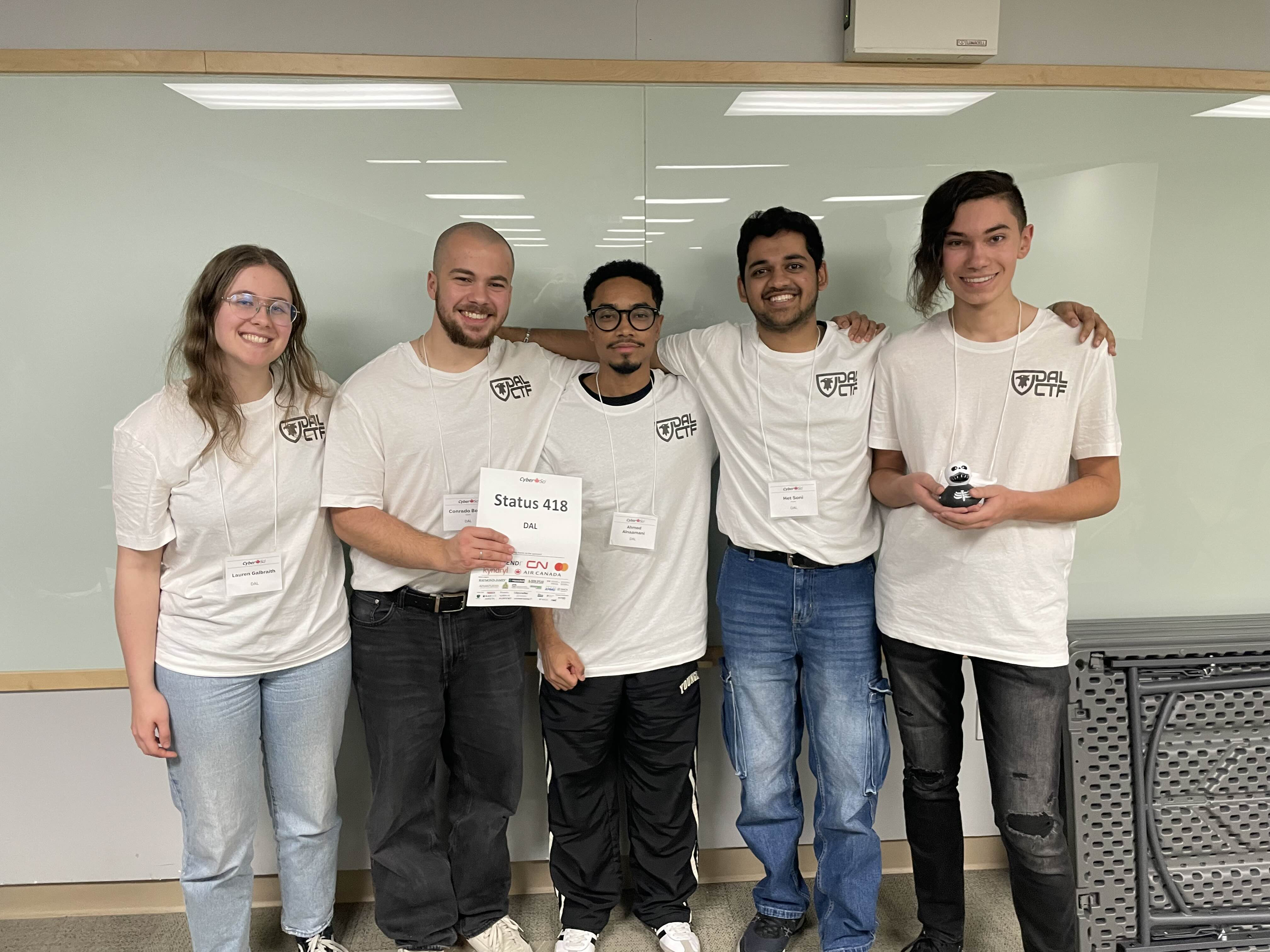
The team names reference HTTP error codes, such as 404 Not Found or 403 Forbidden. The error code for Status 418 is “I’m a Teapot” (meaning a webserver refuses to brew coffee because...it’s a teapot). The team thought it was funny and chose it. The error code for Status 425 is “Too Early,” referencing the development team’s largely first-year complement.
National and international representation
This is the first time Dal has finished first and second at CyberSci Atlantic and has two teams in the top 10 nation-wide. Status 418, led by graduate students Conrado Boeria and Lauren Galbraith, will represent the Atlantic region at nationals in Ottawa next summer.
Both teams have been practicing with the Dalhousie Capture the Flag (DalCTF) Society, a club where participants use their hacking skills to find "flags" hidden in vulnerable systems to score points.
Dr. Zincir-Heywood started teaching CTF through her research lab and grad course [CSCI6706], and as interest from students increased, started providing dedicated workshops and training.
“Since 2022, we have had an undergraduate course [CSCI4178, taught by Samer Lahoud] covering skills of this nature, which then led to the creation of DalCTF,” Dr. Zincir-Heywood says. “We have been researching, training, and competing in different cyber challenges of this nature for almost 15 years now.”
Galbraith, a second-year MSc student, is one of the founders, along with Conrado Boeria, of DalCTF. She has competed nationally and internationally and was selected to represent Team Canada at the International Cybersecurity Challenge in Santiago, Chile in 2024. In 2025 she was invited to compete at CyberSci Nationals in Ottawa as part of a women’s team, where they secured an overall 4th place finish. Again, Galbraith was selected to represent Team Canada, this time in Warsaw, Poland, at the European Cybersecurity Challenge in October 2025.
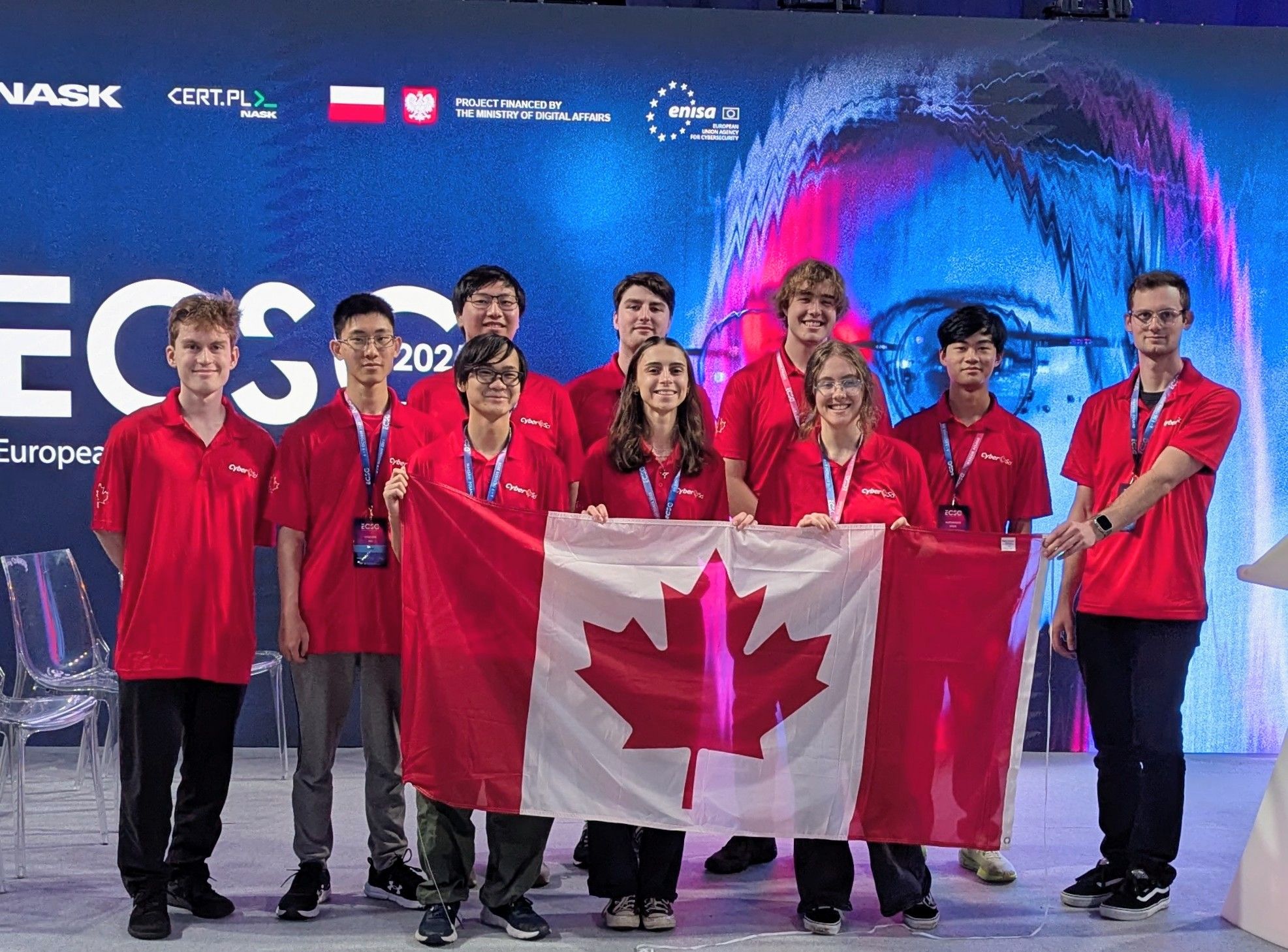
“Since my first CyberSci in 2022, I fell in love with CTF and it has opened so many doors for me,” Galbraith says. “In November 2024 Conrado and I vowed to create a community at Dal to support competitive cybersecurity talent, to ensure that Dal was a force to be reckoned with. And that's exactly what we did!”
Conrado Boeria, the other founder of DalCTF, says this year’s win was especially sweet since the team finished second last year. “[Lauren and I] were convinced we could do a lot better, and started working on creating the society, bringing in more students, and structuring training sessions and workshops,” Boeria says. “It was incredible to see both Dal teams excel in the competition! It was everything we set out to do and more.”
A new personal best for Dal
At last year’s competition, Dal’s CTF team finished second behind UNB. This year, Dal’s development team, Status 425, bested UNB.
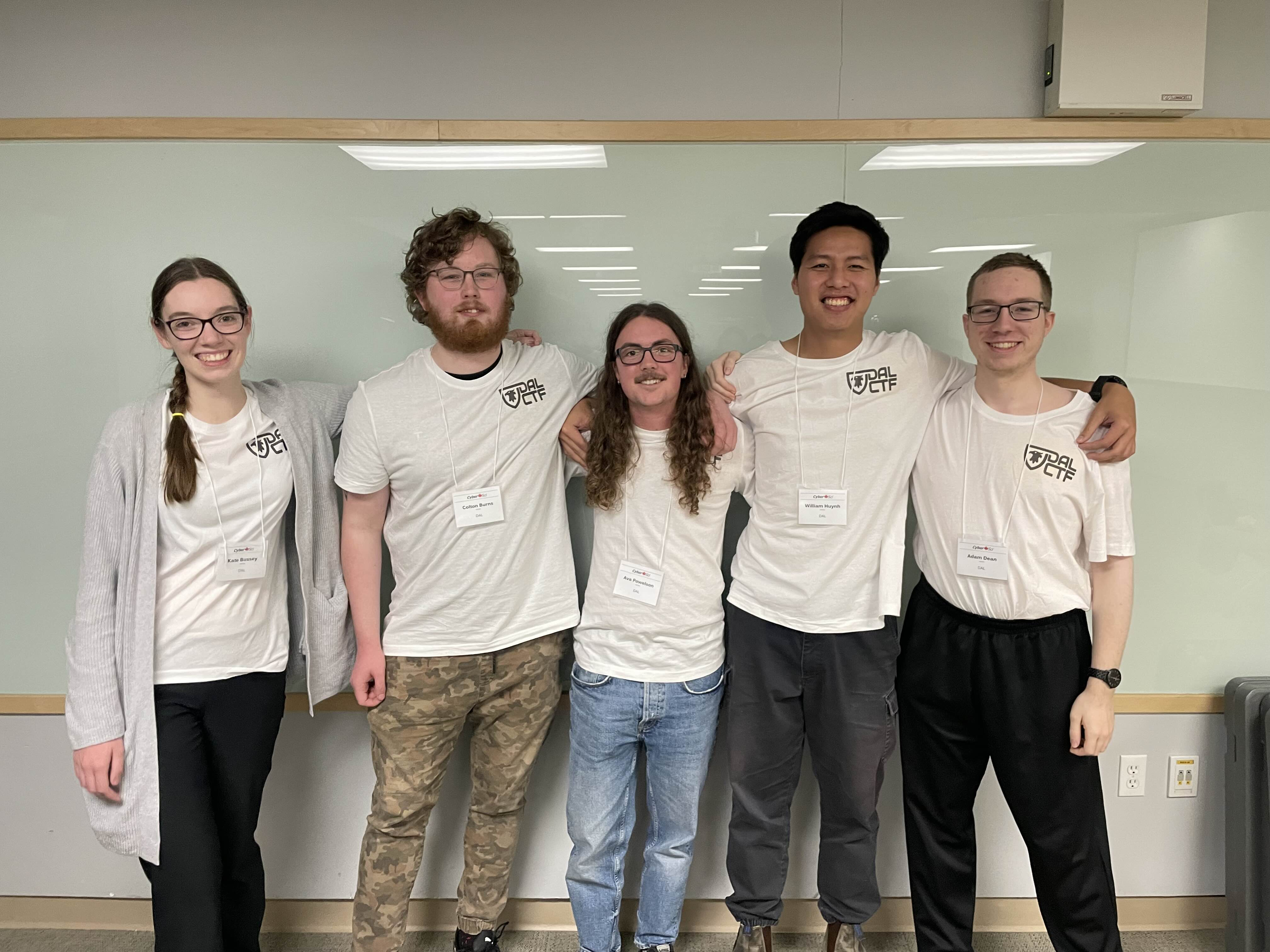
“Status 425 finished second, but they actually held the lead for much of the last half of the competition, which is incredible given how new many of those members are new to CTF competition,” says Liam Houlahan, the CTF Society’s staff advisor.
Houlahan says the CyberSci Atlantic team that competes at nationals will likely feature a combination of members from both Status 418 and 425. “There are national all-star–style teams for categories like women and U20, which could feature members from our second-place team,” he explains. “The expectation is that everyone who competed this past weekend for Dal and who is eligible for nationals, will be in Ottawa come June.”