News
» Go to news mainBuilding Futures: How Dalhousie’s Free Lab on Hornby Island Shaped a New Generation of Architects

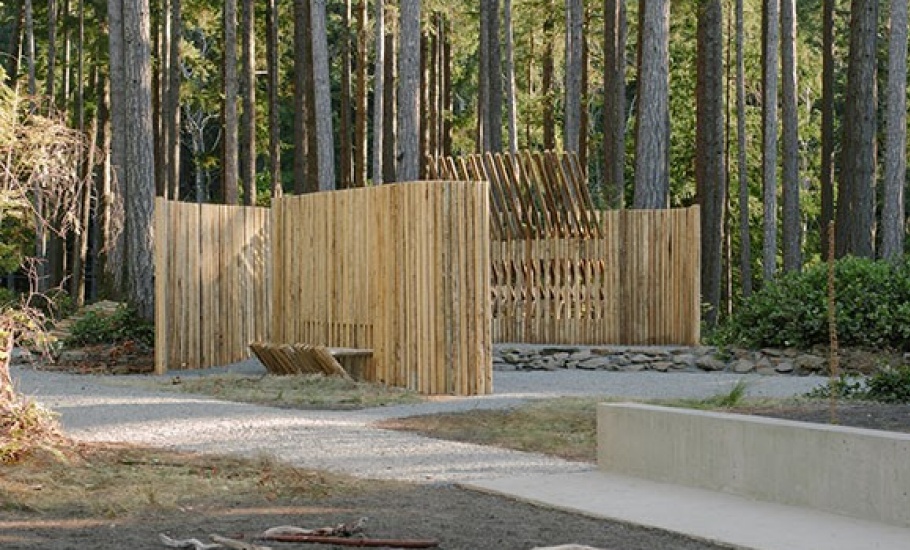
This summer, students from the Dalhousie School of Architecture exchanged studio desks for shovels, chisels, and meaningful community engagement. As part of the school’s Free Labs program, they collaborated to design and construct a community pavilion on Hornby Island, British Columbia. It was a hands-on learning experience that deepened their architectural understanding and fostered lasting connections with the island’s residents.
A Pavilion Rooted in Place
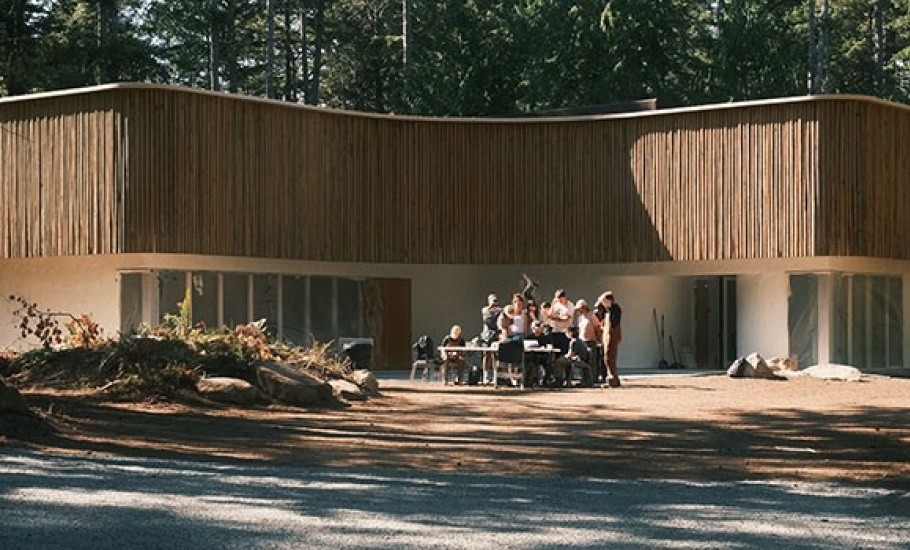
Led by school alumnus and practicing architect D’Arcy Jones (BEDS’97), with assistance from Breana Chabot and alumnus Shane Hauser (BEDS’19, MArch’21) from D’Arcy Jones Architects, the Hornby Island Free Lab was conceived as part of his office’s winning proposal for the Canada Council for the Arts’ Prix de Rome Prize. The pavilion was built on the site of a former trailer gallery and plywood stage, just steps from the newly constructed Hornby Island Arts Centre.
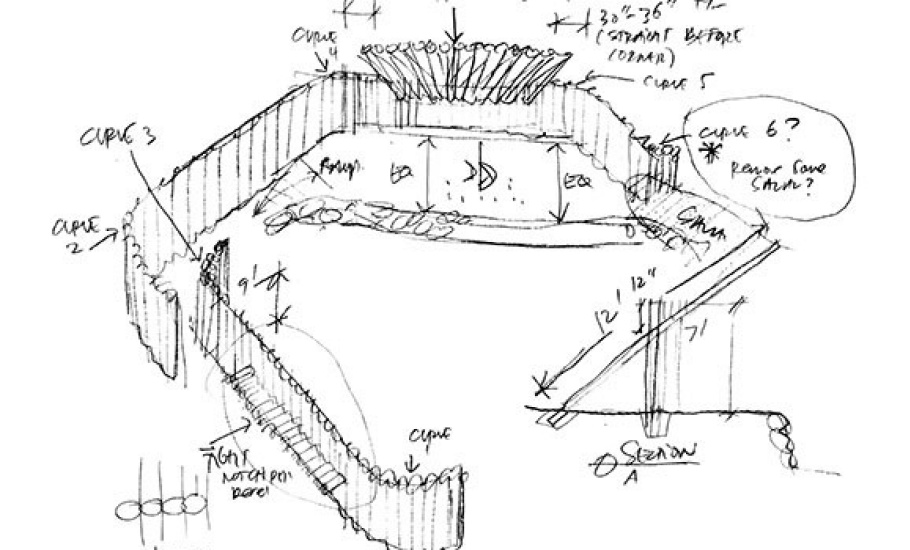
“Our goal was to experiment with traditional logs to make a modern design,” said Jones. “When we stood on the site with the students on the first day, everyone’s input pointed to something ambitious - a structure that could become a generous outdoor room for the community.”
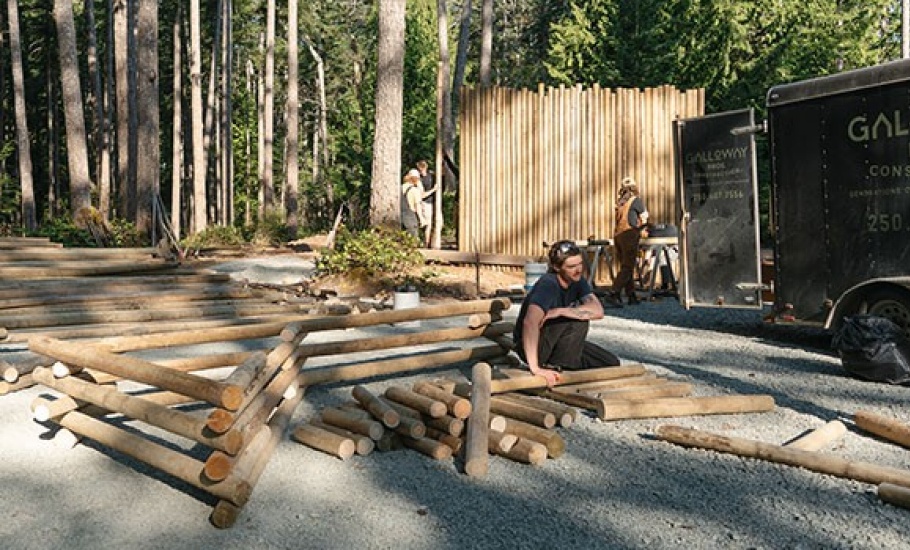
The final design reflected Hornby Island’s expressive and unconventional building culture, using typical materials in unexpected ways. Students worked with logs leftover from the art centre build and shaped their learning around the practical demands of remote logistics and fire safety limitations.
Learning by Doing
The Hornby Island Free Lab offered students a rare opportunity to engage in every phase of a project, from concept to construction. They learned joinery, trenching, tool use, and how to improvise design to fit real-world constraints. More importantly, they discovered the value of teamwork, leadership, and community engagement.
“Construction is hard work, and the design drawings are only the beginning,” Jones emphasized. “Students learned that spaces are more compelling when they’re a bit ambiguous — open to interpretation and shaped by context.”
Mentorship played a key role in the build. Contractor Derek Galloway and his crew, still working on the adjacent arts centre, offered daily guidance on safety and best practices. Students were encouraged to ask questions and make decisions collaboratively, fostering a supportive learning environment. “I was impressed by how well our team executed the project,” commented one of the Free Lab students, reinforcing the idea that hands-on learning can be more impactful than a textbook education.
The pavilion’s public location near biking trails and a popular farmer’s market meant students received real-time feedback from locals and tourists alike — a rare and rewarding experience for emerging designers. “Locals saw the pavilion as a meaningful gift,” one student shared. “That kind of community connection is something you can’t replicate in a classroom.”
A Lasting Impact
For many students, the Hornby Island Free Lab was more than a summer project — it was a turning point in their educational journey. They experienced community-oriented architecture, worked with sustainable materials, and explored hands-on design/build approaches. One student commented that the experience motivated them to pursue sustainable building and collaborative work in the future.
“It felt like a barn-raising bee,” Jones reflected. “Ten students putting their minds to it — the amount of work that got done was incredible. It reminded us how everyday natural materials, when combined in simple ways, can have a modern personality and a strong sense of place.”
Help Build the Future of Free Labs
Dalhousie’s Free Labs program continues to demonstrate the power of experiential learning. By immersing students in real-world challenges and community contexts, it prepares them not just to design buildings, but to shape places, lead teams, and build futures.
Interested in leading a Free Lab or have an idea that could help shape your community?
Reach out to the Dalhousie School of Architecture to learn how you can get involved.
Free Labs happen because of the hard work and dedication of our faculty and lab leaders, but they also rely on the generosity of donors. If you believe in the value of hands-on learning and want to support the next generation of architects, consider donating to help fund future Free Labs. Your contribution helps create opportunities for students to learn, build, and make a lasting impact.
Recent News
- Celebrating Anna Brozek, 2026 Loran Scholar and Incoming BCD Student
- Grounded in Extraction: Architecture & Planning Students Shine at Nocturne
- Uncle Mel's legacy: A family’s journey through Dalhousie’s O’Brien Hall
- Designing Resistance: Celina Abba’s Journey from Biology to the Venice Biennale
- Hosting EDRA56: Putting Dalhousie and Halifax on the Global Environmental Design Map
- Building Futures: How Dalhousie’s Free Lab on Hornby Island Shaped a New Generation of Architects
- Dalhousie Impact Award Winner Recognized for Outstanding Contributions
- Dancing Between the Lines: Paulette Cameron’s Architectural Journey of Women, Space, and Transformation