Dr. Albert Swan, (1975)
Emeritus Professor
Albert W Swan
Dr. Albert Swan was born in Glasgow in 1892, schooled in Edinburgh, he graduated in 1917 with a B.A.Sc. from Toronto University. At what point he acquired his interests in matters statistical is not on record; he first made an impact in 1941 as a wartime adviser on applied statistical techniques of inspection in the Directorate of Filling Factories of the Ministry of Supply. After the war, he joined United Steel as Head of their Statistical Department from 1946 to 1951. In 1951 he left to run the O.R. Department at Courtaulds.
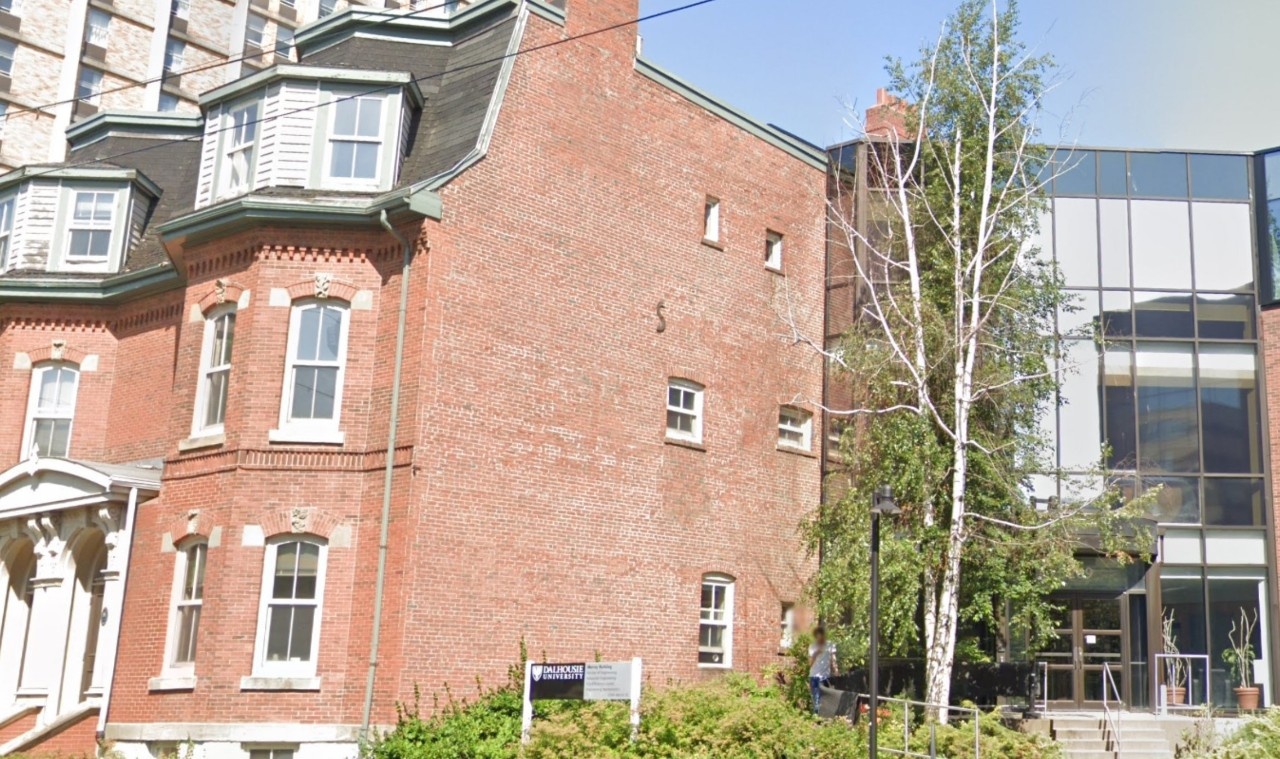
On retirement in 1958, he acted as consultant to a number of companies, including Rowntrees of York; he also played an important advisory role in the teaching of applied statistics and O.R., for example at Hull University. At the age of 73, he returned across the Atlantic to help to develop the Industrial Engineering Department, concerned with O.R. and associated subjects at Nova Scotia Technical College in Dalhousie, where he continued to advise and teach until his death at the age of 83. His post there as Emeritus Professor, and their award of an Honorary Doctorate of Engineering, were honours of which, rightly, he was proud; he is remembered there with a deep feeling for his unique qualities.
His services to the Royal Statisical Society were considerable; he took an important part in the post-war development of the applied statistical aspects of the Society's work and, in particular, in the settingup of the Industrial Applications Section, both centrally and in the founding of the local Group in Sheffield, which continues to be so active today. From 1950 to 1955 he served on Council; his principal interest was in the teaching and training of applied statisticians and O.R. specialists. He linked this with his involvement with Operational Research; he was a founder member of the O.R. Club which later developed into the O.R. Society of which he was a Council member.
Albert Swan was, above all, a statistical salesman. He was no theoretician (we had his word for it) but he knew a good idea when he saw it; he also knew where that idea could be used, and he persisted until the idea and the need came together. It has been said that he was a better evangelist than theologian, but the one without the other is meaningless, and evangelists are in short supply.
Swan himself recognized his role as early as 1945 when he wrote: "Statistical Quality Control is essentially a problem of salesmanship." The rest of that note was a message of salesmanship as relevant today as it was then; he drew attention to the need for simplicity, for avoidance of complicated mathematics in presentation, for clear-cut organization, the need to find out what each manager seeks to gain from each system.
He warned that shop-floor suspicions were inevitable, and that it was dangerous to over-sell. How dangerously he lived! How suspicious we were! Swan was particularly effective in selling to top management- this is a rare and an invaluable quality.
Like all good salesmen, Swan could be a nuisance; he suffered from selective deafness, but only to the word "No"! As statisticians, we have to be careful to distinguish between cause and effect and association, but it is surely no nonsense correlation that Albert Swan should have been found in so many of the recent growth points of applied statistics and O.R. Surely he was more than just the grit in the oyster?
There are few statisticians who practised in the years immediately following World War II who did not know Albert Swan. It is with a real sense of loss that we realize that he is no longer with us. We miss the teetotal Mason, the amateur photographer, the folk dance and choir enthusiast, who continued to be hard at work at 83, who could always be relied upon to be where the action was. Unique.