Cailey Dyer's Story
From Policy Papers to Polar Seas: Navigating a Dynamic Career in Marine Management
For prospective students eyeing a career in the vast and ever-evolving marine sector, a common question arises: Where can a specialized program like the Master's of Marine Management (MMM) truly lead? The journey of Cailey Dyer, an alumna of the Marine Management program (August 2021 - December 2022), offers a compelling answer, demonstrating how a foundational understanding of policy can propel one to the challenging and critical environment of Canadian Arctic shipping.
Today, Cailey serves as the Assistant Manager of Ice Services at Fednav, an international bulk cargo shipping company. Her trajectory, from a social science background to a role in Arctic navigation, underscores the diverse applications of the MMM degree.
Building a Foundation: From Public Policy to Protected Waters
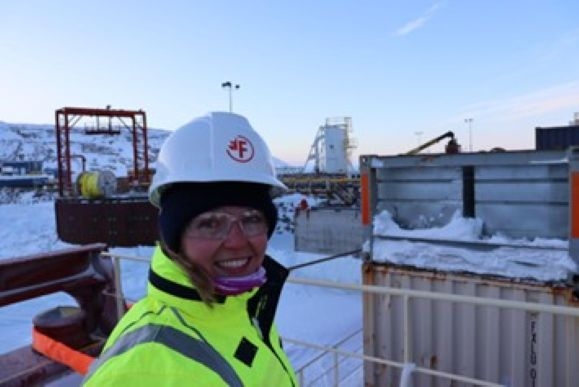
Cailey’s academic path began at the University of Ottawa, where she delved into public administration and political science. This strong social science foundation proved invaluable for her research in Marine Management for her Master's degree. She tackled a pressing policy issue: the phasing out of Class B lobster fishing licenses in the Maritimes and Atlantic provinces by the Department of Fisheries and Oceans (DFO).
Remarkably, no policy review had been conducted since these licenses were first introduced in the 1970s. Cailey's project meticulously explored their history and, crucially, involved direct engagement with Class B lobster fishers themselves. Through these interviews, she uncovered that many relied on these licenses for their primary income or as a cherished family tradition. Her work effectively highlighted a significant gap in public policy that directly impacted coastal communities, advocating for a much-needed policy review.
Working in the Frozen North: A Unique and Critical Role
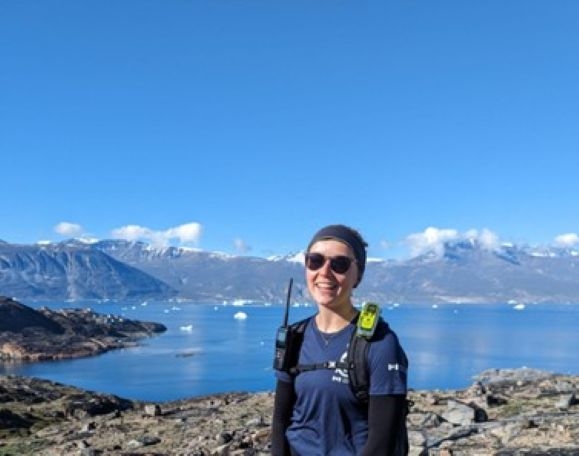
Now, Cailey's work takes her to the remote and challenging Canadian Arctic. At Fednav, a company renowned for shipping essential bulk cargo, such as grain and iron ore, its "Ice Services" division plays a critical role. This specialized team is the lifeline for Fednav's fleet, providing essential reports, updates, and navigation assistance to ships operating in icy conditions.
Fednav stands out as the only company that ships year-round in the Canadian Arctic, utilizing three dedicated icebreakers that service northern mines. As Cailey emphasizes, "Not even the Canadian Coast Guard is there when we are there transiting." This highlights the profound reliance their ships place on Cailey’s team for crucial, real-time information. Beyond providing documents, she trains crews on vital skills, including how to interpret satellite images, identify safe paths through ice, and understand various ice charts—all while working with already highly experienced captains.
A key tool in their operations is IceNav, a proprietary software developed by Fednav and installed directly on the ships' bridges. This innovative system consolidates ice charts, satellite imagery, and the ship's radar onto a single screen, streamlining navigation, facilitating ongoing learning, and aiding government reporting. Cailey occasionally embarks on icebreaker voyages to personally assist crews in mastering IceNav, equipping them to navigate these formidable environments with confidence and expertise.
The MMM Program: Shaping a Dynamic Career
Initially, after completing her master's degree, Cailey returned to search and rescue with the Canadian Coast Guard, but she didn't immediately see the direct application of her degree. However, her current role at Fednav has unequivocally demonstrated its immense value. She describes her work as "very dynamic," noting how the MMM program's broad curriculum prepared her for the varied challenges she encounters daily.
Cailey explains, "We work on a lot of different projects where maybe it's about marine spatial planning or maybe it's about working with different stakeholders or co-management or navigating different priorities between mining companies, the government, and ourselves." She finds it crucial to grasp the perspectives of diverse groups—whether their focus is on conservation, business, or community needs—to effectively address complex issues such as the creation of marine protected areas.
Several courses proved particularly impactful:
- Co-management, taught by Claudio Aporta, was a favourite and remains highly relevant, especially as she engages in co-management projects with her Arctic team.
- Marine Science and Technology, although initially challenging for her social science background, provides her with daily insights, enabling her to communicate the science with engineers and mining companies effectively.
- Even an undergraduate Marine Biology 101 course provided foundational knowledge, enabling her to act as a "policy translator" by bridging the gap between scientific information and its practical application for others.
Cailey firmly believes her MMM degree was instrumental in securing her position at Fednav. Her background in Arctic communities, co-management, marine protected areas, and marine spatial planning, combined with her ability to translate scientific information, were all key assets. She stresses that the program's wide range of topics was a significant advantage, as it perfectly mirrors the multifaceted nature of her current work.