
Derek Rutherford
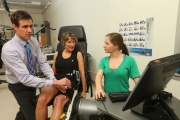
In 20 years, 25 percent of Canadians will have arthritis, with a great majority of individuals presenting with OA of which the lower extremity joints are most prevalent. Are you ready?
Education
- Honours BSc. Kinesiology – University of Western Ontario
- BSc. Physical Therapy – University of Toronto
- MSc. Rehabilitation Research – Dalhousie University
- PhD. Biomedical Engineering – Dalhousie University
By: Nancy Walker, Instructor, BScPT , MSc Anatomy
Our profession is moving. Clinical reasoning, treatment approaches, education, research all move and evolve at great pace. Do we get a chance to reflect on how immersed we actually are in this evolution. This reflection, looking back to perhaps guide the future, is akin to "re-searching." To "re-search" makes us unique among many health care providers. Re-searching to vet our clinical interpretations, re-searching for signs and symptoms that help to explain a clinical response to treatment, null response or to re-search for better treatments, outcome measures or management strategies.
For Derek Rutherford, it was re-searching that lead him from outpatient clinical practice in musculoskeletal physiotherapy at Athletes Care, York University, Ontario to Dalhousie University nine years ago.
“There has to be something more that a Physiotherapist can do than rely on hands and eyes to understand how a joint functions during human movement,” states Derek.
His interest in quantifying lower extremity joint function in states of injury and disease lead him through a MSc in Rehabilitation Research and a PhD in Biomedical Engineering at Dalhousie University. His focus has been on knee osteoarthritis (OA), understanding how joint biomechanics and muscle activation, are altered in individuals with various severities of this disease. These data help to establish our understanding of disease pathomechanics and establish a mechanical framework to evaluate management strategies.
“To thwart chronic disease, mobility is essential. If you cannot walk because of hip or knee osteoarthritis how are you going to remain physically active during your golden years, how well can you manage obesity, COPD, or rehabilitate after stroke or heart attack?,” said Derek.
In 2012, Derek was appointed to Assistant Professor in the School of Physiotherapy and has been since cross appointed to the School of Biomedical Engineering, School of Health and Human Performance and appointed to Affiliated Scientist at Capital Distract Health Authority, through the Department of Surgery, Orthopaedic Division. Derek currently contributes to the musculoskeletal research compliment in the School of Physiotherapy. In addition, he coordinates and teaches the exercise and movement science module as well as providing assistance to the cardiorespiratory and integrated practice modules of our entry-level masters program.
Here at the School, we are in the process of re-structuring our musculoskeletal research infrastructure. This will involve extensive renovations to the Forrest Building to accommodate graduate student space, faculty offices and the newly funded Joint Action Research Laboratory (JAR lab). Derek was recently awarded a Canadian Foundation of Innovation John R Evans Leadership award to fund the purchase of over $300,000 in equipment to develop lower extremity gait perturbation research in the School of Physiotherapy. His work extends beyond the walls of the Forrest Building, with research collaborations including the Dynamics of Human Movement Laboratory in the School of Biomedical Engineering (Drs. Cheryl Hubley-Kozey and Janie Astephen-Wilson), the School of Health and Human Performance at Dalhousie University and the John MacIntyre motion Laboratory of Applied Biomechanics (mLAB) lab at Acadia University (Dr. Scott Landry).
As a component of these initiatives, we recognize the importance of establishing clinic-based research potential. Derek has developed a portable gait analysis infrastructure to monitor and record three-dimensional knee, hip and trunk motions as well as record 16 channels of surface electromyography that can be placed in any clinic with a treadmill and sufficient space. Currently, with co-investigators Dr. Janice Moreside, PT PhD, Assistant Professor in Health and Human Performance at Dalhousie University and Dr. Ivan Wong, Orthopaedic Surgeon at Capital Health, along with assistance from the orthopaedic surgeons at Capital Health, Derek is conducting a pilot study to investigate walking mechanics and muscle activation patterns during gait in individuals with hip osteoarthritis. This team was recently awarded a Capital Health Research Grant to continue this investigation. Derek and the team of musculoskeletal health researchers are hoping to continue these initiatives in the future as they feel it helps engage clinicians in the research process and provides a key element for knowledge dissemination.
As clinicians, graduate students and academics move to advance our profession for future success, ensure sustainability and promote health and wealth for Canadians, "re-searching" is arguably a fundamental philosophy for our evolution as a physiotherapy profession. Derek, along with our team of musculoskeletal researchers and clinicians affiliated with the School of Physiotherapy are proud to advance the methods of Physiotherapy practice to ensure "re-searching" continues to be a part of our development for future success and validation.
For more information on Derek Rutherford and the musculoskeletal research initiatives in the School of Physiotherapy, please visit his website at https://uniweb.dal.ca/members/168/profile. For continued updates, please follow this blog.