
Fall 2018 Faculty Profile
By Lil Crump
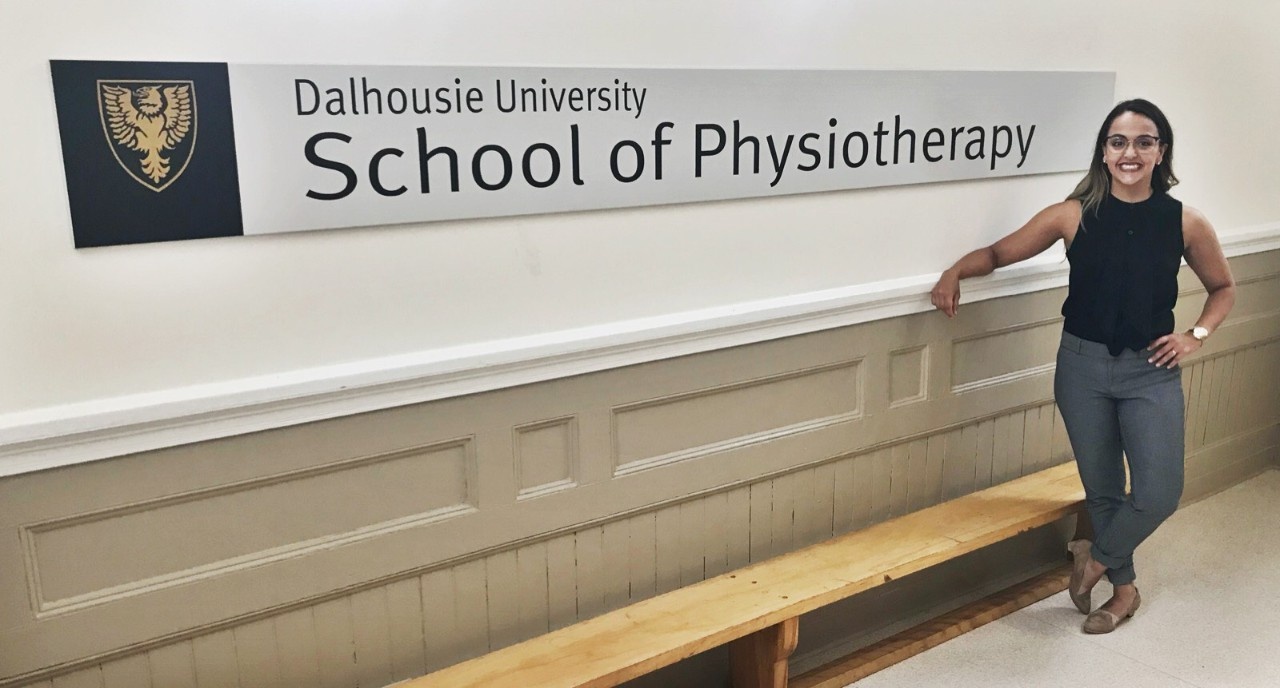
For this issue of PT Matters Faculty Profile, I had the pleasure of interviewing the School of Physiotherapy’s newest instructor and dauntless conversationalist, Lauren Singh. Lauren joined the School this August to support Dr. Gail Dechman in teaching of Cardiorespiratory Physiotherapy and Health Promotion, as well as to support the Integrated Practice module in the winter term.
Graduating from the University of Saskatchewan in 2014, she has made quick turnaround time in returning to the classroom. I caught up with Lauren to get her take on physiotherapy, teaching and the future of the profession.
Lauren did not dream of becoming a physiotherapist. “I thought I was going to be a lawyer, and so did everyone else!” She grew up dancing competitively, and continued to coach throughout university. She was also a self-proclaimed group fitness junkie, and eventually became an instructor. It was in that role teaching with physiotherapists, of both orthopaedic and cardiorespiratory disciplines, that she began to understand the scope and opportunity physiotherapy could provide. She applied to the program and so began her physiotherapy journey.
“I thought I was going to be working with athletes,” she laughs, “just like everyone else.” She had worked closely with a sports clinic in Saskatoon assuming she would eventually work there. Halfway through her program, the University of Saskatchewan School of Physical Therapy hired a new faculty member, Dr. Sarah Oosman and Lauren’s view of what was possible with physiotherapy changed. “There are people who teach you to practice a profession and those who inspire you to transform it and add to it.”
Dr. Oosman’s influence led Lauren to finish her PT school career in the northern community of Île-à-la-Crosse, Saskatchewan. “Time spent in a northern Métis community was the most invaluable learning experience. You get exposed to factors you don’t see in classrooms or lab work. An immersion experience which necessitated that you integrate cultural competency, community engagement, reflective practice, and skill sets of physiotherapy to be effective.” The disparity of chronic conditions among Indigenous populations compared to the rest of Canadians was staggering for her. It was pivotal in shaping the clinician she is today.
In Lauren’s words, “Chronic Disease is continually occurring –and with an aging population we see an increase in the amount of conditions an individual can accumulate and an associated increase in healthcare utilization.” Lauren discussed the benefits of using exercise as a tool of disease management and increasing self-efficacy for individuals. “It is a low-cost intervention, which pays dividends in reducing public resources and adverse outcomes. But, it must be safe and effective for the individual, taking into consideration the nuances of their health status. And that, my friend, is called physiotherapy!”
I asked Lauren where her insight came from. Prior to taking on her role as an instructor in the School, Lauren was the physiotherapist with the Cystic Fibrosis Adult Team for the Maritimes. Her work with CF patients had a significant impact on how she sees and promotes health education. “Physiotherapy is a cornerstone in the management of Cystic Fibrosis” Lauren states, “not just for airway clearance but, we are also equipped to address orthopaedic issues, and other complications where a prescribed exercise program or targeted education can significantly improve a patient’s quality of life.” She adds it was an opportunity to partner with patients in a primary care setting and work to optimize them in community, “it was my most challenging and rewarding clinical work.”
It was in this role that Lauren mentored physiotherapy students from both Dalhousie and the University of Saskatchewan. “They continually question your process, which makes you stop and re-evaluate your clinical reasoning.” No matter the setting, answering students’ questions, Lauren believes, is a good way to stay current in intervention methods and processes.
She discussed the high expectations she sets on clinical placements and that most students rise to the challenge “The program is more competitive than ever, and stimulating a higher level of thinking not only has students integrate the multifaceted material they learn and apply it in a methodical way, but also elevates their understanding of the profession.”
In her role as instructor, Lauren relishes the opportunity of passing along current evidence-informed practice to the students, and providing clinical examples. In addition to seeing the growth of the students she instructs, Lauren consciously looks for ways she can influence the physiotherapy profession. “I think as physiotherapists we should not only be advocating on behalf of our patients, but also be strongly advocating on behalf of our profession.” Lauren proposes that health policy should be rooted in improvements in primary care. “In a climate of exercise being medicine we, as PTs, know the value of our profession. We know that exercise is good for everyone, we know we can provide effective education and goal setting. But do policy makers?”
“I reflect on my own education and the lasting influence my faculty has had on me as a student, clinician and advocate. If I can translate the same sentiment to my own students then I've met my own goal. They are, after all, the future of our profession.”
If Lauren could offer one piece of advice to physiotherapy students, she would encourage them to be open to the process, “don’t look ahead to where you think you will be two years from now, be present in the journey so you can discover where you truly want to go.” Or, as she quotes her father, Sanj Singh, “Enjoy the Journey – Embrace the possibilities.”
According to Assistant Professor, Dr. Gail Dechman, Lauren has already made a positive impression amoung her colleagues, peers and students.
"Working with Lauren has been a fantastic experience. She is capable, positive, and enthusiastic. There seems to be no end to her energy! Lauren’s clinical expertise has been invaluable in redesigning the cardiorespiratory course. One of our goals was to better prepare students for clinical placements. To that end, she has also helped attract a number of clinical experts in our local community to assist with the design and delivery of the course content. I’m really excited by the positive changes that Lauren has brought to the course." ~Dr. Gail Dechman