
Summer 2019 Clinical Education Update
International Placement in Aikudy, South India.
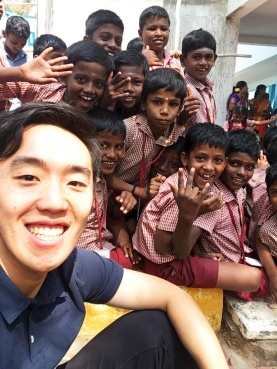
The sense of community was as strong in the villiage as it was in the Centre.
by Sangmuk Choi (Class of 2019)
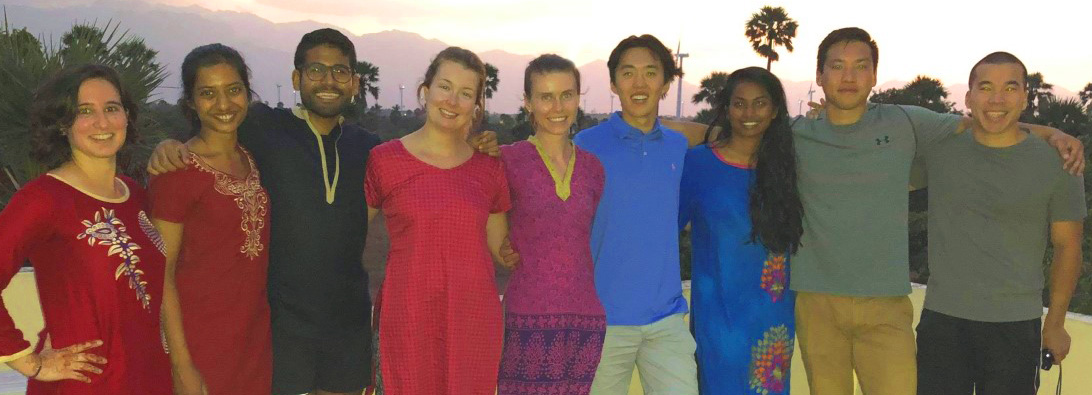 My neurotherapeutic placement was at a multi-disciplinary health and education center called Amar Seva Sangam (ASSA) located near Aikudy, a small village in south India. The center offered a variety of opportunities to practice clinical skills with different types of populations including paediatrics, patients with stroke and spinal cord injury, and individuals with special needs. My clientele was predominantly made up of patients with stroke and spinal cord injury.
ASSA is run by donations and operated by a non-profit organization (Handi-Care International) whose aim is to provide services to those with disabilities in India. It is one of their main institutions that many Canadian volunteers and Occupational Therapy/Physiotherapy (OT/PT) students visit each year for research, clinical placements, volunteering work, etc. In addition, most of the services offered are free for the patients who may be locals or travel from far to stay in the in-patient units. I felt a great sense of gratification as a student, to be able to help those who may not have had the means to access services otherwise. It was also an interesting experience to work alongside local PT’s and PT students who came in for their 15-day clinical postings from a local university.
Therapies commonly used at the Centre are exercises, manual therapy and education involving close collaboration with OT counterparts. We had access to modalities like Electro Physical Agents (EPA’s), and thermal agents, as well as equipments such as bikes, a body weight support treadmill and a tilt table. I appreciated that the Centre allowed me to be creative with my treatment of patients when access to the limited equipment was not available. I found that having a translator was also helpful for overcoming the language barrier during treatments.
I was pleased to have the opportunity, alongside a physiotherapy student from McGill, to present and demonstrate the Chedoke-McMaster Stroke Assessment to a group of local physiotherapists. We hoped that that their familiarity with the assessment technigue may encourage them to implement it into their regular practice. There responsiveness was very rewarding. I see the potential for future Canadian students to share their evidence based knowledge with ASSA to optimize the quality of care available to their patience.
The people in the area where I worked were extremely friendly and welcoming. It was fun being included in many “selfies” simply because I was a visitor. Clients were generous with their hospitality. For example, during one of our onsite client evaluation visits, we were served 3 fresh coconuts (per person) full of water, cut directly in front of us! The sense of community was as strong in the village as it was in the Centre. I felt comfortable wherever I travelled within the village.
I joined other physiotherapy and occupational therapists during the weekends and travelled to places like Varkala beach, Kanyakumari, and the Munnar Tea Plantations. Time did not allow for exploration of all the beautiful places in the region, but there was enough time to foster intercultural friendships that I will carry with me for the rest of my life.
A special thanks goes out to Daphne Pereira from the School of Physiotherapy for arranging the opportunity. Thanks also to the Dalhousie's International Centre for providing the Study/Work International Fund (SWIF) financial assistance.
நன்றி (Nanri meaning thank you!)