
Clinical Education Feature
Rural Practice with Jodi Cooper and Nick Souder
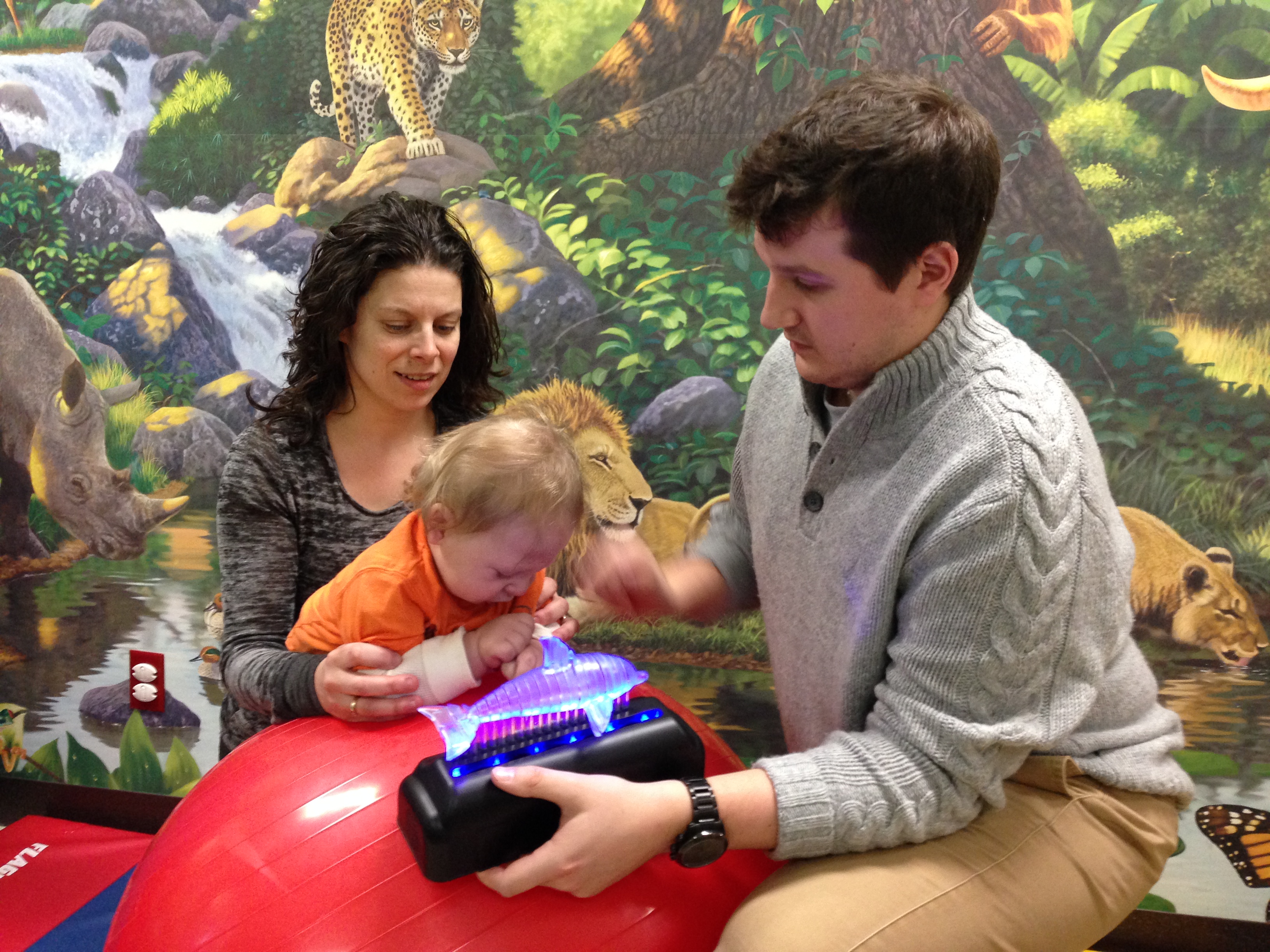
(Left to right) Jodi Cooper (RegPT and Clinical Instructor) and Nick Souder (MScPT student) in Gander, NL.
Working in a rural area provides a unique experience for both clinicians and students. The School of Physiotherapy had the opportunity to learn about these experiences first hand from regional physiotherapist, Jodi Cooper and MScPT student, Nick Souder.
Jodi Cooper graduated from Queen’s University with a Bachelor of Science in Physical Therapy in 2001. After a few months working in private practice, she accepted a sole-charge position as a Paediatric Physiotherapist in Gander, NL, providing coverage to the central region of the province. Eleven years later, her passion for helping children continues to grow and she finds herself constantly promoting rural postings.
Clinician Perspective on Rural Practice
~By: Jodi Cooper, RegPT
Gander and Grand Falls – Windsor, NL
The Janeway Children’s Health and Rehabilitation Centre is a tertiary care centre located in St. John’s, the capital city of Newfoundland and Labrador. The province covers a large geographical area. To improve accessibility for patients, the Janeway employs physiotherapists and occupational therapists in satellite offices in Gander, Grand Falls – Windsor, and Corner Brook. Jodi Cooper is the regional physiotherapist in Gander and Grand Falls – Windsor and her services include:
- assessment and treatment (individual and group) of neurological, developmental, orthopaedic, and inflammatory conditions;
- screening of high-risk infants;
- development of home/school programs;
- consultation with preschools/schools/recreation groups/community organizations;
- developing and enhancing fitness/recreational opportunities for children with physical impairments; and
- public education
“In rural practice, you have to be familiar with all areas of physiotherapy practice. A typical day requires that I use my skills in neurology, orthopaedics, cardiorespiratory, and exercise physiology,” says Jodi.
“A supportive team is essential in any working environment.” Jodi works very closely with the physiotherapy department at the Janeway and each of the therapists there has become a mentor to her. The regional therapists meet regularly with their Janeway colleagues by teleconference to discuss case studies, review journal articles, and present on topics of interest.
“One of the greatest challenges faced in rural settings is covering such a large geographical area.” Patients travel up to four hours for an appointment which makes regular follow-up challenging. Jodi is innovative in her approach and uses technology whenever possible. Video and tele-conferencing saves families hours of driving and is more fiscally and environmentally responsible. “There are times when you need to see a child in the clinic for an examination or to facilitate movements, however technology has proven very successful in implementing and progressing home programs, as well as monitoring a child’s progress. On a videoconference, I can teach school staff how to do passive stretches for a child with cerebral palsy; instruct a parent in facilitating lying to sitting with an infant who has low tone; or assess a child’s gait after (s)he has had Botox injections.”
“A rural setting poses a unique set of challenges and tests my creativity on a daily basis. You have to think on your feet. I encourage all students to participate in a rural placement to challenge your problem-solving skills and be rewarded with a strong sense of community as a result of the relationships you build.”
Student Perspective on Rural Placements
~By: Nick Souder, MScPT student, Dalhousie University
Rural placements are intimidating. You are in a place you've never been, surrounded by people you don't know. Friends and family are left behind and you feel isolated. This is where students learn the most about what type of therapist they will become. You learn that physio isn't about a typical 9-5:00 day and it helps to cement the concept of patient-centred care. You must take into account socio-economic status, weather, patient priority, behavioural/attention issues, and if it would be more beneficial to see the patient in clinic, at school or at home; all things you don't have to consider in large urban centres.
There are greater expectations put upon therapists in rural areas, overwhelming caseloads, hours of travelling, all while trying to implement and run successful community programs. Whether you are in the mall, the grocery store, or the local rink, people recognize who you are and what you do. A rural physiotherapist doesn't turn off the light and lock the door at four o'clock, they have social responsibilities in and to the community all day everyday.
Jodi Cooper and the Janeway Outreach Office in Gander is a class-act program and one I'm proud to say that I've been a part of, even if only for a short time.