
Festive 2024 ‑ Alumni Profile
by Lil Crump
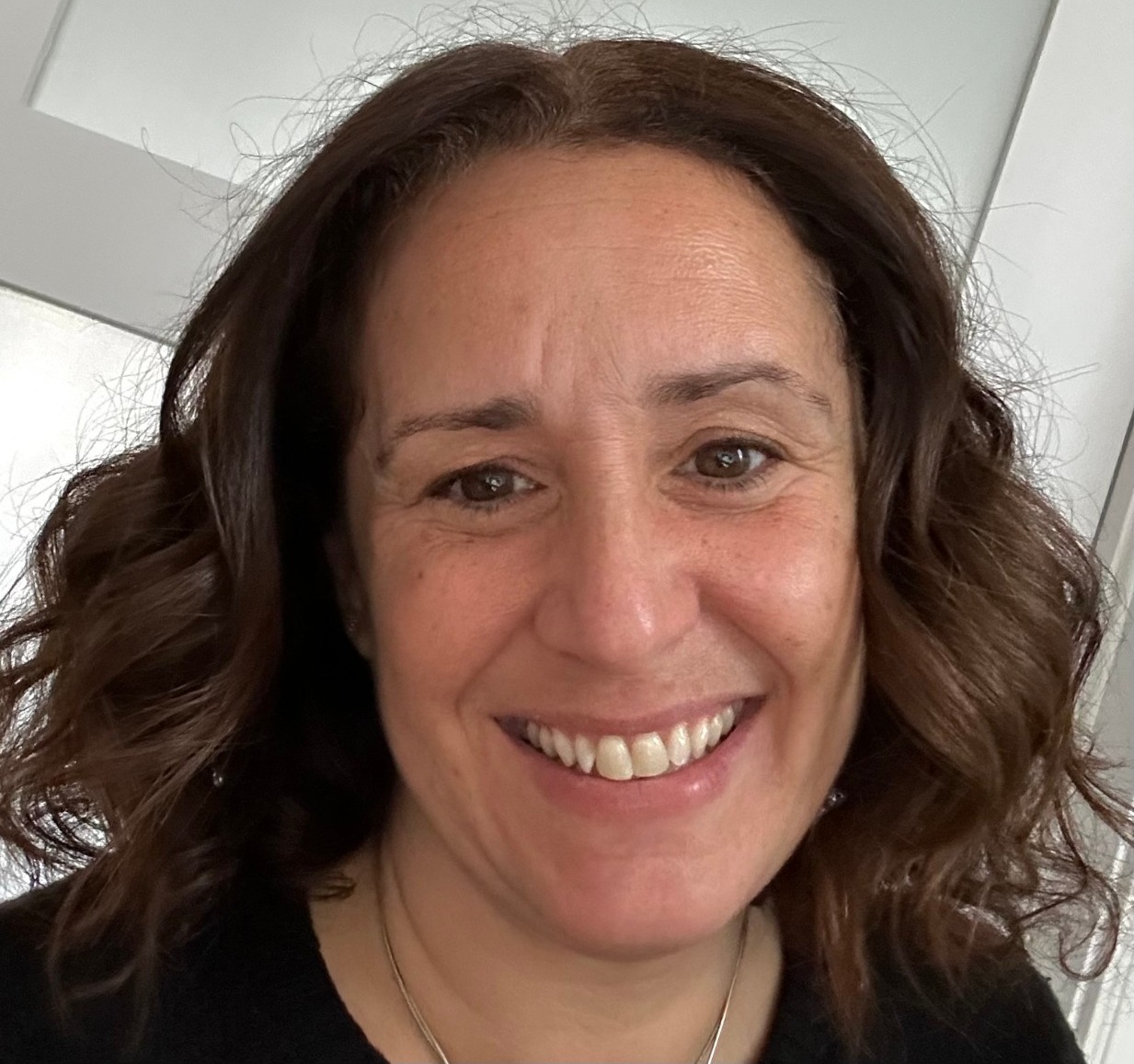
It is not enough to 'treat everyone the same'; it is shown in studies that 'those with less need more.' And this is hard to get traction on when the staff is already stretched to its limits. ~Stephanie Francis
Focusing on healthcare transformation for Indigenous persons
Stephanie Francis is a member of Pictou Landing First Nation. She completed her bachelor’s degrees (Psychology and Physiotherapy) at Dalhousie and is a member of the School’s BScPT Class of 1998.
Stephanie Francis has always been active and aware that physical fitness is important to overall health. Originally pursuing a career in Architecture, , Stephanie found herself drawn to the Physical Therapy profession thru a friend. She then shifted gears and applied to the Dalhousie Bachelor of Science - Physiotherapy program.
While in the program, Stephanie enjoyed the supportive class environment: "We would work together to study and practice techniques and complete assignments." Stephanie's involvement with the DAL Trainers working with the Dal basketball team also shaped her Dal experience. "The experience taught me how to interact with 'clients' throughout my career – I felt comfortable and relaxed talking to people during an assessment – this was particularly helpful when I entered private practice and was the sole PT on my shift," Stephanie explains. Stephanie reconnected with some of her classmates over the past several years. "It's really nice to see them and be part of each other's lives again!"
After 12 years in private practice, Stephanie moved to Nova Scotia Health and worked in inpatient and community physiotherapy settings. "I have always wanted to work to support my community, but it's been difficult as I don’t live there," Stephanie says. She was working as a community physiotherapist within continuing care when she came across the Mi'kmaw and Indigenous Patient Navigators (MIPN) posting at NS Health – she knew her experience working with NS Health in both 'inpatient' and 'community' worlds would benefit her greatly in the position. "This was my opportunity to finally support my community as a health care worker."
The MIPN position is new and was implemented in the spring of this year. There are 2 MIPNs in the central zone, 1 for each of the other three zones in NSH and two at the IWK. In addition to meeting with patients, Stephanie and her colleague Jacquie Potvin-Boucher have been working to get the word out to the First Nations Communities, urban Indigenous peoples, and the NSH staff. To do this, Stephanie and Jacquie are providing lunch and learns to staff, developing brochures and banners to place within the facility, and connecting with the community health care facilities. They are also working with NSH regarding smudging. "Smudging is a large part of Indigenous Cultural Healing, and Indigenous patients accessing healthcare at NSH are requesting the ability to continue this tradition remain a part of their healing journey," Stephanie explains. "We recently had a patient at the Dartmouth General Hospital with limited ability to leave the room, and as part of their healing, they were requesting the ability to smudge inside the facility. We reached out to maintenance and operations at the Dartmouth General Hospital to gain further insight into the barriers to 'in-room smudging' from an operations perspective and to develop some options to decrease those barriers on a case-by-case basis. They worked with us to develop a guideline process, knowing that we will need to work further with the staff on the individual units to implement this process." Stephanie and Jacquie are now working to meet with the other facilities to address similar operations procedures. They had not met with the Halifax Infirmary maintenance and operations at the time of this article. Still, they did have the opportunity to work with the ICU staff with a patient. Although no formal standard operating procedure was in place, the staff on the unit were very open and accommodating to the in-room smudging. "I was so surprised at the lack of barriers presented and so grateful at their willingness to accommodate the traditional ways of Mi'kmaw healing and ceremony." Stephanie explains, “We have also received very positive comments from the patients we have worked with to date. They have reported feeling more comfortable having us present during conversations with staff and talking about their experiences – good and bad – within the healthcare system."
Stephanie hopes that implementing the MIPN role will improve cultural awareness within NS Health and Indigenous healthcare outcomes. Ultimately, Stephanie hopes that all Indigenous patients, including those in her community, will have consistently positive and culturally aware experiences when accessing health care in Nova Scotia, regardless of the presence of the MIPN at their bedside.
When asked what "one thing she would change in her area of health profession?" Stephanie answered with a resounding "More staff!". She explains, " In general, the health care system in Nova Scotia is lacking. Workers are stretched thin as there are not enough staff to meet the needs of the patients. The social determinants of the health of Indigenous peoples have a direct correlation to the poor healthcare outcomes experienced by Indigenous peoples. A part of our education piece is the discussion of Equity vs Equality. It is not enough to 'treat everyone the same'; it is shown in studies that 'those with less need more.' And this is hard to get traction on when the staff is already stretched to its limits.”
Stephanie would like to see an improvement in awareness of the impact of colonization. "There should be classes in the curriculum that address this history, cultural awareness/sensitivity," Stephanie suggests students and health professionals research the history themselves, as part of their continuing education, to improve their knowledge of the history of Indigenous peoples across Canada as a result of settler colonialism to understand the mistrust and intergenerational trauma that still impacts Indigenous peoples today and how that is directly related to the Indigenous poor healthcare outcomes. Not only will this begin to improve the experiences of Indigenous peoples, but it will also improve overall cultural awareness of all cultures, thus positively impacting the healthcare outcomes of all Nova Scotians.
Click on the video link below to find out more about Stephanie and Jacquie’s roles as MIPN’s in NS Health in the PT Matters Presentation of Transforming Healthcare for Indigenous Persons.