
Summer 2024 Special Feature
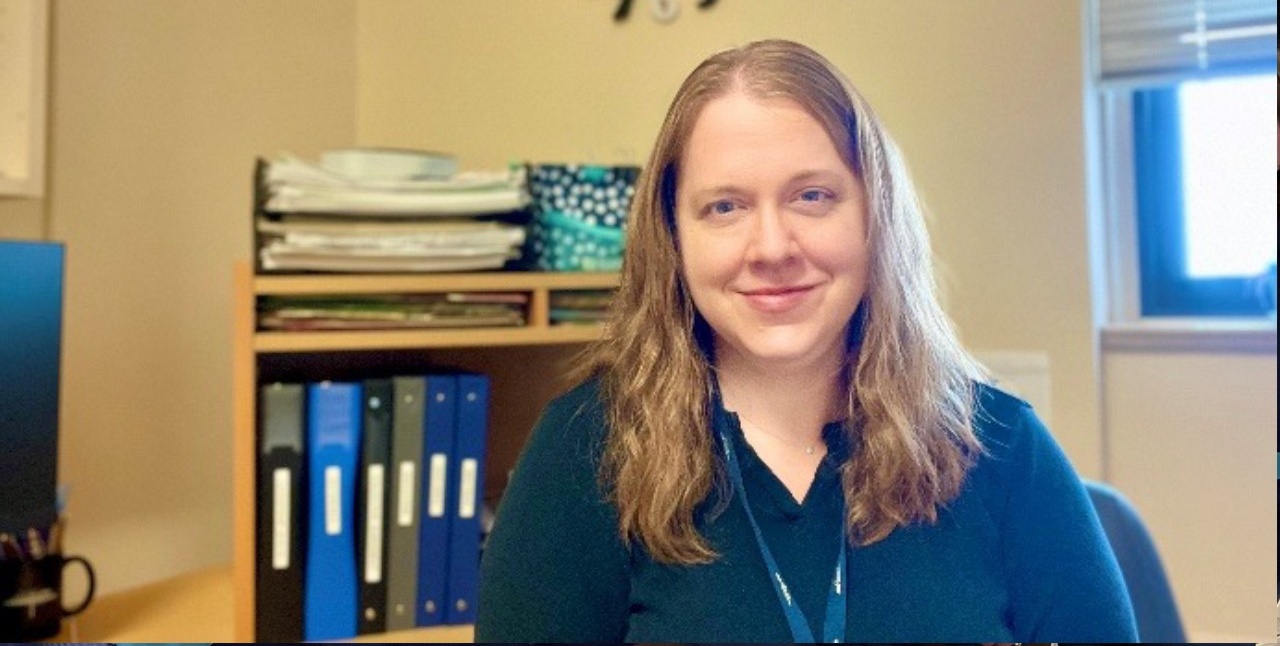
"Students are very welcome and add to our working environment." Natalie Bourque
by Lil Crump
Meet Natalie Bourque
Do you ever wonder what it's like to be in a management role when it comes to clinical education programming of student placements? Well, you are in luck—I had the opportunity to catch up with Natalie Bourque, who currently manages the Rehabilitation Services department at five hospitals within Nova Scotia Health in Yarmouth, Bridgewater, Digby, Liverpool, and Shelburne, to get her perspective.
Natalie Bourque grew up in Yarmouth, Nova Scotia and dreamed of becoming a physiotherapist from a young age. She graduated in 2003 with a BScPT from Dalhousie University. She started her career as a physiotherapist 2003 at Yarmouth Regional Hospital before moving into management in 2010.
The Role of Manager when it comes to Clinical Placements
As a manager, Natalie no longer engages as a clinical instructor for physiotherapy students. Still, Natalie takes great pride in her teams, which offer many placement opportunities. "As much as supporting these placements is about making sure our future colleagues have well-rounded clinical learning opportunities while also allowing current employees to grow – they are also a bit self-serving," Natalie says. "It is important to me that physiotherapy students have a positive experience in our hospital because we need them to work with us in the future. Placements are a wonderful recruitment tool." Natalie knows that opening a student's eyes to the diverse opportunities available in the public sector is important. And the opportunities are growing! Many hospital teams/services/clinics want a physiotherapist, but this growth can only be accommodated if there are qualified staff to recruit. "It is heartbreaking to limit our involvement because of recruitment challenges. Our patients deserve more", Natalie shares.
By way of a quick overview of a manager's role when it comes to student placements, once a student is placed in a department, Natalie's administrative assistant ensures they have the network access they need. She signs off on a parking pass if needed (students get free parking!), and depending on the site, she may collect a photo for their student hospital ID. Because Natalie manages five sites, she does not handle orientation herself, so this training aspect is organized by the interdisciplinary clinical leader and/or the supervising therapist. Natalie admits, "I do love to meet students, though and may ask some probing questions about where they are from and their plans after graduation. (Recruitment, recruitment!)"
How hard is it to recruit physiotherapists to offer student placements? Actually, it's not all that hard when it comes to the dedicated teams that Natalie works with. "Students are very welcome and add to our working environment." Natalie often involves her team leaders (Interdisciplinary Clinical Leaders) to spread the word and collect responses. Natalie admits some employees may need a little nudge to consider a placement, but this is not common. Taking students often appears as a goal on performance reviews, so they already want to participate in it. Sometimes, overall staffing levels, or if therapists are already sponsoring PT Residents, hinder her team's ability to offer student placements.
Challenges Happen
As it is with all things in life – challenges happen. Situations can arise regarding a student's performance; thankfully, Natalie shares that it is rare. "It's not the therapist's sole responsibility to fix the situation – I would expect them to reach out to me, and we'd involve the School very early in the placement to work toward a solution." The hope would be that after providing the proper support, the student would be successful with their placement. It is not in their, or their future patients' best interests to ignore issues. Being a preceptor is a significant role, but physiotherapists will be well supported if things aren't going well.
Are all placements created equal?
Maybe – but just for fun, I'm listing Natalie's recommendations as Olympic gold medals.
For placement preference, the gold goes to rural placements (insert anthem of choice) because of the variety and the vast experience in smaller and more rural hospitals. Some therapists cover multiple service areas, allowing broad exposure to different ages and conditions.
For placement model preference – Natalie's gold goes to the 2:1 model (two students to one preceptor). Natalie experienced this format as a student herself and found it created an effective and comfortable learning environment. "It felt safe to have a classmate nearby to collaborate with and allows for increased confidence." From the preceptor's point of view, having two students can ease the pressure of constantly attending to the students and guiding them through the day. The students can work together to find answers to questions, glean information from the chart and see patients together.
For student choices, Natalie's gold goes to students who do a variety of placements in different locations. "Don't try to do them all in your hometown," Natalie advises. “Clinical placements are an incredible opportunity to learn and see how different sites/provinces do things and bring a wealth of observations and suggestions back to your future employer. Students hopefully view placements not as a chore but as a privilege."
The Clinical Education Team, the School and its students would like to thank Natalie Bourque for her professionalism, commitment and support for placement offers from Nova Scotia's western zone. We wish Natalie many delightful treasures as she scours maritime beaches for sea glass with her husband and three children.