
Summer 2020 Special Feature
Advice for Success
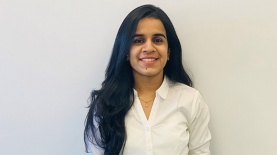
The only advice I can offer to others who are considering the MScPT - RR program is to know your area of interest well. If you are interested in what you are doing, the required determination for accomplishing success will follow.
Q & A with MScPT Rehabilitation Research Student Purva Trivedi
by Lil Crump
Some may wonder why Master of Physiotherapy -Rehabilitation Research student, Purva Trivedi took a 28-hour flight from the tropical warmth of her hometown in Vadodara, Gujarat, India to journey to Nova Scotia, and its unforgiving winter weather. So we decided to ask her.
Q: How did you hear about the Dalhousie’s MScPT-RR program and what influenced your decision to apply for the program?
A: When I completed my Bachelor of Physiotherapy and started working as a full-time clinical physiotherapist at Nisarg Multi-Specialty Hospital in Vadodara, I was drawn to the research aspect of physiotherapy and knew it was an area I would like to pursue. I looked into my research options and discovered Dalhousie University, and the School of Physiotherapy’s Rehabilitation Research option in the list of Schools on the Canadian Council of Physiotherapy University Programs website. It looked like a great option – so I applied.
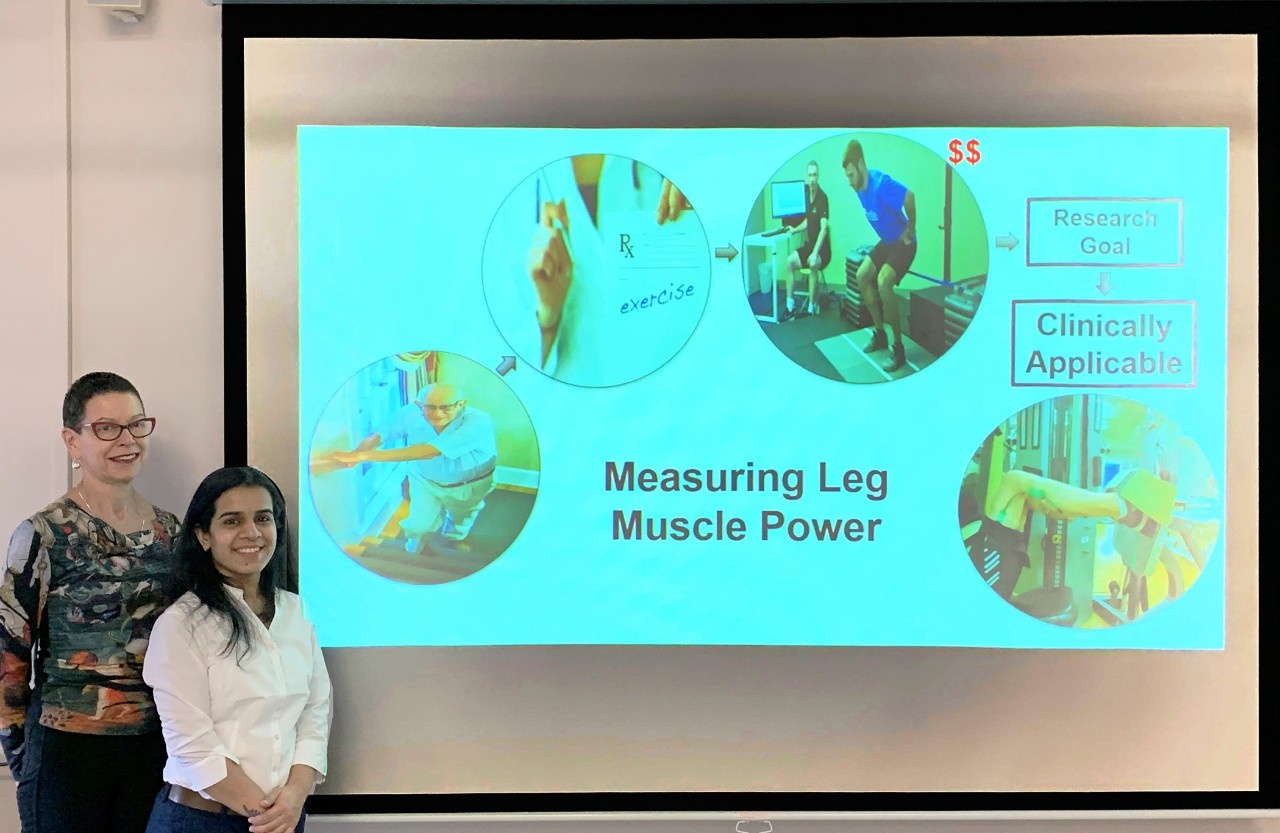
Presenting research findings. Pictured here with supervisor Dr. Gail Dechman
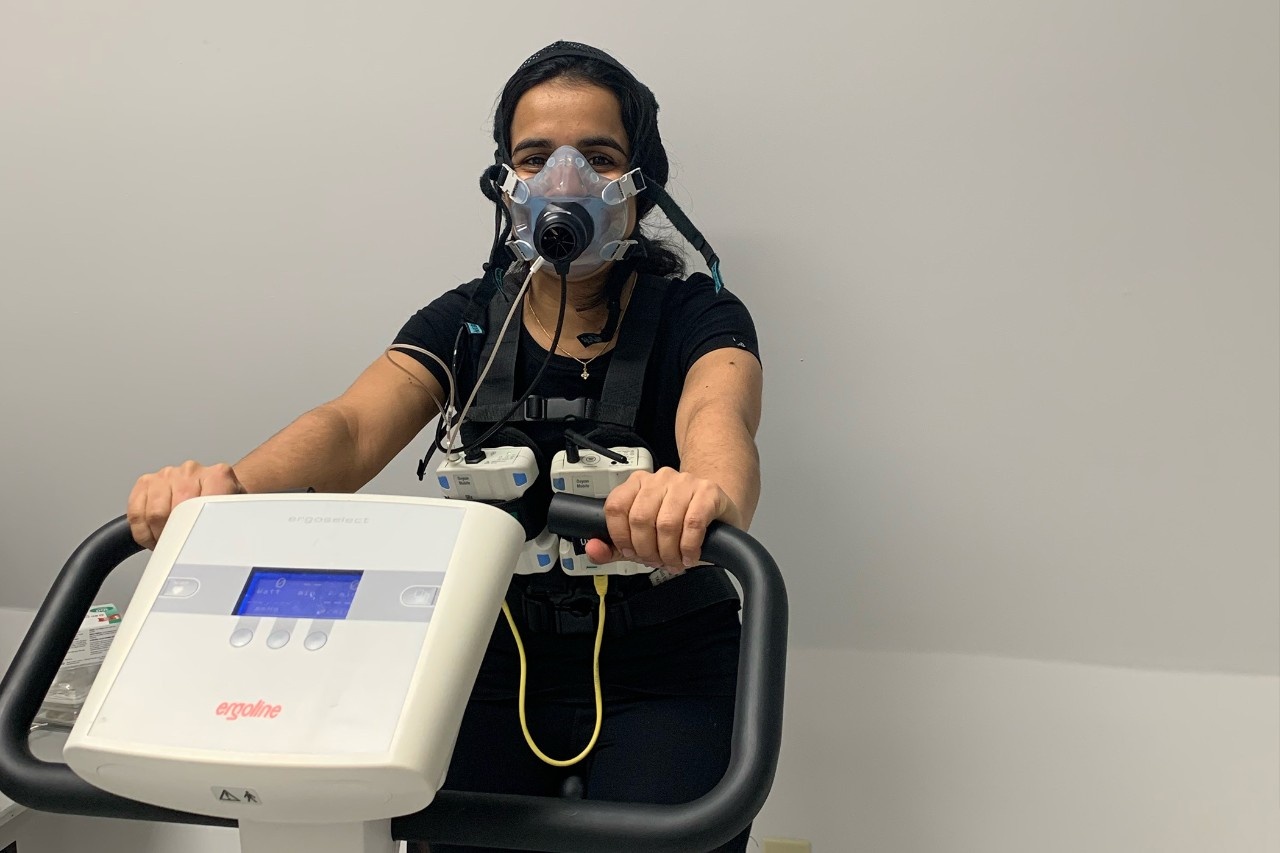
Conducting Research in the Exercise Physiology & Functional Performance Lab.
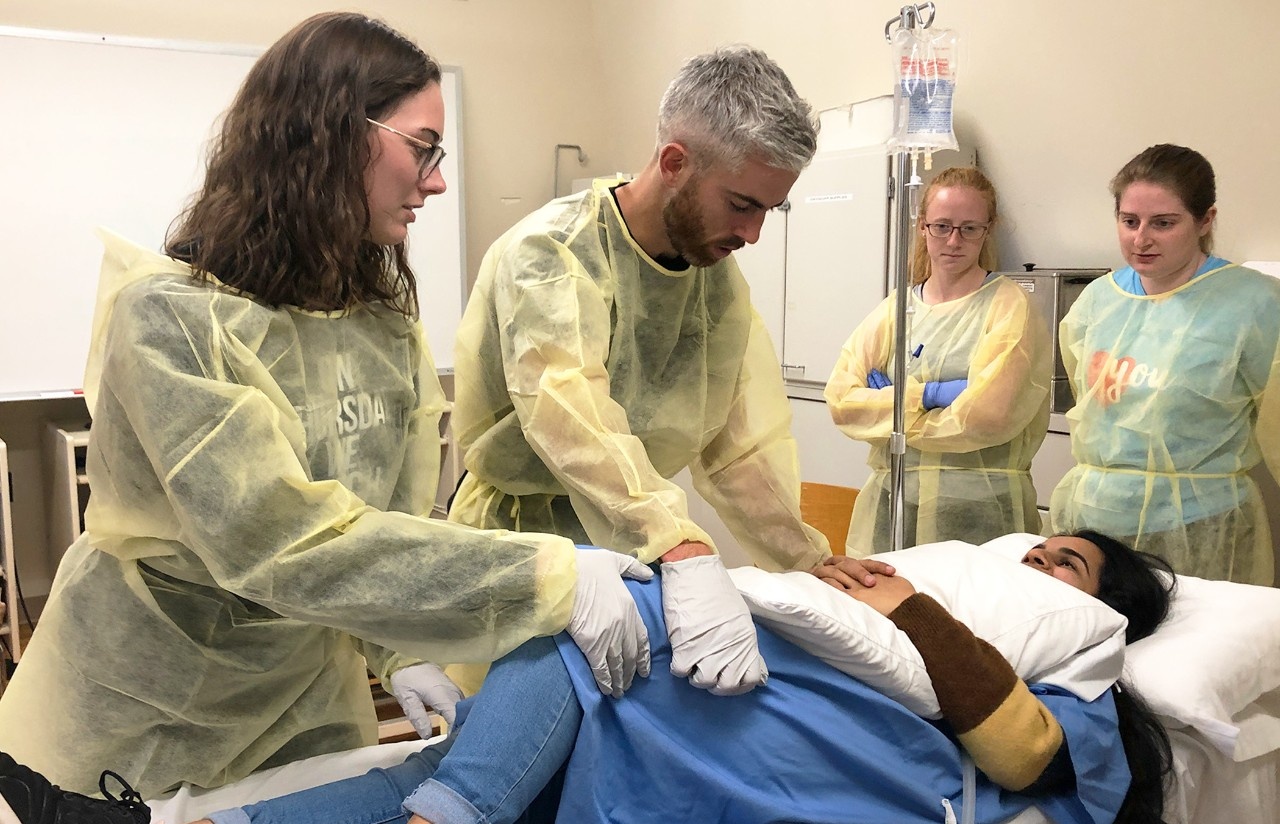
Playing the role of simulated patient during MScPT hands on skills lab.
Q: Were there any big adjustments as you settled into Halifax and the School of PT/MScPT-RR program?
A: Canadian weather. Coming from a tropical country like India without ever experiencing temperatures below 0°
Celsius, acclimatizing to negative temperatures was one of the biggest challenges. Central heating and winter parkas were my allies in overcoming Halifax winters with ease.
As for the School of Physiotherapy - like anyone new to this place who doesn’t know a single person other than their supervisor, I was a little nervous. With great thanks to my supervisor, who introduced me to everyone, along with the extremely welcoming and friendly nature of everyone at the School of Physiotherapy, I was able to overcome my nervousness quickly (to be honest it was less than a week).
Q: Can you give a brief overview of the type of activities you are involved in during the course of your MScPT-RR studies?
A: As a part of my MScPT-RR studies, for the initial two terms, I undertook several courses that helped me develop a strong base before commencing my research. After this, I followed with my master’s degree requirements which involved learning and presenting research from start to finish under the guidance of my supervisor. From conducting massive literature searches, applying for research ethics, recruiting participants, collecting data, to analysing data and deriving results and conclusions, it has been an exciting ride for me. It has been a great journey so far and I have developed skills I never thought I was capable of.
I have also benefitted from activities like being a teaching assistant and participating as a standard client in OSCE (Objective Structured Clinical Examination) simulations.
Q: I understand you are planning to defend your thesis this fall. What is the basis of your thesis and what prompted you to go in this direction?
A: Old age and associated quality of life has always been an area of interest for me. As a part of my research I have developed a novel method that I am proposing could be used to measure muscle power in older population safely and can be used for rehabilitation and prevention of age-related loss of skeletal muscle functionality. I am looking at validating this newly developed method against reference standard instrument.
Q: Achieving a master’s program is an impressive accomplishment. What would you say is the most important attribute in being able to achieve success?
A: In my opinion, being self-motivated would be the most important attribute. Research is an entirely self-paced entity where you set your own deadlines and targets. Self-motivation seems to be a crucial attribute in order to set and achieve those targets.
Q: A master’s program is a challenge for anyone… is there something you do in your spare time that you feel helps you through the more challenging times?
A: I practice “Ashtanga yoga”. I think it has helped me a lot during my challenging times.
Q: What do you think your next steps will be once you graduate?
A: Immediate Next Steps: I’m planning to write the Physiotherapy Competency Exam and practice as a clinical physiotherapist in Canada. Long term goal: I want to pursue a PhD.
The MSc (Rehabilitation Research - Physiotherapy) program aims to improve the evidence that we use in clinical practice. It is designed to provide graduates with skills and knowledge to design and implement research in diverse areas of rehabilitation science; supporting the future of evidence-based practice in our health care system.