
Diagnostic Imaging for Low Back Pain
 |
To view and test the Low Back Pain Red Flag Score Calculator, CLICK HERE! |
Decision support for diagnostic imaging of patients with low back pain
Why is a decision support tool needed?
In most cases, low back pain is non-specific; that is, it is a painful, but harmless, condition that can be managed with little diagnostic investigation or treatment. However, in rare cases, low back pain symptoms can be related to an underlying serious pathology, including fracture (2.4% of low back pain cases), spinal infection (0.7%), cancer (0.5%), or cauda equina syndrome (0.3%) [1].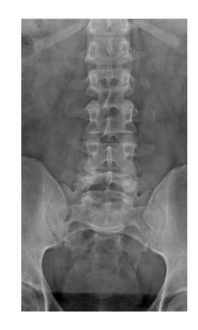
Accurate identification of these potentially serious low back pain pathologies is important. In cases where a patient has characteristics that might indicate a possible serious pathology, also known as ‘red flags’ characteristics, clinical practice guidelines recommend taking diagnostic imaging [2-6]. Unfortunately, the characteristics that are considered ‘red flags’ differ by practice guideline and are often very common (e.g., age greater than 65 years) [7]. Unnecessary diagnostic imaging results in wasted healthcare resources and potential harms for patients such as radiation exposure, poorer recovery and increased surgeries [8-10].
Currently, no multivariable decision support tool is available and recommended to inform clinical decision making.
We have developed and internally validated a prediction model using a set of 10 recommended red flag characteristics (age, cancer history, major trauma, recent infection, urinary/bowel dysfunction, saddle anesthesia, unexplained weight loss, immune suppressing condition or medication, fever, disruptive night pain).
The model currently identifies the percent of risk a patient has of having serious pathology low back pain. Patients with higher risk are more likely to benefit from diagnostic imaging. However, this model has not yet been externally validated, and should not be used in clinical practice.
Once externally validated, the decision support tool built from this model could improve decision making and reduce unnecessary imaging of patients presenting with low back pain.
View and test the Low Back Pain Red Flag Score Calculator here.
Study protocol: Hayden JA, Ogilvie R, Stewart SA, French S, Campbell S, Magee K, Slipp P, Wells G, Stiell I. Development of a clinical decision support tool for diagnostic imaging use in patients with low back pain: a study protocol. Diagnostic and Prognostic Research. 2019;3(1). https://doi.org/10.1186/s41512-019-0047-8
Study publication: [To be linked here when published]
Want to know more?
Design and data sources: We conducted a prospective cohort study which recruited patients who visited one of four of our emergency departments (ED) study sites between 2019 and 2021. We collected participant characteristics (potential red flags and descriptive characteristics at the time of each patient’s presentation to the ED (index visit)), and health outcomes. To develop the prediction model, we linked data from three sources: 1. a physician red flags checklist (collected at the index visit – completion rate 28.4%), 2. ED administrative data (Emergency Department Information System data), and 3. administrative health billing data (provincial medical services insurance data) (follow-up assessed over a 12-month follow-up period after the patient’s ED visit), accessed through a data access agreement with Health Data Nova Scotia.
Outcome: Our primary outcome was any serious pathology (cancer, fracture, dislocation, infection, cauda equina syndrome, aneurysm), created by examining health billing data for healthcare visits between the ED visit and the following one year.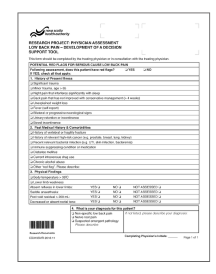
Risk factors: We considered 20 evidence-supported red flag characteristics for our prediction model. Based on sample size estimation, we prioritized 10 variables that were easy to collect, had good face validity and clinical acceptance. Furthermore, we considered prevalence, correlation between variables, and clinically sensible combinations of items.
 Our final model for prediction of any serious pathology low back pain includes the following red flag characteristics: age, cancer history, major trauma, recent infection, urinary/bowel dysfunction, saddle anesthesia, unexplained weight loss, immune suppressing condition or medication, fever, disruptive night pain.
Analysis: We developed a clinically-driven prediction model with logistic regression, and internally validated with bootstrapping and evaluation in ED sub-settings.
Results: Serious pathology low back pain was diagnosed in 7.3% of patients in our study. Our prediction model had good discrimination (AUROC 0.86, 95% CI 0.84-0.89). The model was also well calibrated. Decision making with the model resulted in higher net benefit over all threshold probabilities from 1% to 15% (decision curves) compared to other approaches: imaging patients with one or more red flag characteristics (guideline recommendations), patients where physicians had clinical suspicion of serious pathology, all patients and no patients.
References
1. Reginato LS, Machado GC, Maher CG, Grande GHD, Vidal RVC, Oliveira CB. Prevalence of serious spinal pathologies and nonspinal conditions in low back pain: A systematic review and meta-analysis. Pain Med. 2025;27(1):43-52.
2. Canadian Association of Radiologists. Spine guideline. Ottawa, Ontario; 2024. Available from: https://car.ca/wp-content/uploads/2025/03/CAR_Spine_Referral_Guideline_FINAL.pdf.
3. Chou R, Qaseem A, Snow V, Casey D, Cross JT, Jr., Shekelle P, et al. Diagnosis and treatment of low back pain: A joint clinical practice guideline from the American College of Physicians and the American Pain Society. Ann Intern Med. 2007;147(7):478-91.
4. Jarvik JG, Deyo RA. Diagnostic evaluation of low back pain with emphasis on imaging. Ann Intern Med. 2002;137(7):586-97.
5. Delitto A, George SZ, Van Dillen LR, Whitman JM, Sowa G, Shekelle P, et al. Low back pain. JOSPT. 2012;42(4):A1-57.
6. Oliveira CB, Machado GC, Williams FMK, Tambree K, Maher CG. Revisiting the diagnostic classification for low back pain. BMJ. 2026;392:s353.
7. Pinto RZ, Kongsted A, Silva S, Hayden JA, Downie A, Saragiotto BT. Recent highlights in low back pain research, Part I: Diagnosis and prognosis. J Physiother. 2026;72(1):23-32.
8. Jacobs JC, Jarvik JG, Chou R, Boothroyd D, Lo J, Nevedal A, et al. Observational study of the downstream consequences of inappropriate MRI of the lumbar spine. J Gen Intern Med. 2020;35(12):3605-12.
9. Hall AM, Aubrey-Bassler K, Thorne B, Maher CG. Do not routinely offer imaging for uncomplicated low back pain. BMJ. 2021;372:n291.
10. Webster BS, Bauer AZ, Choi Y, Cifuentes M, Pransky GS. Iatrogenic consequences of early magnetic resonance imaging in acute, work-related, disabling low back pain. Spine (Phila Pa 1976). 2013;38(22):1939-46.