
Convocation Feature Fall 2024
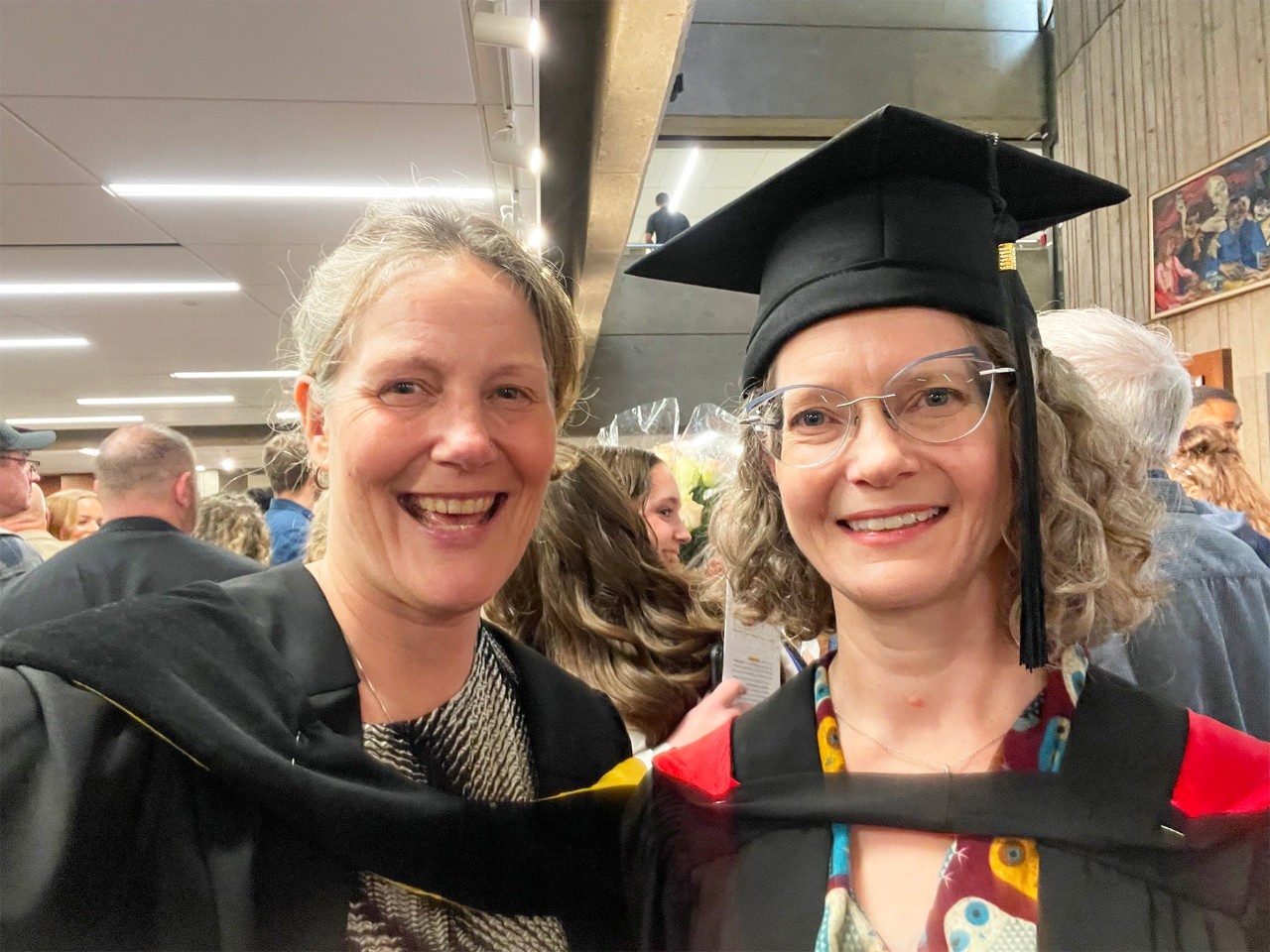
Recent Graduate Tressa Rodges with Supervisor Dr. Heidi Lauckner.
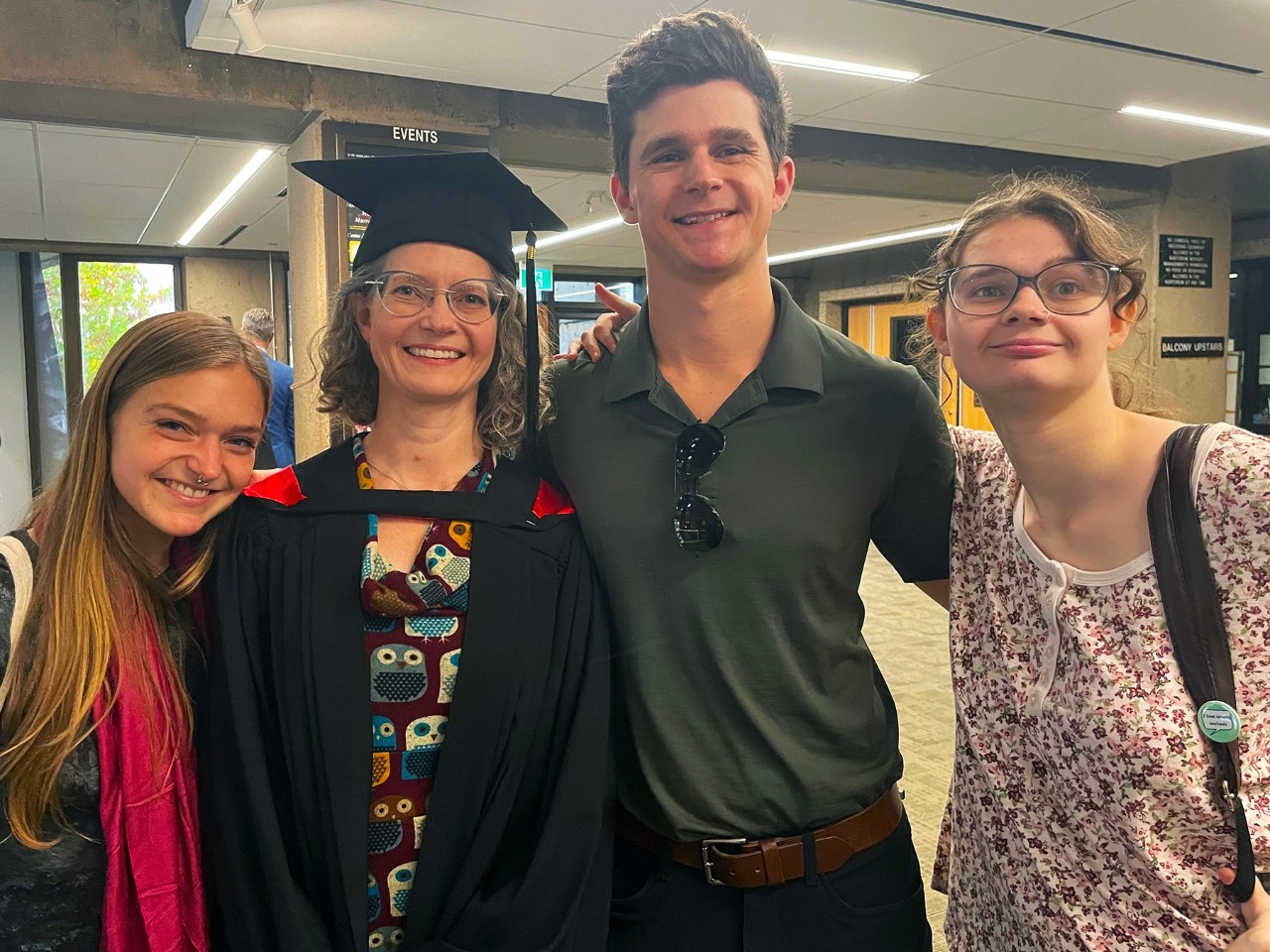
Convocation celebration with family members.
Q & A with Post-Professional Master's graduate, Tressa Rodges
When Tressa Rodges decided to pursue a Master's program, she was looking for one that would allow her the flexibility to continue working full-time and wouldn't require her to relocate from her rural community. She also wanted an academic environment that valued her clinical experience and challenged her to engage in clinically relevant research while expanding her critical thinking Skills. She found that Dalhousie's School of Occupational Therapy's Post-professional program met all these criteria. Now newly graduated, I took the opportunity to ask Tressa about her online Master's program experience.
Your degree had a thesis component, can you tell us a little about your thesis topic and why you chose to pursue homecare research?
While work-in-home care is valuable and rewarding, it would benefit from more research and innovation. My topic integrated several understudied aspects of occupational therapy that have the potential to enhance the health and wellness of homecare clients. From my experience, although clients gain significant benefits from addressing self-care, home safety, and independence, it feels like a missed opportunity to stop there. As OTs, we understand that people's lives encompass much more than these basic needs.
Did your thesis findings have applications in clinical practice?
Leisure often seems trivial within healthcare settings, but the literature review in my thesis highlights the numerous health and wellness benefits of engaging in various "want-to-do" activities. I hope the findings from my thesis encourage OTs to consider the role of leisure in their practice, even when time is limited, and serve as a useful advocacy tool for colleagues and program management.
My findings include a practice-based description of the clinical steps taken by homecare OTs in addressing leisure. These descriptions illustrate how the approach can differ from addressing other types of occupations, emphasizing the importance of maintaining the integrity of the activity to ensure it aligns with clients' values and self-expression. The research also revealed how OTs navigate and work around systemic constraints to address leisure. The Discussion section examined the impact of neoliberalism and resource management, indicating that OTs in less-resourced settings often address leisure in a covert manner. Ultimately, I aim for this research to spark further conversations about reimagining our roles in-home care, fostering greater professional autonomy, and advocating for improved funding.
What would you say was the highlight of your degree?
Returning to university after many years as a clinician was daunting. One of the highlights was discovering that when I wasn't overwhelmed by the workload, I thrived at the intersection of clinical practice and academia. I truly enjoyed collaborating with my thesis committee and advisor, Dr Heidi Lauckner.
Tressa shares that completing this degree was significant because it refreshed and advanced her clinical and critical thinking. Presently, when she is not picking up home renovation skills from construction-savvy family members, she is focusing on seeking opportunities to share her knowledge and promote clinical excellence in home care.
We wish you all the best, Tressa, wherever your future takes you.