
Preceptor and Student Feedback
Strengthening Fieldwork Partnerships: Preceptor and Student Feedback Insights (2025–2026)
by Brenda Beagan, Professor
Overview
Feedback from preceptors and students in the OCCU 6111 placement cycle (Jan-Feb 2026) indicates a highly positive instructional environment grounded in respectful relationships, effective clinical teaching, and strong student performance. At the same time, results show areas for improvement, particularly in feedback systems, evaluation tools, and structural supports for both learners and supervisors.
Preceptor Perspectives
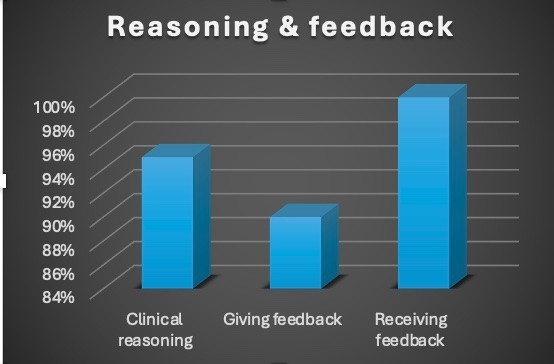
Thank you to all the preceptors who supervised students! Responses to the online survey we circulated suggest preceptor experiences were mostly positive. Students were reported to have appropriate clinical reasoning (95% very much or somewhat) and to accept and implement critical feedback (100% very or somewhat well). Occasionally, students were described as nervous about decision-making, needing prompting, and somewhat passive in their learning. Some took more time than others to reach the skill levels preceptors expected.
Only 90% said students gave them feedback "very" or "somewhat well". Preceptors recognized the inherent power dynamic and suggested that some students were more concerned with finding out how they were doing and with passing the placement. Preceptors who set routine times and processes for exchanging feedback with students appeared to find it effective.

95% of respondents reported the School is doing reasonably well in building respectful, reciprocal relationships with preceptors. They were less enthused with how we gather and act on preceptor feedback, with only 17% saying we do this extremely well.
A major concern is consistent feedback about not liking the CBFE-OT, yet we keep using it. There is a new national fieldwork evaluation tool coming in 2027 – yay! Some people commented that we need to recognize preceptors better: “There is not a larger appreciation for the work that it takes to have a student. More recognition in ways that would show this would be nice.” We are working on this… a challenge is always that our preceptors are in four provinces.
This year, given the number of storms in January-February, some preceptors commented on the need for more clarity regarding how to handle those. Some also noted that when students are forced to accept placements far afield because there are too few available around Halifax, this can prove challenging for both the student and the preceptor. Some people loved the weekly emails, some found them overwhelming; some appreciated the availability of preceptor sessions, and others wanted more availability.
Why become a preceptor?
This year, we asked why people become preceptors, given the considerable work and complexity involved. The open-ended responses clustered in main themes: employer expectations; People’s own experiences as students (positive and negative); keeping up to date, professional development; the “opportunity to give back to the OT community”; the ability to provide a learning opportunity for students, particularly in their own field of practice; and simply enjoying teaching and mentoring students.

- “My own poor experiences with preceptors have driven me to do better and be the preceptor I needed in school.”
- “I started taking students soon after graduating. I feel it is part of giving back to the profession and to help shape our future colleagues.”
- “I enjoy working with students and getting their fresh perspectives, plus it encourages me to step back and think about my own practice.” ~ example preceptor comments
Student feedback for OCCU 6111
Students were almost uniformly positive about their experiences on this placement. Concerns arose mainly because of unexpected work disruptions or learning gaps due to the types of issues clients presented with. Well over 90% of students reported receiving clear, respectful, and constructive feedback, with only a very few requesting earlier or more frequent feedback. Regular check-ins were seen as helpful. Well over 90% also reported valuable strengths in their preceptors’ demonstration and encouragement of clinical reasoning, their use and encouragement of evidence-based practice, and their modelling of effective performance management. Students really valued probing questions and preceptors’ ability to adapt to individual student learning styles/needs.
Students said wonderful things about their preceptors! For example:
- “I enjoyed every single aspect of this placement. I have no words to describe the positive experience I had here.”
- “I felt so supported, and she helped me feel so much more confident in my abilities as a future clinician. She was 10/10!!”
- “I had an amazing time at this placement. I was able to learn and develop my skills as an OT and gain hands-on experience working with clients in various practice areas.”
- “[Name] is a phenomenal preceptor who genuinely wants her students to succeed. She pushes you outside of your comfort zone, but enables so much growth in the process... [She is] a model for the kind of clinician I hope to become.”
Summary
The 2025–2026 fieldwork cycle provides a strong foundation of high-quality clinical education supported by dedicated preceptors and engaged students. Key strengths include effective teaching, positive learning environments, and meaningful professional development.
Priority aspects for improvement include strengthening the feedback system, addressing concerns about evaluation tools, increasing recognition for preceptors, and refining logistical supports. Continued attention to these areas will further strengthen the fieldwork experience for everyone.