
Posted: August 12, 2026
By: Jocelyn Adams Moss
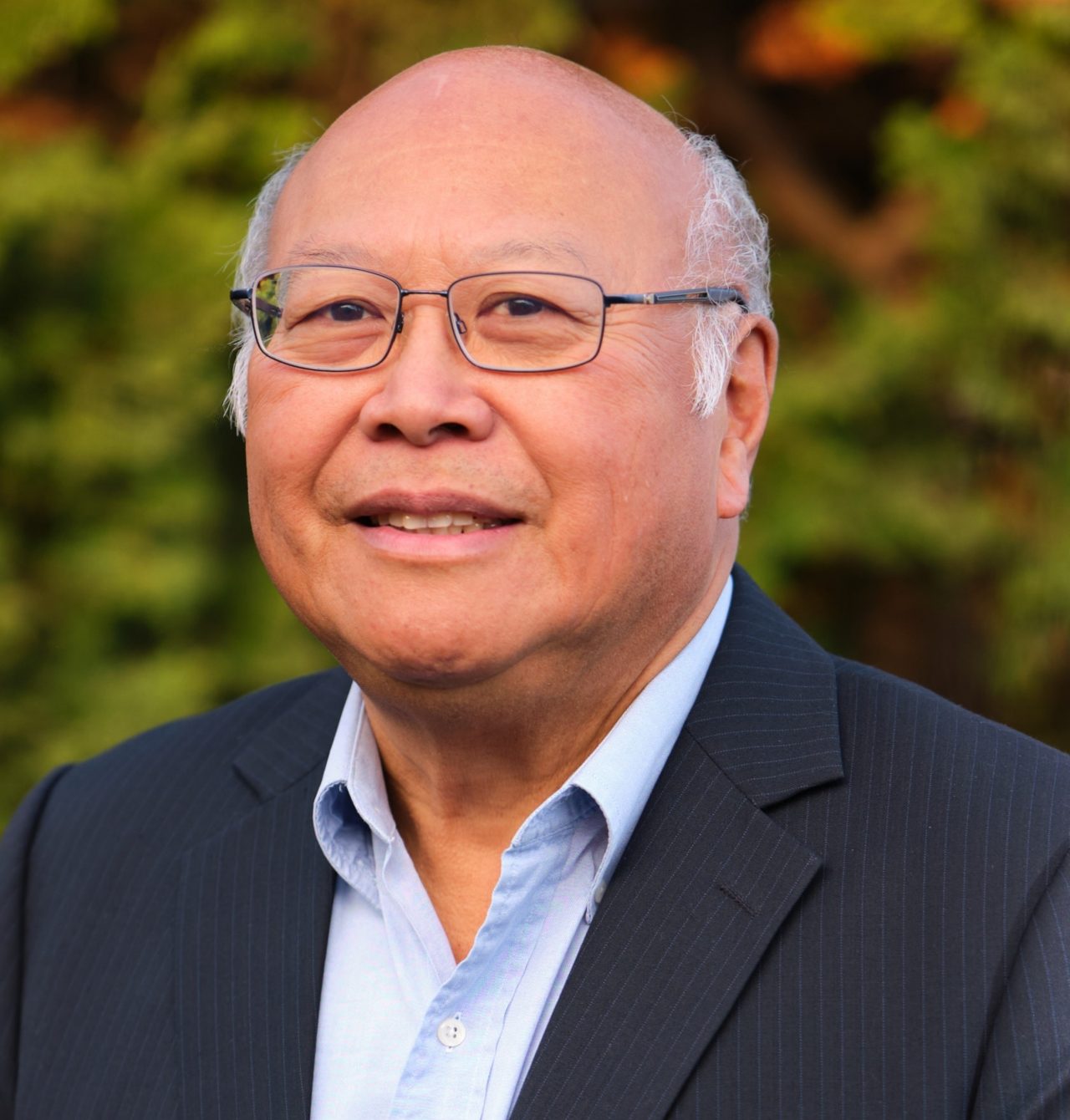
Dr. Kenneth Lee (BSc’75) has spent the past four decades shaping the world's understanding of marine oil pollution and environmental protection. An internationally respected marine scientist, he was recently recognized as one of Atlantic Canada's Top 7 Over 70, honouring his lifelong contributions to ocean science and his commitment to mentoring the next generation of scientific leaders.
Dr. Lee was born and raised in Halifax. One of the earliest Chinese immigrants in the city, Ken’s father worked in a Chinese laundry on Barrington Street, where the family lived above. His parents instilled a hard work ethic in their children.
“My parents never spoke English,” says Ken. “As a kid with no money, what do you do for entertainment? I was fishing on the wharves of Halifax.”
Those childhood days by the ocean sparked a curiosity that would ultimately lead him to Dalhousie University and eventually becoming one of Canada's leading marine scientists.
A career shaped by unexpected opportunities
Like many children of immigrant parents, Ken entered Dalhousie University with a clear expectation. “I went to Dal thinking I was going to medical school,” says Ken.
Instead, a series of unexpected opportunities within Dalhousie's Department of Biology completely changed the direction of his life.
During his first year at Dal, Ken enrolled in Biology 101, but when he started the class was at capacity. Because of his strong high school grades, he was invited to skip first-year biology and enter directly into second year.
“When I think back, Dalhousie offered opportunities and inspired me so much,” he says. “At the time, you don't think of these things, but they did a lot for me.”
As he became immersed in the biology community, Ken volunteered at a department open house. Afterwards, several professors encouraged him to pursue an honours degree in biology. That conversation led to a meeting with the department Chair, who asked a simple question that would change his future.
“Are you a plant person or an animal person?”
Ken chose plants. He was awarded a Sarah M. Lawson Scholarship in Botany for a summer internship at the Huntsman Marine Science Centre in St. Andrews, New Brunswick. There was no thought of medical school following.
Looking back, Ken credits Dalhousie's faculty members with recognizing his potential long before he did.
They mentored me, challenged me to think critically, and made me feel like part of the research community before I had even graduated. — Dr. Lee
Building a career across scientific disciplines
Rather than following a straight career path, Ken embraced opportunities to study multiple scientific disciplines.
After earning his biology degree at Dalhousie, he completed a master's degree at the University of Toronto, studying algal physiology and phytoplankton dynamics. He explains, “Being in Ontario away from the ocean, I became a limnologist, studying freshwater lakes.”
Wanting to pursue more applied research, Ken shifted fields for his doctorate. He chose to study toxicology focusing on the environmental impacts of vanadium emissions associated with the extraction of oil from Canada’s tar sands. Recognizing the importance of chemistry in understanding environmental systems, he later completed a postdoctoral fellowship in chemical oceanography studying the environmental impact of oil spills and spill response technologies in British Columbia at Fisheries and Oceans Canada’s Institute of Ocean Sciences.
Ken explains, “Switching fields, which enabled me to understand a little bit about everything, gave me a foundation for multi-disciplinary research.”
That interdisciplinary perspective became one of the defining strengths of his career.
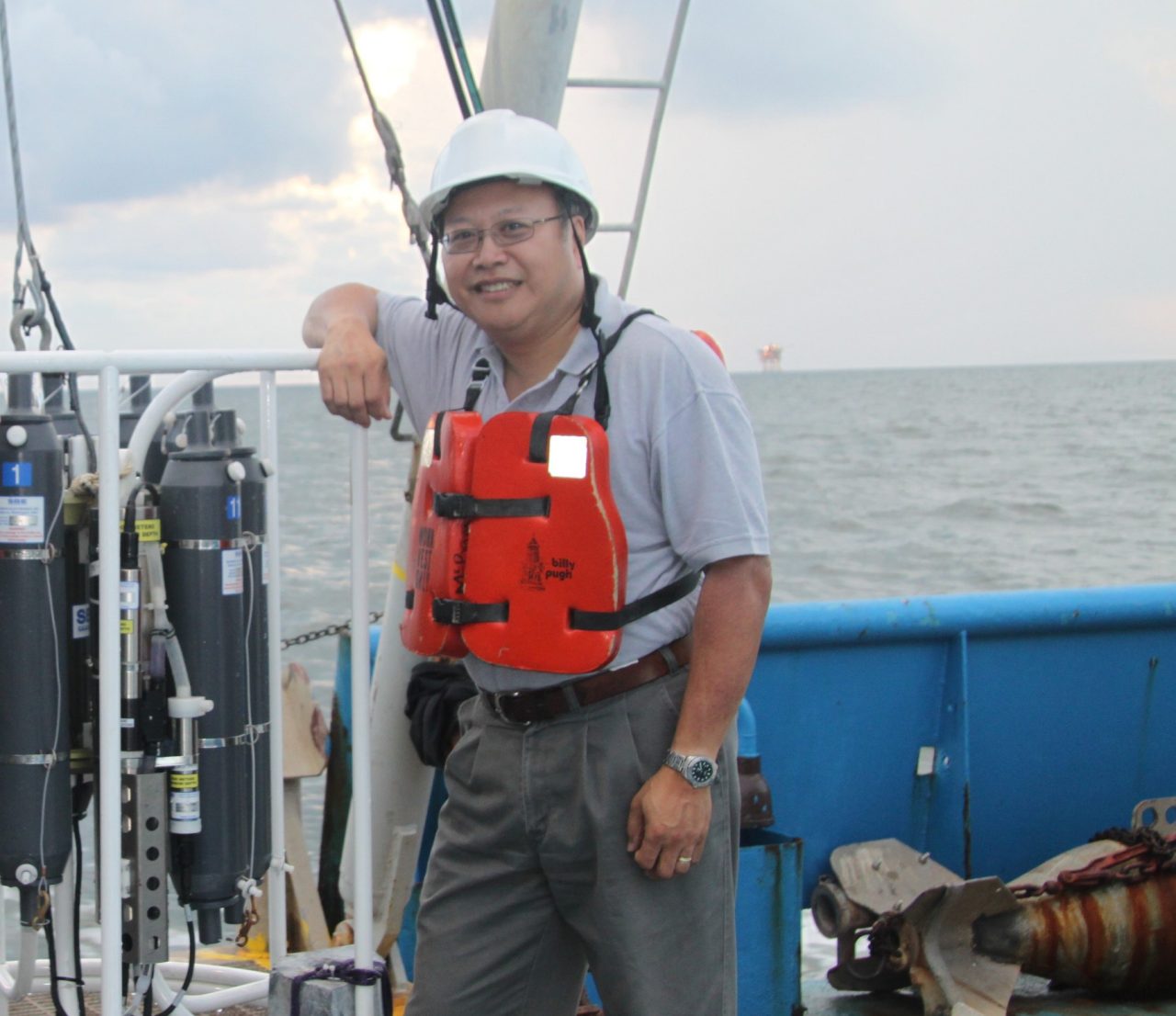 Dr. Lee at the Deepwater Horizon Oil Spill at sea response operations (2010).
Protecting oceans at home and around the world
In 1984, Ken began his professional career with Fisheries and Oceans Canada (DFO) at the Bedford Institute of Oceanography in Halifax. Five years later he accepted a research scientist position focusing on the study of biogeochemical processes in relation to microbial transformations of contaminants and other chemical and biochemical substances in estuarine and coastal environments at DFO’s Maurice Lamontagne Institute in Rimouski, Quebec. In 2001 he returned to Nova Scotia to establish and lead DFO’s Centre for Offshore Oil, Gas and Energy Research (COOGER). His expertise attracted international attention.
Following a major oil spill in Australia in 2013, Ken was recruited to serve as Director of Oceans and Atmosphere at the Commonwealth Scientific and Industrial Research Organisation (CSIRO), Australia's national science agency. There, he helped develop the country's national oil spill response strategy.
While in Australia, he also led a Royal Society of Canada initiative to identify the country’s future oil spill research priorities. The resulting report highlighted critical knowledge gaps and laid the foundation for significant federal investment in collaborative research.
When Ken returned to Canada from a four-year leave-of-absence, Fisheries and Oceans Canada asked him to turn those recommendations into reality. The result was the Multi-Partner Research Initiative (MPRI), an internationally recognized program that brings together scientists from around the world to improve oil spill preparedness and response.
Although officially retired from Fisheries and Oceans Canada in 2022, Ken continues to lead the initiative under Natural Resources Canada as Chair of MPRI’s Advisory and Technical Advisory Committees. “The program funded 250 researchers and more than 120 graduate students across 16 countries,” he says.
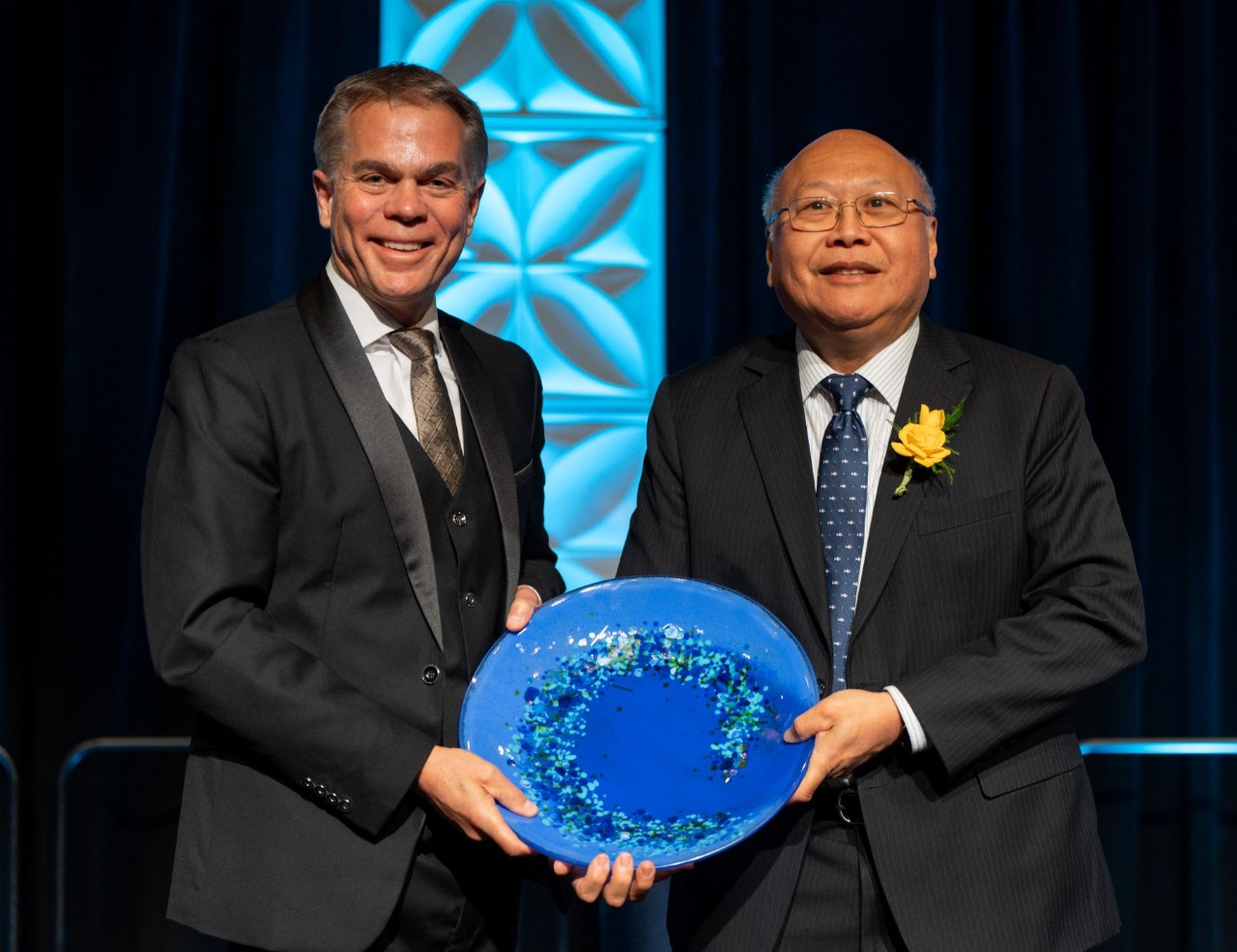 Dr. Lee (at right) receiving a Top 7 over 70 Award (2026).
A lifelong passion for discovery
Throughout his career, Ken has published more than 600 scientific and technical papers and has received numerous honours, including two Fisheries and Oceans Canada Prix d'Excellence awards and the Government of Canada's Federal Partners in Technology Transfer – Leadership Award for his work advancing oil spill countermeasures. He has served as a scientific advisor for oil spill response operations in Canada and abroad. In recognition of the applied nature and impacts of his research and advice, in 2024, Ken was inducted as a Fellow of the Canadian Academy of Engineering (CAE).
Despite an accomplished career spanning multiple continents, Ken doesn't consider himself retired. “People ask me, 'when are you going to retire?’ To tell you the truth, I never started working. It's just a hobby as far as I'm concerned,” says Ken.
That passion for discovery continues to fuel his work today.
Advice for the next generation
Reflecting on the lessons of his career, Ken encourages aspiring scientists to remain curious, embrace collaboration, and never stop learning. “Work with people in different fields because they can teach you something,” he says.
Ask questions. Don't be afraid of learning. In the end, it's not the money you need. It's not infrastructure. It's the ideas. —Dr. Lee
For Dr. Lee, a lifelong passion for the ocean has carried him from the shores of Halifax to international recognition, demonstrating that curiosity, dedication, and an openness to opportunity can transform a childhood fascination into a career of global impact.