
 |
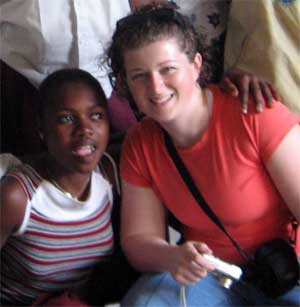
| Dal med student Nicole Richard with children from Kiwohede. (Photo courtesy Nicole Richard) |
Dalhousie students in a wide range of health professional programs are returning to Canada this week following a three-week study tour in Tanzania.
ÒI was shocked by the enormous range of conditions the doctor saw in one morning, from elephantiasis and malaria, to dog bites and bicycle accidents, to syphilis and HIV,” says Nicole Richard, who will soon enter her second year of medical training at Dalhousie Medical School.
ÒThey made diagnoses without the sophisticated tests we have here, and dealt with conditions that patients had let go far past the point where I thought help was possible.”
Home of Mount Kilimanjaro and one of the poorest countries in the world, Tanzania is located on the east coast of Africa. Dalhousie Medical SchoolÕs International Health Office (IHO) has led medical students on study tours in Tanzania for the past three years. But this is the first time the IHO has coordinated a study tour for a group of students from a variety of health care professions. Twenty-one students made the trip: eight medical students, eight dentistry students, four nursing students, and one pharmacy student.
ÒEven in our pre-departure preparation sessions, the students were incredibly excited to be working with students from other health professions,” says Ashley Pinsent, IHOÕs manager of student programs. ÒThe trip to Tanzania strengthened those bonds, as the students learned to look at extreme health care situations from the different professionsÕ perspectives.”
The inter-professional study tour to Tanzania is part of a larger strategic initiative among DalhousieÕs Faculty of Medicine, Faculty of Dentistry and Faculty of Health Professions. These health care faculties have launched several joint research, training and clinical programs to strengthen the ability of diverse professionals to work together in teams.
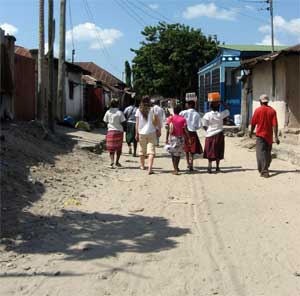 |
| Dal dentistry student Crystal Savoie walks with village women through Kiwohede. (Photo courtesy Nicole Richard) |
The Dalhousie students spent two weeks in TanzaniaÕs bustling capital, Dar es Salaam. They toured and attended lectures at the Muhimbili University College of Health Sciences (MUCHS), and observed the work of two non-governmental organizations: Kimara Peer Educators, a grassroots advocacy group dedicated to teaching the truth about HIV and AIDS, and Kiwohede, a rescue and rehabilitation agency for young victims of human trafficking and other abuses. They spent another week observing rural health care in the village of Ifakara.
ÒI was amazed by the talent and dedication of the health professionals in Tanzania,” says Ms. Richard, who is interested practicing family medicine in a rural community after graduation. ÒLack of education and skill are not problems, but lack of funds and resources are.”
Necessary drugs are not always available in Tanzania, and people must pay for their medical care, since the country cannot afford to fund a public system.
Medical students who participated in the 2006 Tanzania Study Tour were so struck by the lack of basic supplies in Tanzania, that they raised money for the hospital in Ifakara to purchase new mosquito nets.
ÒMalaria is a major problem in the Tanzanian countryside,” notes Ms. Pinsent. ÒIt was disheartening last year to see that the mosquito nets in the hospital were full of holes, making people who were already ill vulnerable to bites and therefore to malaria. The students and staff were thrilled to install the new nets this year. Simple and inexpensive as they are, the nets are a huge tool for prevention.”
The students also took 400 kilograms of textbooks to Tanzania, which they presented to MUCHS for their library.
Plans are already underway for next yearÕs inter-professional study tour to Tanzania. ÒIt has been such a successful partnership,” says Ms. Pinsent. ÒThe students come back with a whole new perspective on the Canadian health care system and how they can contribute to international health.”