Sustainability core concepts
Indigenous knowledge concepts of respect for the environment, reciprocity, and responsibility, such as the Mi’kmaq concept of Netukulimk, have been embedded globally in human cultures for thousands of years.
Concepts include:
- appreciation of and respect for the natural world
- short-term and long-term planning approaches
- integration of environmental, social, human, and economic goals in policies and activities
- community engagement
- intergenerational, global, regional, and local equity
- responsible governance
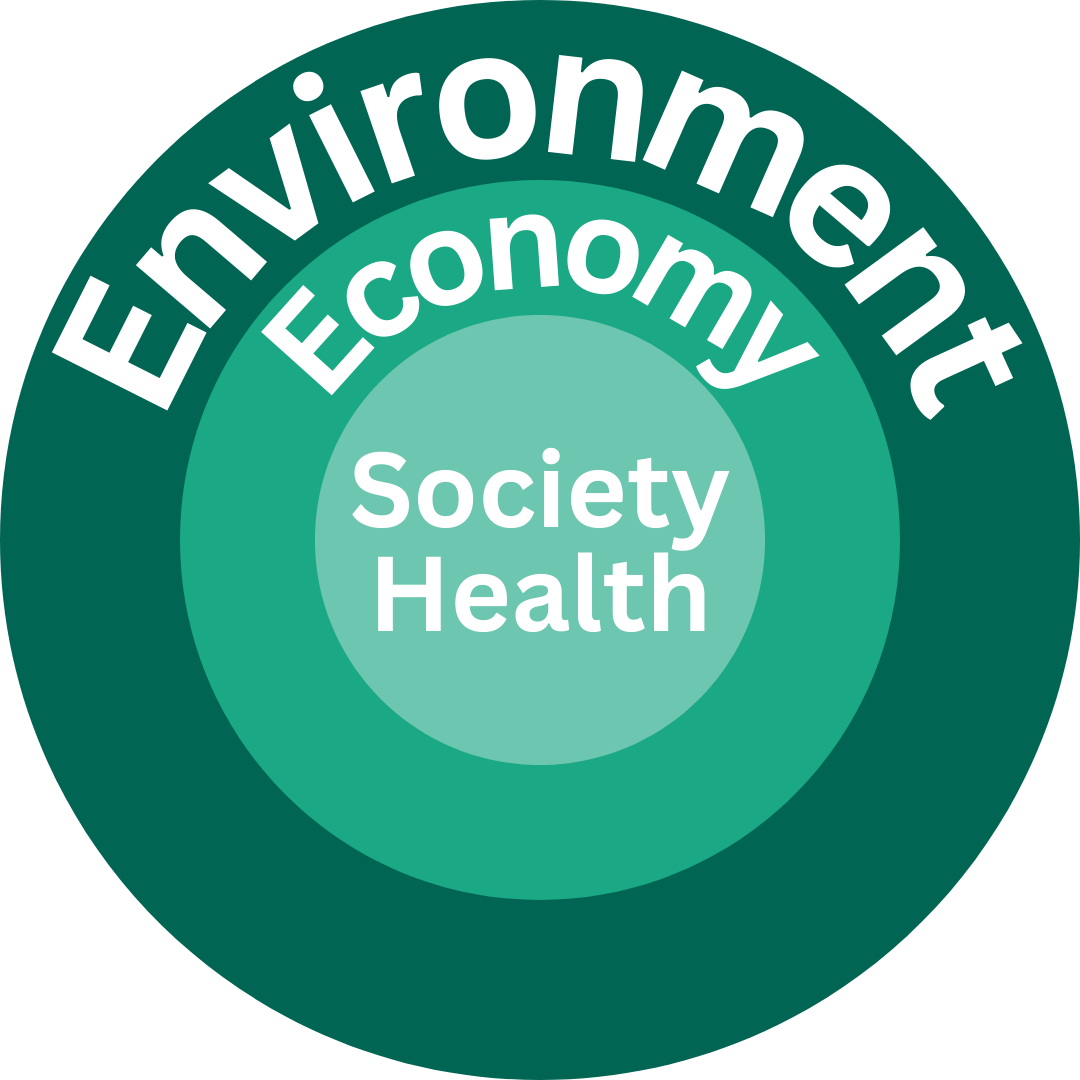
The integration of these concepts differs depending on the sustainability definition used. The common concentric circle definition used in this plan recognizes the earth and a healthy ecosystem as the outer ring and the foundation of existence, followed by the economy: what we do to serve and create, and societal and health outcomes for people and other species.
$100M
invested in sustainability projects by Dalhousie and partners in the past decade
900+
students have graduated from the Environment, Sustainability, and Society program since its founding in 2009
90%
of our academic departments offer courses on sustainability topics
44%
of our research community is engaged in sustainability research
GOLD
Our STARS rating, the leading global system for measuring sustainability in every aspect of higher education
45%
reduction in GHG emissions since our baseline year, 2010, as of 2024/25